

Our People
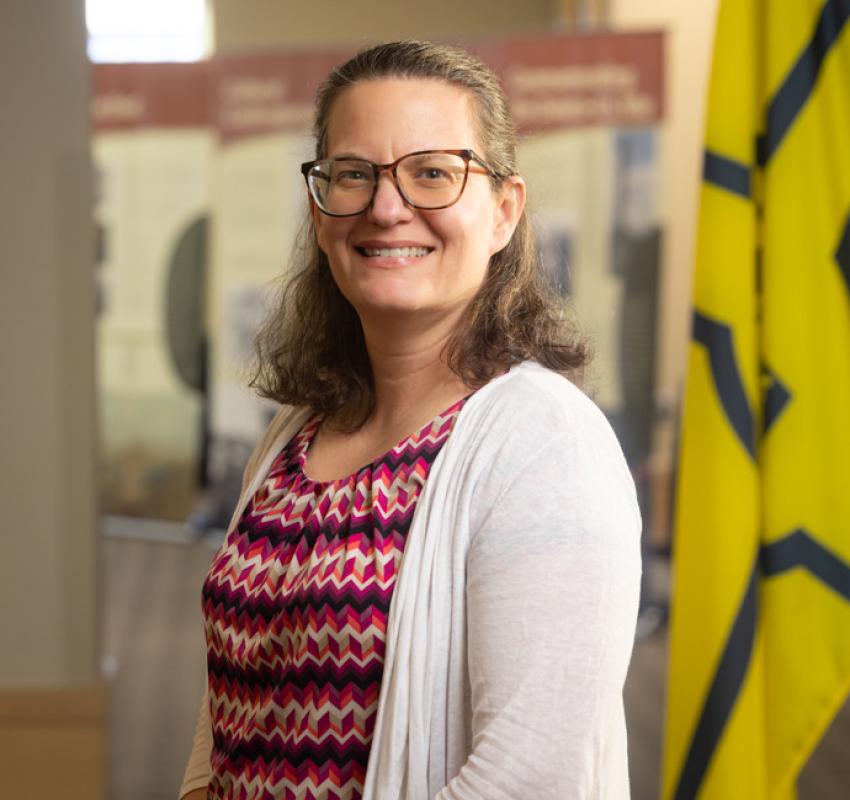
Mary McHugh
Mary R. McHugh is a Professor in the Department of Greek, Latin, and Classical Studies. She is a social historian whose wide-ranging scholarship encompasses political history, intellectual and cultural cross-pollination, and the history of food production and culture. A recently published chapter examines how Plato’s Timaeus shaped conceptions of time and cosmology within the intellectual milieu of Western Greece. McHugh argues that its call for cosmological models influenced a tradition of mathematical and mechanical innovation, from Archimedes’ devices to medieval and Renaissance astronomical clocks.
McHugh is adept at pursuing leads and situating the particular within its broader context. She has taught courses at all levels of Greek and Latin to those spanning Near Eastern and Greco-Roman history to Chinese and Islamic cultural exchanges with the West. She also teaches courses in art and archaeology, bringing her expertise in material culture directly into her research.
Our People
Amanda Nienow
Dr. Amanda Nienow began her Gustavus career in 2007, in the department of chemistry. She obtained her PhD in (Physical) Chemistry at the University of Minnesota and completed a brief post-doctoral fellowship at Purdue University in West Lafayette, IN. In 2013, she was promoted to Associate Professor and in 2018, was promoted to Professor. She has authored multiple peer-reviewed publications with undergraduate students related to environmental fate and photochemistry of herbicides. She recently won the Janet Anderson Award from the Midstates Consortium for Math and Sciences for her work mentoring students in undergraduate research. Dr. Nienow served as co-chair of the Chemistry Department from 2015-2020 and 2023-2026 with Dr. Dwight Stoll. She currently serves as the Director of Undergraduate Research and regularly teaches SIG-370, Signature Experience - Research along with physical chemistry courses.
Accommodation Requests - Accessibility
Students can learn more about requests for academic, testing, dietary, and mental health accommodations at Gustavus to support your success and well-being.
Major/Minor
Eastern European and Eurasian Studies
Major/minors in Eastern European and Eurasian Studies dig into geo-political relationships and influences at work in Eastern Europe including languages, literatures, cultures, civilizations, histories, and economics. Check out sample classes and career opportunities.
Our People
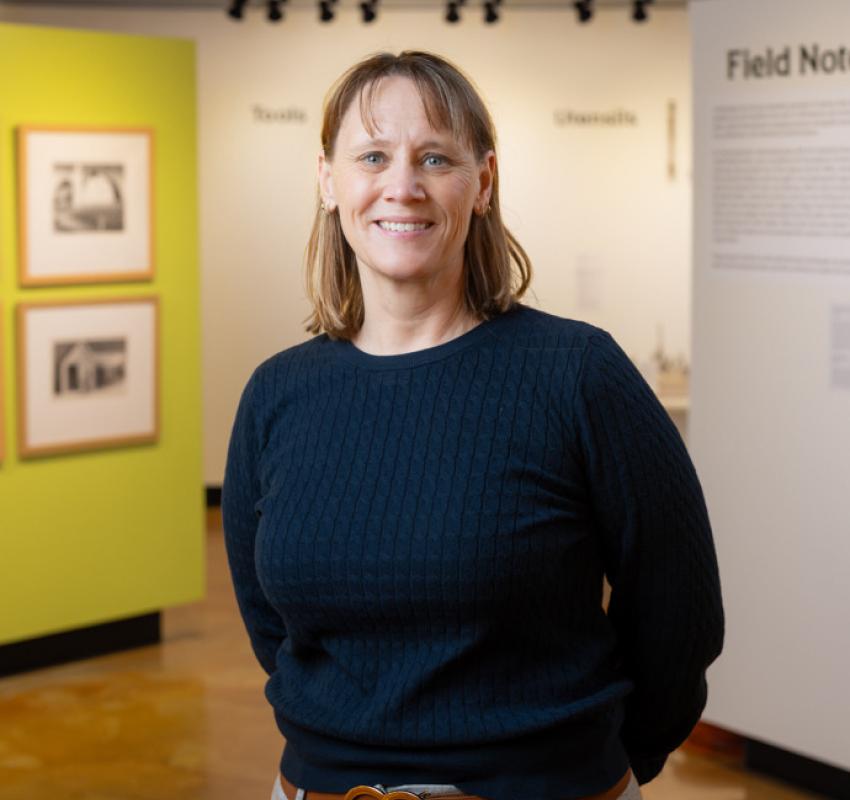
Heidi Meyer
Heidi M. Meyer is Associate Professor of Nursing and currently serves as the Chief Nursing Administrator for the Department of Nursing. A proud Gustavus alumna, she brings to her work a deep commitment to the College’s liberal arts mission and to preparing graduates who have strong clinical reasoning abilities, are intellectually curious, and grounded in compassionate care. She teaches across the nursing curriculum and at times contributes to interdisciplinary offerings, including the Public Health minor. Recent courses include Public Health Nursing, Transitions to Professional Practice, Capstone Clinical, Research and Ethics, and a May study-away course, Health Across Borders: Exploring Social Determinants of Health in Sweden and the U.S.
Dr. Meyer’s scholarly expertise centers on emotional intelligence, clinical reasoning, and innovative teaching strategies in nursing education. Her doctoral work examined the relationship between emotional intelligence and clinical reasoning in senior nursing students, and she is certified in the Mayer-Salovey-Caruso Emotional Intelligence Test (MSCEIT). Her research has been published in peer-reviewed journals and presented at national and international conferences, including the American Association of Colleges of Nursing (AACN), the Midwest Nursing Research Society (MNRS), and the International Nursing Association for Clinical Simulation and Learning (INACSL). She has also contributed to multisite studies focused on simulation debriefing and the development of clinical judgment in baccalaureate nursing education.
A strong advocate for active, experiential learning, Dr. Meyer has been recognized with competitive grants and scholarships that have advanced simulation-based education and strengthened the integration of clinical reasoning across the curriculum. Her teaching is informed by a belief that learning is relational and reflective; she challenges students to move beyond memorization toward deep understanding, emotional awareness, and sound professional judgment. She is particularly passionate about helping students integrate the science of nursing with the human experience of care.
At Gustavus, Dr. Meyer has served in numerous leadership roles, including Department Chair/Chief Nursing Administrator and Faculty Senate representative. She contributes to college-wide initiatives related to academic affairs, strategic planning, accreditation, and wellbeing. She is an internal facilitator for the Nursing National Advisory Board and serves on the Public Health Minor Advisory Board. Beyond campus, she is active in the Minnesota Association of Colleges of Nursing, currently serving in a leadership capacity, and has completed Commission on Collegiate Nursing Education (CCNE) evaluator training.
Dr. Meyer’s favorite aspect of her work is mentoring students and faculty—whether guiding independent student research, supporting future nurse educators as a graduate preceptor, or walking alongside seniors as they transition into professional practice. She values the close-knit Gustavus community and the opportunity to know students not only as learners, but as whole people with unique goals and gifts.
Student Organization
Women's Rugby
We’re a team, a strong team community in a challenging club sport. Our team focuses on learning new skills, working together, and building lasting friendships through this exciting and fast-paced sport that is open to everyone.
Student Organization
Women's Lacrosse
We’re a team that gives students the chance to build their skills in a fast-paced sport while competing for Gustavus. We welcome players of all experience levels and focus on both improving as athletes and building strong team friendships.
Academic Department
Japanese Studies
Through the Gustavus Japanese Studies Department, students study the Japanese language, literature, history, politics, art, and religion. Plus, there's a required semester abroad in Japan, and faculty mentoring.
Living on Campus
Living on campus is at the heart of the Gustavus experience—close community, vibrant events, and a variety of dorms and apartments make campus feel like home from day one to graduation.
Academic Department
Why Study Literature
Literature helps us better understand our lives, ourselves, and the world around us. Encounters with literature develop the concepts of identification, imagination, and empathy. In our increasingly chaotic world, these skills matter deeply. Taking a deep dive into literature from different cultures allows you to both expand your ability to evaluate and discuss the work itself and also better understand what it tells us about the world, our own beliefs and values, and the beliefs and values of others.