

Sustainability
Gustavus is driving sustainability forward with zero-waste goals, solar power initiatives, and a robust campus composting program.
Office
Opportunities - Campus Activities Office
Join student organizations and clubs, Greek life, CAB, Gustie Greeters, and voter engagement programs to connect and lead at Gustavus College.
Our People
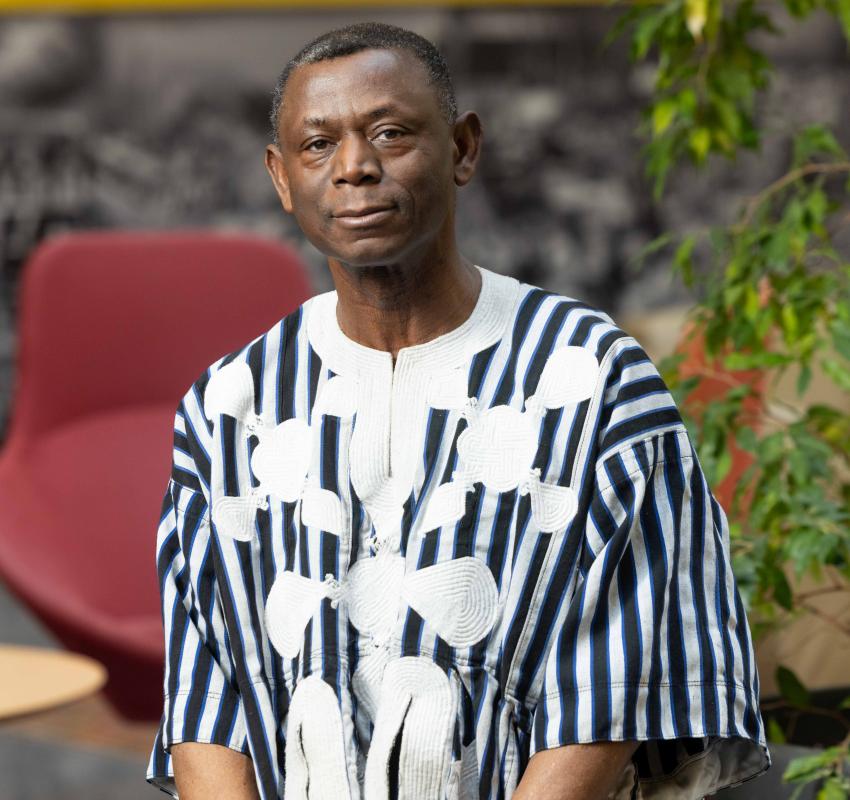
Paschal Kyoore
Paschal Baylon Kyiiripuo Kyoore is a professor of French, African/Caribbean Studies. He specializes in French literature of the 19th and 20th centuries, and Francophone Literatures of Africa and the Caribbean. He teaches a range of courses in French and in English. For courses taught in French, his "Francophone African/Caribbean Literatures & Cultures" course that he introduced many years ago marked the beginning of the French program shifting away from focusing on only France and French culture. Francophone cultures have since been the mainstream of courses offered by the French program, and this has made the program more attractive to students. Prof. Kyoore finds it pedagogically and professionally very enriching to teach about the cultures of francophone communities at all the levels of French courses. Also, he founded the African/African Diaspora Studies program, with the collaboration of colleagues, and also created a course in English.
Prof. Kyoore was the first Director of the African/African Diaspora Studies program. He has also served in other administrative positions such as being a co-chair of the Department of Modern Languages, Literatures & Cultures. One other service he renders to the institution is through his involvement with student organizations such as the Pan-Afrikan Student Organization (PASO). He is often invited to do an African xylophone performance at the annual Africa Night celebration organized by PASO; one of the student organizations event that attracts a large community crowd.
Besides journal articles and reviews, Prof. Kyoore has published three collections of folktales, two in English and one in French, and three critical works. He is currently working on a book on womanhood in Dagara folklore and culture. The Dagara are an ethnic group in Ghana, Burkina Faso, and Ivory Coast. He was a recipient of the Gustavus Faculty Scholarly Achievement award; an acknowledgement of his contributions to scholarship at the international level. Also, he was a finalist for a Fulbright Scholar grant to teach and do research abroad. His research focuses mainly on gender issues, the historical novel, and African folklore.
Our People
Sharon Marquart
Sharon Marquart is a Professor of French and Gender, Women, and Sexuality Studies, and she also serves as Director of the Gender, Women, and Sexuality Studies Program. Dr. Marquart is also affiliated with the Peace, Justice, and Conflict Studies Program, the Latin American, Latinx, and Caribbean Studies Program, and the Comparative Literature Program. At Gustavus, she teaches courses on global French cinema, graphic novels, and literature, as well as topics such as the Holocaust, revolution and rebellion, feminist philosophy, disability, and trauma testimony. In May term, Dr. Marquart teaches a travel course to Paris that centers the stories of marginalized communities in the city. She holds a PhD in French literature and culture from the University of Michigan-Ann Arbor, and she has taught and studied at universities throughout the United States, Canada, and France.
Dr. Marquart’s research is located at the intersection of feminist philosophy and of literary and cultural studies. Her research has been funded by the National Endowment for the Humanities and the Lurcy Foundation, and she frequently collaborates on it with students. She has published extensively on issues of gender and trauma in Nazi camp testimonies and, most recently, on the AIDS crisis in the Caribbean. Dr. Marquart is the author of On the Defensive: Reading the Ethical in Nazi Camp Testimonies (University of Toronto Press, 2015), co-editor (with David Caron of the University of Michigan) of a volume of essays published in France on Auschwitz survivor Charlotte Delbo, and her work has been published in The Routledge Companion to Literature and Trauma, French Forum, H-France Forum, The Romanic Review, Ethnologies, and various essay collections on World War II and the Holocaust. She is completing a book on care that features a chapter co-authored with her former student at Gustavus, Ellie Hartmann. Please contact Dr. Marquart for current student research opportunities related to her work.
Dr. Marquart’s interests outside of the classroom include camping, gardening, photography, all things cats, and travel, especially in the French-speaking world. She is an advocate for students, faculty, and staff of all backgrounds and abilities and welcomes discussion about ways to create more inclusive and just communities on campus and beyond.
Our People
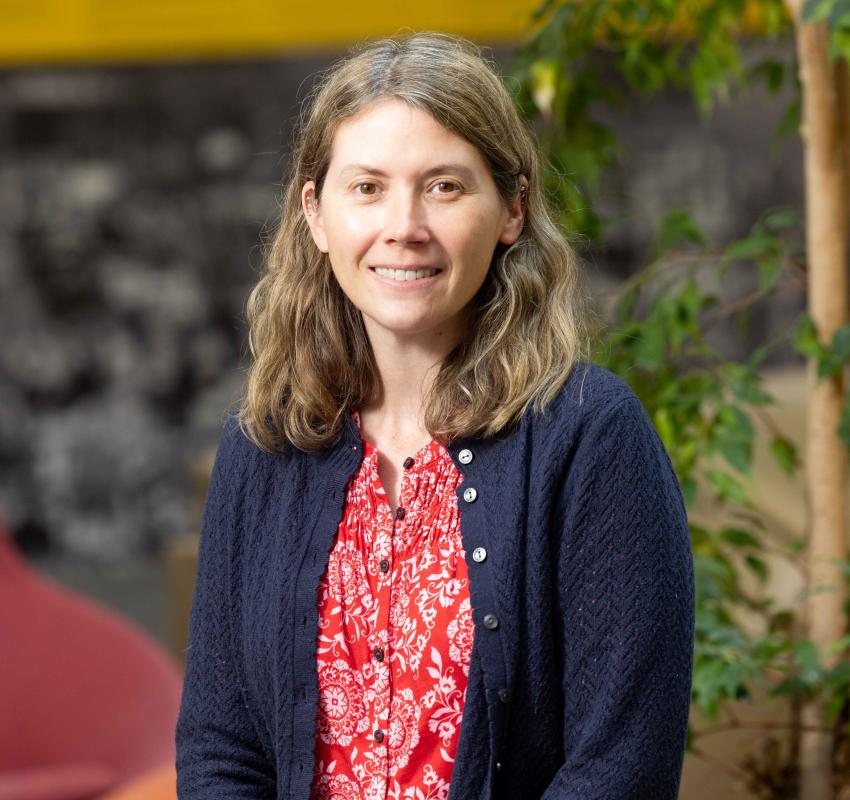
Julie K. Bartley
As a Professor in the Department of Environment, Geography, and Earth Sciences (EGE), Julie K. Bartley teaches courses in the Geology and Environmental Studies programs. With a background in chemistry and geology, Professor Bartley brings an interdisciplinary perspective to the study of the Earth’s past and present. As a teacher, she strives to know her students as individuals and to inspire interest in the Earth’s past and care for its future. She has also held significant leadership roles at Gustavus, including serving as chair of EGE, as the project director for the Inclusive Excellence Project, and as Associate Provost and Dean of Sciences and Education.
Professor Bartley’s expertise lies in interpreting ancient environments, with a particular focus on the Precambrian. Her research explores how microbial communities shaped and were shaped by the environments in which they lived. She and her students study the fossil record and the chemical signatures left by life hundreds of millions or even billions of years ago. At Gustavus, she actively involves students in this discovery process, supervising numerous undergraduate research projects that range from evaluating stromatolites in Minnesota to analyzing the Martian surface signs of habitability.
Students who collaborate with Professor Bartley might conduct fieldwork, perform laboratory analyses, analyze imagery, work with databases, or some combination of these. In the classroom, Professor Bartley teaches a wide array of courses taken by students across campus. Her teaching philosophy is characterized by a commitment to effective and inclusive instruction and a firm belief that every student is equipped to succeed. Whether a geology major, a general education student, or a first-semester Gustie, students can expect to take an active role in class, have many opportunities for hands-on experiences, and be challenged to grow as they learn.
Beyond her teaching and research, Professor Bartley serves Gustavus and the broader scientific community in many ways. She recently served as the Faculty Shepherd for the Nobel Hall of Science renovation and addition project and has co-chaired the Nobel Conference. She is a trained facilitator for two national programs: the ADVANCEGeo Partnership, which aims to improve workplace climate in the geosciences, and the Traveling Workshop Program, whose workshops help strengthen geoscience departments.
As the curator of the Chester Johnson Geology Museum, Professor Bartley regularly shares her passion for geology with K-12 students and the public. Whether leading fossil collecting field trips or presenting to local community organizations, she enjoys helping others see the landscape as a "time machine." Her dedication to service was recently honored with the Gustavus Faculty Service Award.
Outside of her professional life, she has served as the chair of a local charter school board and remains an active member of several professional societies, including the Geological Society of America, the National Association of Geoscience Teachers, and the Association of Women Geoscientists.
Student Organization
Peer Assistants
We are trained student mentors who help Gustavus students with academic challenges, study skills, and adjusting to college life. Our program builds supportive friendships that help students succeed and also helps mentors develop leadership and mentoring skills.
Student Organization
Student Athlete Volunteer Educators
We train student-athletes to become peer educators on topics like alcohol and drug prevention, healthy relationships, mental health awareness, and academic success. Our program empowers student-athletes to be positive role models and contribute to campus wellness.
Student Organization
Genetics Club
We support students who want to become genetic counselors. We provide information about graduate programs, what the job requires, and updates in genetics and genomics. Our club connects students with current professionals and helps prepare them for this specialized healthcare career.
Office
Events - GustieWELL
Join GustieWell and the Peer Assistants plans events like Thrive in 5, Sophomore Stride, 100-Hour Challenge, and Project 21—fun, educational programs that promote wellness.
Major/Minor
Arts Entrepreneurship
The minor in Arts Entrepreneurship provides students with an introduction to the skill set required to effectively create, manage, and promote creative programs and institutions related to the arts. It is a minor is available to all Gustavus students.
Major/Minor
Pre-Veterinary Medicine
In this pre-professional program, you'll receive a strong science foundation in the core classes needed for grad school, plus the freedom to explore a range of elective courses. You'll major in Biology, Chemistry, and/or Biochemistry and Molecular Biology, and be supported by the Office of Health Professions from your first thoughts on becoming a veterinarian through grad school application.
Academic Department
Opportunities - Eastern European and Eurasian Studies
Immerse yourself in the rich cultures, languages, and histories of Eastern Europe and Eurasia through our diverse academic and extracurricular opportunities. Whether you're interested in studying abroad, joining a community of fellow enthusiasts, or accessing valuable language and cultural resources, our program offers a gateway to deeper engagement.