

Our People
Jeff Jenson
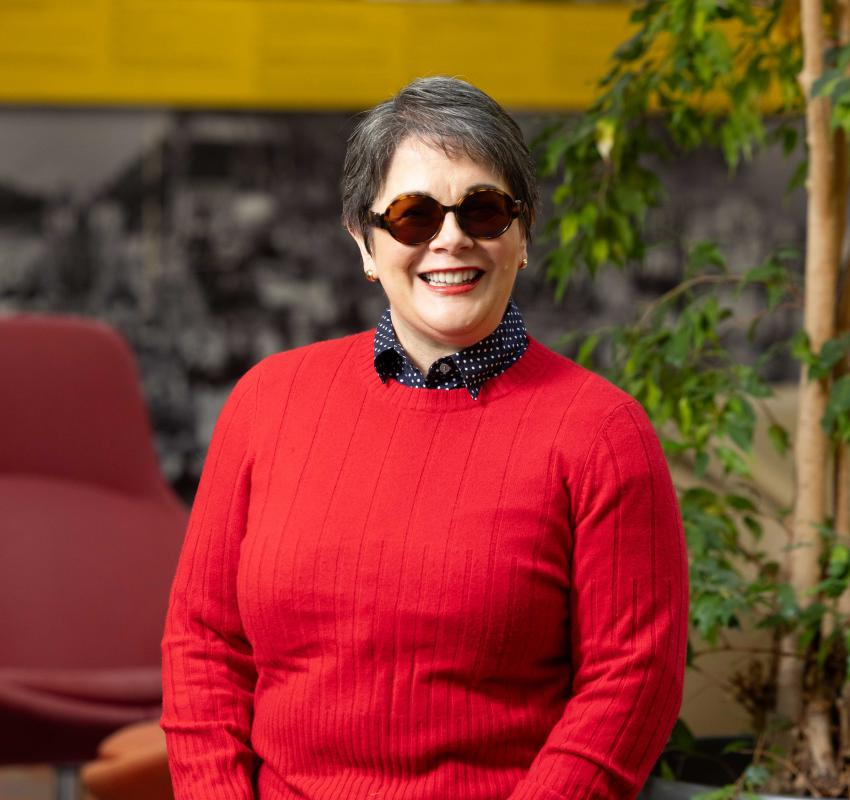
Jeff Jenson joined Gustavus in August 2007, bringing extensive experience in archives development, public service, and education. In his role, he is dedicated to building and strengthening archival collections, improving access to historical materials, and ensuring the long-term preservation of vital records. Deeply committed to public service and education, he works to connect communities with information resources and assists researchers in fostering meaningful engagement with archival materials. He also collaborates closely with faculty and students, developing instructional sessions that promote the effective use of primary sources and research tools in academic settings.
Embracing the diverse nature of the liberal arts tradition, Jenson’s research interests span a wide range of topics, with his most recent publications and presentations exploring the history of timber rattlesnakes in Minnesota. He is an active member of the archival and library communities, presenting or facilitating sessions at the Midwest Archives Conference, Twin Cities Archives Round Table (TCART), Brick & Click Academic Library Conference, and the ACRL Conference. In addition, Jeff serves as a researcher with the DNA Doe Project.
Beyond his professional affiliations, Jenson is heavily involved in institutional leadership at the College. He has served as Chair of the Library and Archives Department and actively contributes to the campus community through his service on numerous faculty committees. His campus involvement has included roles on the Faculty Senate, the Adjudication Board, Third-Year Review Committee, as a Liberal Arts Search Committee Representative for several searches, and as a faculty representative on the Conduct Board.
Our People
Jeff Ford
Dr. Jeff Ford has been a visiting assistant professor of mathematics at Gustavus since 2016. He has taught almost every mathematics course offered at Gustavus. His research is in topology, dynamical systems, and mathematics education. Dr. Ford has supervised three honors theses, two interdisciplinary research projects, and six independent studies. He has co-authored two books in dynamical systems and one in linear algebra. He is committed to providing open access educational materials to students and encouraging teachers to use active and inclusive pedagogy. To that end, he has presented more than 20 times at conferences on active learning and alternative grading.
Our People
Mary McHugh
Mary R. McHugh is a Professor in the Department of Greek, Latin, and Classical Studies. She is a social historian whose wide-ranging scholarship encompasses political history, intellectual and cultural cross-pollination, and the history of food production and culture. A recently published chapter examines how Plato’s Timaeus shaped conceptions of time and cosmology within the intellectual milieu of Western Greece. McHugh argues that its call for cosmological models influenced a tradition of mathematical and mechanical innovation, from Archimedes’ devices to medieval and Renaissance astronomical clocks.
McHugh is adept at pursuing leads and situating the particular within its broader context. She has taught courses at all levels of Greek and Latin to those spanning Near Eastern and Greco-Roman history to Chinese and Islamic cultural exchanges with the West. She also teaches courses in art and archaeology, bringing her expertise in material culture directly into her research.
Our People
Nicolas Darcourt
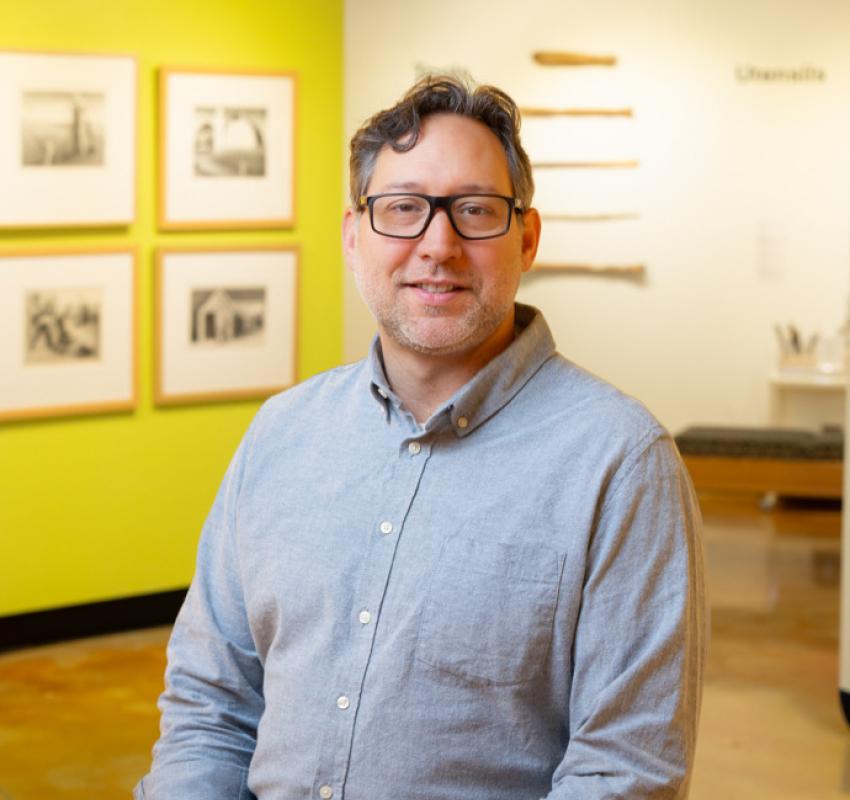
Nicolas teaches beginning and intermediate levels ceramics courses as well as sculptural foundations and design. Other responsibilities include managing the Studios and Department Programs. He was a two-year Resident Artist at the Archie Bray Foundation. He has exhibited regionally and nationally in small group and solo exhibitions at venues including Minnetonka Center for the Arts, Carnegie Art Center, Phipps Center for the Arts, Modlin Center for the Arts, and Mulvane Art Museum. Nicolas has recently received a McKnight Artist Fellowship and a Minnesota State Arts Board, Artist Initiative Grant.
Nicolas uses clay and press-molded multiples to build sculptural accumulations which investigate the confluence of society, geography, and memory. Regarding clay and the ceramic process, he reflects “…a material which is both intimately connected to our humanity and can be made to take any form, a companion to society, I feel it owns a historicity like almost no other.”
Our People
John Hake
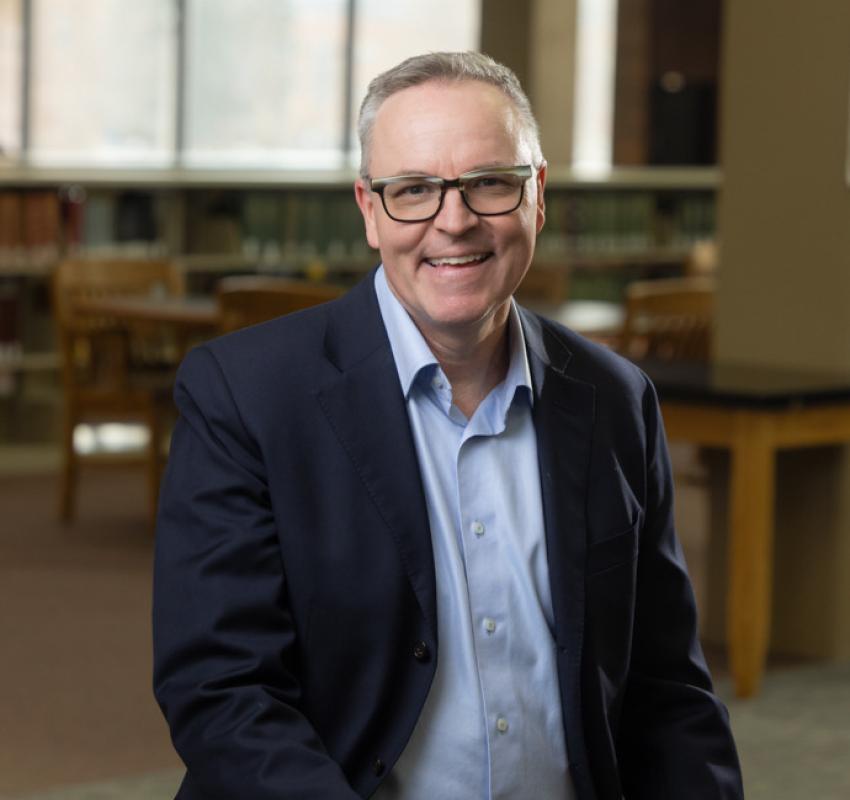
Jay Hake is a faculty member in the Business and Economics Department, where he teaches Business Law, Conflict Management, Entrepreneurship, and Social Entrepreneurship. Jay brings an integrated perspective to his faculty role: that of a licensed attorney, seasoned executive, and entrepreneur who has built companies, closed venture financings, and advised startup founders navigating the full arc of early-stage growth.
Jay's teaching philosophy centers on experiential, student-led inquiry. He believes that rigorous frameworks become meaningful only when students apply them to real decisions, and his courses are designed to support this approach, incorporating active discussion, case-based reasoning, and real world application. Whether working through contract disputes, conflict resolution scenarios, or the design of ventures built to generate both economic and social value, his students engage with material that mirrors the complexity of professional life.
Jay’s professional background spans roles as Chief Executive Officer, Chief Operating Officer, and General Counsel across technology, software, and consumer products companies. He has structured equity financings, negotiated complex commercial agreements, managed board and investor relations, and guided organizations through periods of rapid scaling. That operational and legal experience informs his approach to teaching at every stage: from identifying opportunity and building teams, to navigating the legal, ethical, and strategic challenges that define a business’s trajectory.
In addition to his work at Gustavus, Jay leads a boutique consulting firm, serving executives and startup leaders on strategic planning, leadership development, and organizational growth.
Outside of the classroom, Jay is an avid fly fisherman, hiker, lover of the outdoors, and a reader.
Our People
Maria Isabel Kalbermatten
Maria Kalbermatten is a scholar and educator in Hispanic Studies. She teaches courses in Spanish language, culture, and linguistics. Her work centers on the study of humor in discourse, with a particular focus on verbal irony, political humor, and the ways humor operates in contexts of power, ideology, and social interaction. Drawing on approaches from pragmatics, discourse analysis, and critical literacy, her research examines how humor functions not only as entertainment but also as a tool for critique, affiliation, and meaning-making in everyday communication.
Her scholarship includes analyses of spontaneous conversations and media texts, exploring how speakers use irony and humor to negotiate relationships, express stance, and challenge dominant narratives. She has a particular interest in humor in Spanish-speaking contexts, including Latin America, and her recent work engages with questions of political discourse, manipulation, and the role of humor in shaping public opinion. Her research has been presented at national and international conferences and contributes to ongoing interdisciplinary conversations about language, culture, and society.
Kalbermatten is deeply committed to student-centered teaching and to creating an engaging, inclusive classroom environment. Her teaching philosophy emphasizes active learning, critical thinking, and the development of interpretive skills that allow students to analyze language and culture in meaningful ways. She frequently integrates her research into her courses, designing classes that invite students to explore authentic materials such as political cartoons, media discourse, and everyday interactions. In courses like Political Humor and Manipulation, she applies a critical literacy framework to help students examine how humor can both reinforce and challenge systems of power.
Kalbermatten teaches across the Spanish curriculum, from introductory language courses to advanced content courses, and contributes to interdisciplinary programs that engage with global perspectives, media, and cultural studies. She values mentoring students at all levels and enjoys supporting them in developing linguistic proficiency alongside cultural awareness and analytical skills.
In addition to her teaching and research, Kalbermatten is actively involved in service at the College and within the broader academic community. She contributes to curriculum development, participates in collaborative initiatives, and engages in professional activities that connect her work to wider scholarly and educational networks.
One of her favorite aspects of teaching at Gustavus is the opportunity to work closely with students in a liberal arts setting, where discussion, curiosity, and intellectual exploration are central. She values the strong sense of community on campus and the ways in which students bring diverse perspectives into the classroom.
Outside of her academic work, Kalbermatten enjoys creative and cultural activities that complement her scholarly interests, including drawing, exploring global cuisines, and engaging with music and the arts. These interests often inform her teaching and contribute to the dynamic, culturally rich learning experiences she fosters in her courses.
Our People
Kathy Lund Dean
Kathy Lund Dean holds the Board of Trustees Distinguished Chair in Leadership and Ethics, a position uniquely designed to engage external stakeholders with students, faculty, and program opportunities. This role supports three main strategic focus areas:
- Increase Gustavus’ national and international footprint through scholarship and high profile recognitions
- Increase and broaden career readiness through alumni engagement
- Increase and deepen opportunities for experiential learning for students across campus
Kathy explores experiential education’s impacts on students, learning outcomes, and teaching practice, especially links between student mental health and experiential learning. In managerial practice, she examines remote work and why managers and executives resist remote work so strongly. Last, her partnership with the City of St. Peter and City Council allows her research insights into how municipal leaders prioritize very different constituent issues and resolve serious conflict.
Her scholarship encompasses more than 100 journal articles, book chapters, and books. Books include “The Ethical Professor: A Practical Guide to Research, Teaching and Professional Life” (published both in English and Chinese); "Course Design and Assessment" (2022, Edward Elgar) and "How to Become an Effective Journal Editor in Business and Management A Guide to Developing Authors" (2024, Edward Elgar).
Getting Gustavus' brand recognized outside the United States is a key focus. She won a Fulbright Specialist role to assist institutions under-represented in academic scholarship, an editorial role she will be continuing with the Journal of Management Inquiry. She has worked with business school colleagues at Rikkyo University supported by a Fulbright award, creating an exchange agreement between Rikkyo College of Business and Gustavus. Kathy holds joint appointments at the University of Canterbury, New Zealand, and University of St. Andrews in Scotland.
Kathy is passionate about engaging students in learning about investing and markets. She advises student members on the Board of Trustees Investment Committee as well as the E. Terry Skone Investment Club on campus, where students work with large endowments and portfolios and make important decisions. The Skone Club won a Magnuson Leadership & Service Award for its long-term positive impact on learning, outreach, and philanthropy, donating more than $135,000 in scholarship money back to the College.
Her conflict resolution practice takes many forms. As a certified mediator, a Minnesota Rule 114 qualified neutral, and faculty Ombuds, she helps others talk through and resolve complex issues from an impartial and non-judgmental perspective. At the Academy of Management, Kathy supports ethical practice and manages difficult situations as a member of the Ethics Adjudication Committee and the Ethics Education Committee.
She is a Chicago native and has lived in seven U.S. states and two countries. Prior to joining the Gustavus faculty, Kathy was Professor of Management at Idaho State University for ten years.
Our People
John Volin
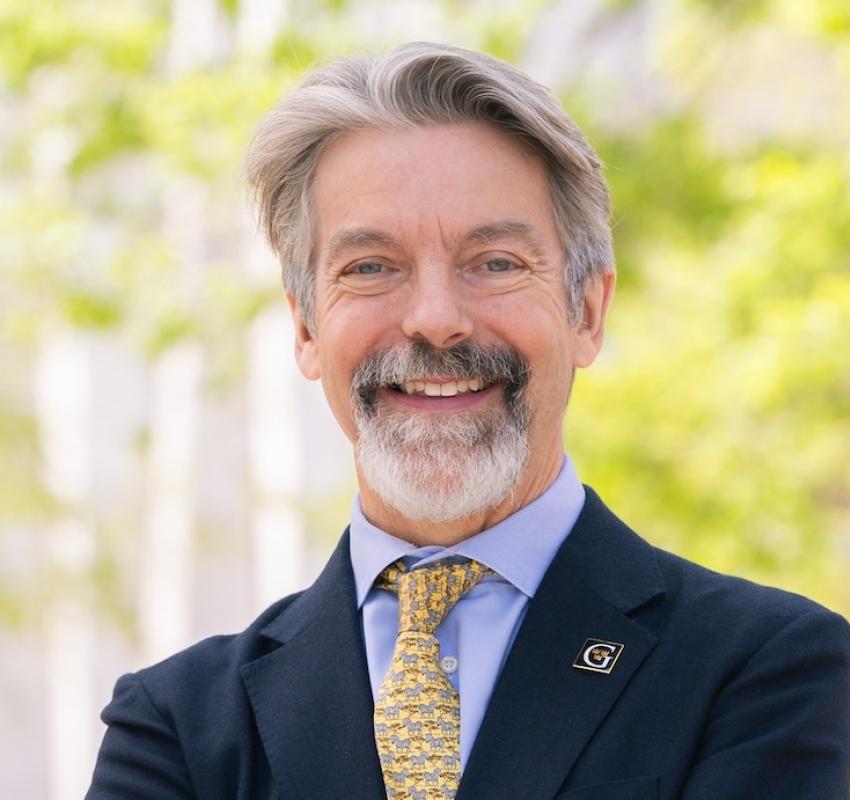
John C. Volin, PhD serves as the 18th President of Gustavus.
Following a postdoctoral fellowship in plant physiological ecology at the University of Wisconsin-Madison, Volin accepted a faculty position at Florida Atlantic University, where he rose to the rank of full professor in the Department of Biological Sciences and served as the director of the Environmental Sciences graduate program. Volin joined the University of Connecticut in 2007 to head the Department of Natural Resources and the Environment, advancing to serve as Vice Provost of Academic Affairs. From 2020-2025, Volin served as the Executive Vice President for Academic Affairs and Provost at the University of Maine, where his portfolio included oversight of more than 1,000 faculty and staff and a budget of over $250 million. Volin is recognized as a national leader in using evidence-based practices to support holistic student wellbeing. He serves on the Executive Committee of the LearningWell Coalition and is a co-founder and senior advisor of LearningWell magazine.
Born and raised in Sioux Falls, South Dakota, Volin holds a BS in botany and biology and an MS in agronomy from the South Dakota State University, and a PhD in forestry from the University of Wisconsin-Madison. Volin and his wife, Valeria, have five children and six grandchildren.
Our People
Tara Cadenhead
Tara Cadenhead serves as the Instructor of the Practice in Entrepreneurship and Innovation, where she is also the Director of the Center for Innovative & Entrepreneurial Leadership (CIEL). A Gustavus alumna herself, Tara brings a unique blend of high-level corporate strategy and "maker" entrepreneurship to the Hill, providing students with a practical roadmap for turning creative ideas into sustainable ventures.
Tara’s teaching is informed by nearly two decades of leadership in the corporate sector. During her tenure at FICO, a leading provider of analytics and CRM software, she led talent management and organizational change initiatives, specializing in aligning human capital with strategic business goals. Later, at Target Corporation, she served as a key advisor to Supply Chain leadership, and then played a strategic communication and change leadership role in launching a new enterprise-wide talent system and related processes for a workforce of more than 70,000 users.
In addition to her corporate background, Tara is the founder of Marquess Studios, a creative venture based in Stillwater, Minnesota, that emphasizes intentional design and community-focused commerce. Experience as a small business owner allows her to mentor students with authentic insights into brand storytelling, lean product development, and the resilience required to launch a startup.
In the classroom, Tara emphasizes experiential learning and vocational discovery. She views entrepreneurship as a multidisciplinary mindset relevant to every major, from the fine arts to the hard sciences. Her courses function as laboratories where students are encouraged to iterate, take calculated risks, and solve complex problems through "failing forward."
As the Director of CIEL, Tara spearheads initiatives that foster a culture of innovation across the entire campus. She oversees the Gustie Cup, the college’s premier entrepreneurship competition which offers significant seed money prizes across "Scalable" and "Sustainable" categories. In this role, she mentors student founders through intensive Start-Up Labs and 1:1 consulting sessions, while engaging alumni and industry experts to enhance the viability of students' plans. Gustie Cup winners have advanced as semi-finalists in the statewide Minnesota Cup. Her service extends to the regional entrepreneurial ecosystem, where she builds bridges between Gustavus and Minnesota’s business leaders, alumni mentors, and economic organizations, and recently represented Gustavus on an International Economic Development trip to Ireland.
Outside of her work at the College, Tara is deeply committed to community-driven service and regional development. She is most interested in exploring public-private partnerships to maximize social and economic impact. Tara is a founding Board member for Connect Lake Elmo, where she helps guide initiatives that enhance local connectivity and economic vitality. Her dedication to service is further highlighted by her previous involvement with Rotary International, various non-profit organizations, and was recently nominated as "Volunteer of the Year" by the Stillwater Area Chamber of Commerce. When not mentoring the next generation of innovators and entrepreneurs, she enjoys traveling, cooking, gardening, and spending time with her family.