

Our People
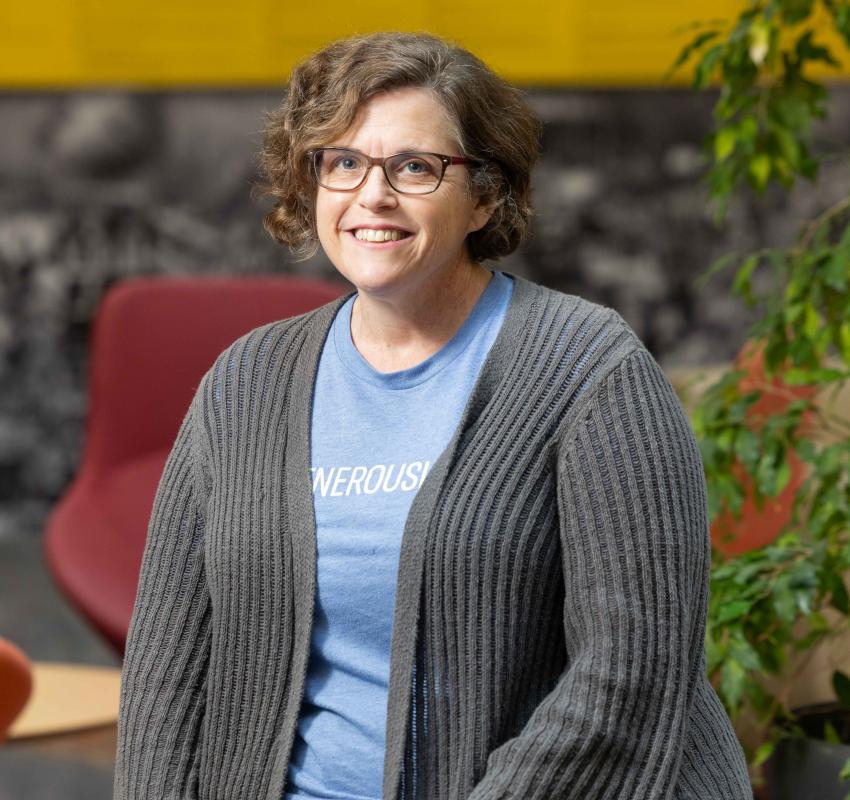
Rebecca Fremo
Rebecca Taylor Fremo (Professor of English) earned her Ph.D. in Rhetoric and Composition at Ohio State University after completing her BA and MA in English at Virginia Tech. In the nearly three decades she’s spent at Gustavus, she’s served as English department chair, English co-chair, Director of Writing Across the Curriculum, and Director of the Writing Center. But Fremo’s real passion is teaching writing, and she’s been awarded the Edgar M. Carlson Award and the Swenson and Bunn Award for this work. Fremo likes nothing better than rolling up her sleeves and sitting side by side with student writers as they work through the challenges of sharing their stories. Fremo has published a variety of scholarly essays about teaching writing, but she’s most excited about her work as a creative writer. She recently completed a memoir titled Controlled Burn, which applies her observations as a gardener to her experiences raising three neurodivergent sons. Her poems and essays appear in journals including Mud Season Review, Mankato Magazine, Full Grown People, Paper Darts, and Water~Stone Review. She is also the author of one collection of poetry, Moving This Body, and a chapbook of poems titled Chasing Northern Lights. When she’s not at work, she’s probably in her garden or daydreaming about her next visit to the North Shore. She’s originally from Richmond, Virginia and still dreads the Minnesota winters–but the summers are worth it!
Our People
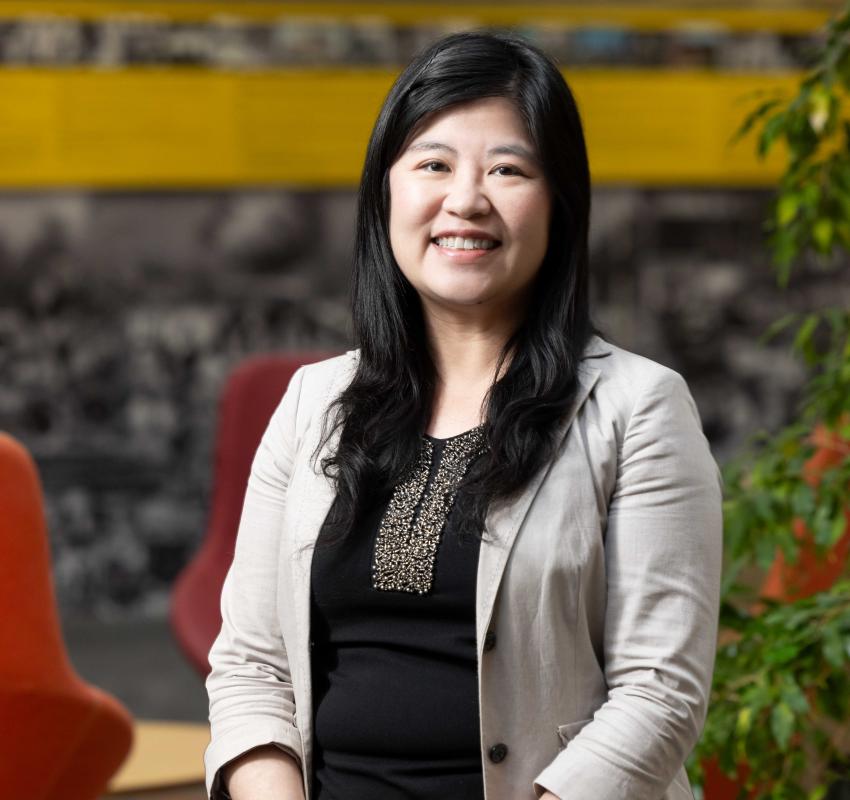
Shu-Ling Wang
Dr. Shu-Ling Wang is an associate professor of Economics. She joined Gustavus in 2016 after a two-year appointment at The College of Wooster. Her teaching interests include Intermediate Macroeconomics, Money and Banking, International Finance, Public Finance, and Principles of Economics. As an active instructor in an interactive and interdisciplinary liberal arts environment, she enjoys developing and experimenting with innovative pedagogies to enrich students’ learning experiences. She also values mentoring undergraduate research that fosters critical and independent thinking. At Wooster, she advised several year-long senior independent studies, and at Gustavus, she offers writing-in-the-discipline courses in economics and mentors class-based research projects. In October 2023, her Money and Banking students’ paper titled “The Asian Crisis of 1997” won third place in the Economic Communication category of the Minnesota Economic Association (MEA) Undergraduate Paper Contest. In 2025, Dr. Wang served as a faculty panelist at the MAYDAY! Peace Conference at Gustavus, participating in the teach-in model addressing issues of peace, human rights, and social justice. More recently, she served on the Nobel Conference '63 Planning Committee (theme: AI and Human Agency).
Dr. Wang’s research focuses on Macroeconomics, Monetary Economics, and International Finance. She studies fiscal and monetary policy issues—such as fiscal stimulus, public debt, tax policy, income distributional effects, and monetary policy, using dynamic stochastic general equilibrium (DSGE) models with representative or heterogeneous agents. Her papers have been published in the Journal of Macroeconomics, Review of International Economics, and Economic Modelling. She received the Mansergh Faculty Scientific Research Award at Gustavus in both 2022 and 2025. Her recent project examines the debt-financed stimulus effects in a high-debt economy without monetary independence, considering different schemes and speeds of debt adjustment in a two-sector New Keynesian model. Future projects will examine the redistribution effects between savers and hand-to-mouth agents of debt-financing policies. She regularly presents her work at the The Midwest Economics Association, Canadian Economics Association, Western Economics Association, and Liberal Arts Macroeconomics conferences.
In addition to her research, Dr. Wang actively contributes to professional service. She serves as a reviewer for the Journal of Macroeconomics, Economic Modelling, Contemporary Economic Policy, Cambridge University Press, and the Bulletin of Economic Research. She has also served on the steering and program committees for the Liberal Arts Macroeconomics Conference and was a member of the Board of the Minnesota Economic Association. In 2025 she served as a mentor and a panelist for junior women economists at the CeMENT workshop sponsored by the AEA at the Federal Reserve Bank of Chicago.
Beyond academia, Dr. Wang is a mother of three children. She enjoys architecture, art, photography, and music. Her favorite architects include Frank Lloyd Wright, Louis Sullivan, and Zaha Hadid. She is also inspired by the works of Georgia O’Keeffe, Edward Hopper, and Claude Monet. A musician herself, she plays the piano, violin, and pipa (a Chinese lute). Her favorite composer is Johann Sebastian Bach of the Baroque period.
Our People
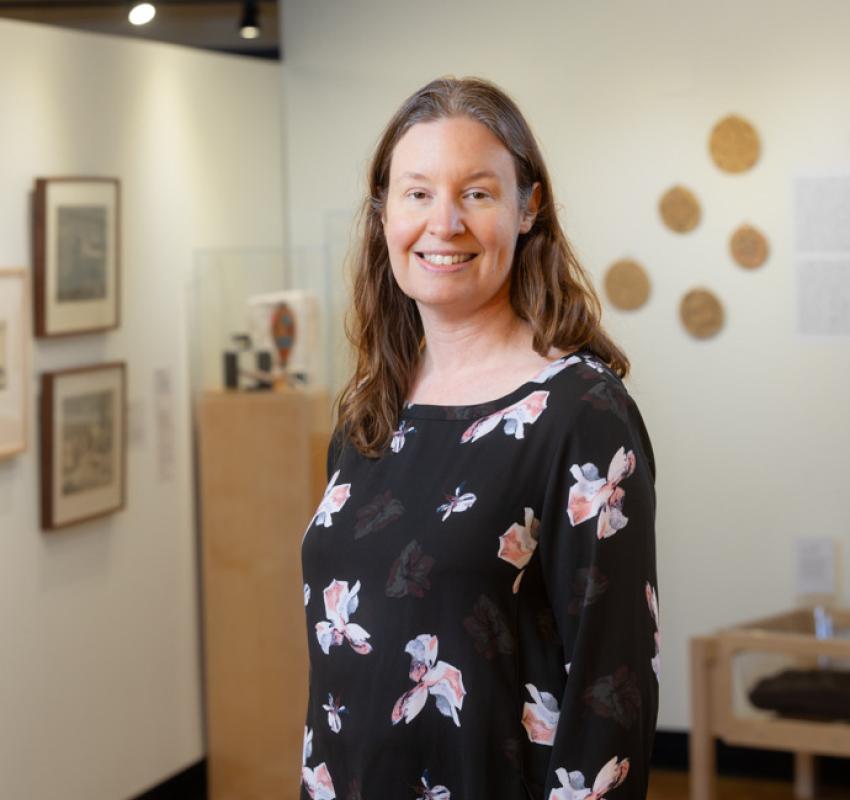
Laura Burrack
Laura Burrack is a Professor of Biology. Her area of expertise is in microbiology and molecular genetics. Professor Burrack has an active research program at Gustavus with undergraduates that focuses on better understanding how fungal pathogens, such as Candida albicans, an organism that causes infections in humans like thrush and candidemia, evolve resistance and tolerance to antifungal drugs.
Professor Burrack has contributed to eighteen peer-reviewed scientific papers and has co-authored multiple research papers with Gustavus students. She recently won the Janet Anderson Award from the Midstates Consortium for Math and Sciences for her work mentoring students in undergraduate research.
She teaches classes in the Biology department such as Cellular and Molecular Biology, Microbiology, and Cancer Biology. She was the Program Director for the Challenge Seminar Program from 2022—2025 and is currently the Chair of the Biology Department.
When not in the classroom or the lab, Professor Burrack enjoys experimenting in the kitchen with cooking and baking.
Our People
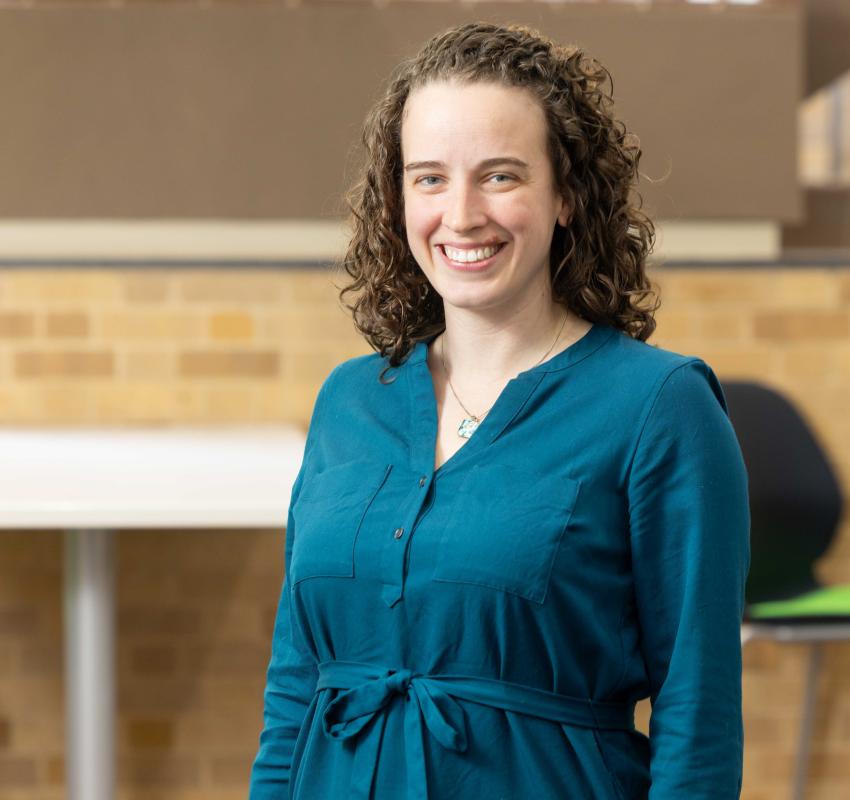
Matthew Panciera
Matt Panciera is an associate professor of Greek, Latin, and Classical Studies. He truly enjoys teaching the languages - all levels of Greek and Latin - in addition to a wide range of classical studies courses; everything from Greek tragedy to Roman history. His research focuses on the incredible treasure trove of information found in the Pompeian graffiti scratched into the walls of the ancient city by its beautifully ordinary inhabitants before it was buried under the eruption of Mount Vesuvius. He is extremely grateful to have been awarded on three occasions a NEH Summer Seminar for K-12 teachers where they, together with a team of distinguished scholars, explored the topic of of Roman daily life as seen in the Roman novelist Petronius and the archaeological and epigraphical remains of Pompeii. He has also worked on Roman funerary inscriptions including the epitaph of the unforgettable freedwoman, Allia Potestas.
Matt feels fortunate to have been hired on four different occasions by the Intercollegiate Center for Classical Studies in Rome and he is a passionate advocate for teaching and learning on site. He always finds himself experiencing ideas, making connections, and asking questions that would never occur to him without the inspiration of standing in the place where the ancient Greeks and Romans once lived their lives. He is happy to teach a class where the students "nerd out" and dive deep into the Greeks and Romans for their own sake. But ultimately he believes, both for himself and his students, the greatest benefit of spending time with the Greeks and Romans is how much we learn about ourselves and what we want to make of our own world.
If pressed, on most days he would say his favorite classical authors to read in the original language are Homer and Ovid. He recognizes the beauty of Greek and the genius of so much that came to fruition in Athens in the 5th century BCE—the histories of Herodotus and Thucydides, the birth of western philosophy, tragedy (Sophocles is his favorite)—but he is more at home in Latin and loves the way that reading Petronius and Pompeian graffiti feels like looking through a window directly at the ancient Romans. His favorite classical building is the Pantheon in Rome and his favorite site is Segesta in Sicily.
Outside of work he loves to cook for his family, visit the Boundary Waters, root for all the Boston teams (but also the Vikings), play golf, and exercise.
Our People
Janie Frandsen
Dr. Janie Frandsen is the Arthur Glass, Charles Hamrum, and Arne Langsjoen Endowed Professor of Biochemistry. Holding a joint appointment in the departments of Biology and Chemistry, she teaches and advises students in the interdisciplinary Biochemistry and Molecular Biology (BMB) program. In her courses, students explore the intersection of the biological and chemical worlds while developing a scientific mindset, essential skills for careers in research or medicine. More importantly, within a liberal arts context, she guides students to become sophisticated thinkers, problem-solvers, and communicators who possess a deep sense of identity, meaning, and purpose — skills that prepare them for lives of leadership and service, no matter what their future holds.
Dr. Frandsen’s research focuses on studying the structure-function relationship of non-coding regulatory RNAs in bacteria, such as riboswitches and small RNAs. Using Escherichia coli as a model organism, her lab combines computational, biochemical, and genetic techniques to understand these molecular mechanisms, with the long-term goal of aiding the development of novel antibiotics to combat antibiotic resistance. Undergraduate researchers engage in high-impact, hands-on discovery, executing experiments ranging from cell culture-based reporter assays to in vitro binding assays with transcribed RNAs and purified proteins. Dr. Frandsen and her students routinely present their work on and off campus and seek support through internal and external grants.
In the classroom, Dr. Frandsen creates structured, inclusive spaces where every student can thrive. Recognizing that students enter college with unique paths and positionalities, she pairs high expectations with robust, equitable support frameworks. To shift focus from stressful numeric grades to deep, formative learning, she implements innovative alternative grading practices, including “ungrading” and contract grading, in her courses. Whether analyzing real-world case studies, developing a growth mindset, or exploring vocation, students are challenged to see themselves as fully capable scientists and multifaceted humans.
Dr. Frandsen’s dedication to excellence extends to her service and leadership on campus. Notably, she has collaborated with her BMB colleagues to complete a comprehensive program review and secure accreditation from the American Society for Biochemistry and Molecular Biology (ASBMB) for the Gustavus BMB program. This prestigious distinction ensures that Gustavus BMB majors graduate from a program validated at the highest national level, opening doors to future careers in academic research, scientific industries, and health professions.
Outside of the classroom and laboratory, Dr. Frandsen claims the title of adventurer. Her adventures range from the local, such as exploring regional hiking trails with her dog, trying out new recipes, or learning a new fiber art, to the momentous, including international hiking trips and family trips to America’s National Parks.
Our People
Elizabeth Kubek
Elizabeth Kubek is a Professor of English, specializing in Literary Theory; Interdisciplinary and Gender Studies; Medical Humanities; and new/emerging media, including the early novel and graphic narrative (comics). While attending the University of Rochester she was the inaugural Susan B. Anthony Fellow for Women’s Studies. Originally tenured at Benedictine University, in 2019 she was hired to serve at Gustavus as Associate Provost, Dean of Arts and Humanities, and Director of General Education, also with tenure. With two decades of experience in academic administration, she serves as Faculty Director for Student Academic Success and Director of Summer Term. Dr. Kubek is also a founding member of the President’s Council on Indigenous Relations, and serves as an ombudsman and a Kendall Center AI Fellow.
Dr. Kubek holds multiple certifications in accessible and inclusive course design, with significant experience in online and hybrid course design and delivery, including for non-traditional student populations. Her teaching, advising, and scholarship all revolve around literacy and education as empowerment, with a focus on underrepresented groups, from contemporary non-traditional and non-neurotypical learners in the liberal arts classroom to early modern women writers discovering cities as sites of professional growth and self-invention.
Recent presentations include sessions for The Grading Conference on asset-based, student-centered assignment design, and on fostering “AI resistance” through intrinsic motivation. Another recent conference paper, for the Pacific and Modern Literature Association, examined the theory that graphic narratives foster empathy by activating non-verbal brain systems involved in facial recognition and emotional “sense making.” Her current writing project, tentatively entitled Paramours, focuses on parasocial relationships and the function of verbal narrative as emotional “training,” from early modern romantic fictions to chatbot/human interactions. This research is also the basis for her AI/Human Relations Challenge Seminar (Spring 2027).
When not teaching she enjoys reading romance novels, watching classic and contemporary films with her family, and disappearing down Reddit rabbit holes.
Our People
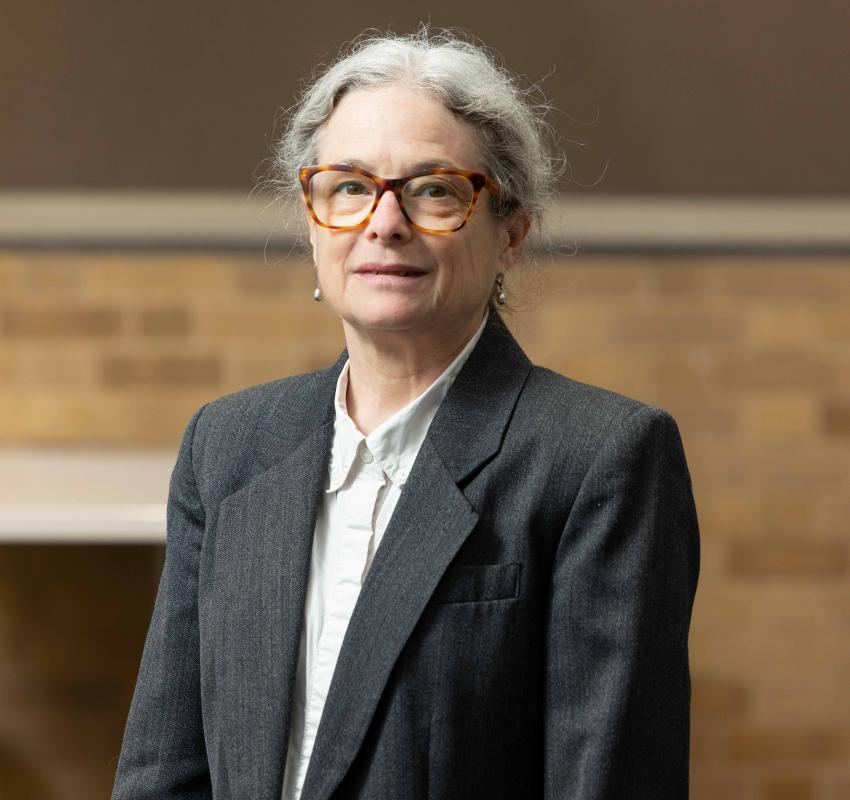
Kathy Lund Dean
Kathy Lund Dean holds the Board of Trustees Distinguished Chair in Leadership and Ethics, a position uniquely designed to engage external stakeholders with students, faculty, and program opportunities. This role supports three main strategic focus areas:
- Increase Gustavus’ national and international footprint through scholarship and high profile recognitions
- Increase and broaden career readiness through alumni engagement
- Increase and deepen opportunities for experiential learning for students across campus
Kathy explores experiential education’s impacts on students, learning outcomes, and teaching practice, especially links between student mental health and experiential learning. In managerial practice, she examines remote work and why managers and executives resist remote work so strongly. Last, her partnership with the City of St. Peter and City Council allows her research insights into how municipal leaders prioritize very different constituent issues and resolve serious conflict.
Her scholarship encompasses more than 100 journal articles, book chapters, and books. Books include “The Ethical Professor: A Practical Guide to Research, Teaching and Professional Life” (published both in English and Chinese); "Course Design and Assessment" (2022, Edward Elgar) and "How to Become an Effective Journal Editor in Business and Management A Guide to Developing Authors" (2024, Edward Elgar).
Getting Gustavus' brand recognized outside the United States is a key focus. She won a Fulbright Specialist role to assist institutions under-represented in academic scholarship, an editorial role she will be continuing with the Journal of Management Inquiry. She has worked with business school colleagues at Rikkyo University supported by a Fulbright award, creating an exchange agreement between Rikkyo College of Business and Gustavus. Kathy holds joint appointments at the University of Canterbury, New Zealand, and University of St. Andrews in Scotland.
Kathy is passionate about engaging students in learning about investing and markets. She advises student members on the Board of Trustees Investment Committee as well as the E. Terry Skone Investment Club on campus, where students work with large endowments and portfolios and make important decisions. The Skone Club won a Magnuson Leadership & Service Award for its long-term positive impact on learning, outreach, and philanthropy, donating more than $135,000 in scholarship money back to the College.
Her conflict resolution practice takes many forms. As a certified mediator, a Minnesota Rule 114 qualified neutral, and faculty Ombuds, she helps others talk through and resolve complex issues from an impartial and non-judgmental perspective. At the Academy of Management, Kathy supports ethical practice and manages difficult situations as a member of the Ethics Adjudication Committee and the Ethics Education Committee.
She is a Chicago native and has lived in seven U.S. states and two countries. Prior to joining the Gustavus faculty, Kathy was Professor of Management at Idaho State University for ten years.
Our People
Karl Larson
Karl Larson, PhD, MCHES, is a Professor of Public Health and is dually appointed to the Master’s in Athletic Training program. Dr. Larson has lead the effort to build a presence for public health on the Gustavus campus and has served as the Program Director for the interdisciplinary program in public health since the program’s inception in 2018. Since his arrival at Gustavus in 2005, he has taught more than 20 different courses focusing on individual and population health including offerings such as stress management, sexuality, tai chi, youth coaching, as well as courses in public health programming, global health, behavioral theory, and epidemiology. Dr. Larson has served the campus community on numerous health related efforts and programs.
Professionally, Dr. Larson is nationally recognized as the “case study guy,” after designing and leading the National Case Study Competition in Health Education (NCSCHE), a role he has served in since 2006. He also has served as the president of the Minnesota Society for Public Health Education from 2015-2018, and has been the recipient of the Karen Denard Goldman Mentor Award (SOPHE), the Dean’s Distinguished Lecturer (New York Medical College), and has received the W.E Schaller Presidential Citation from Eta Sigma Gamma for his professional development work with college students. He is the author of four books including Consumer Health and Integrative Medicine and The Truth About Violence.
Our People
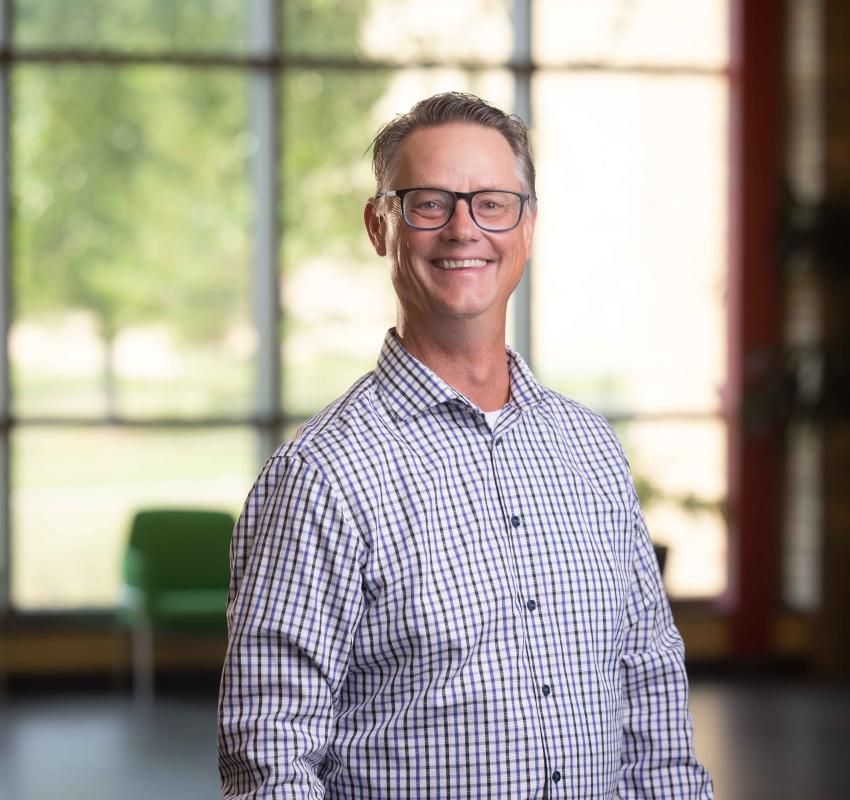
John Volin
John C. Volin, PhD serves as the 18th President of Gustavus.
Following a postdoctoral fellowship in plant physiological ecology at the University of Wisconsin-Madison, Volin accepted a faculty position at Florida Atlantic University, where he rose to the rank of full professor in the Department of Biological Sciences and served as the director of the Environmental Sciences graduate program. Volin joined the University of Connecticut in 2007 to head the Department of Natural Resources and the Environment, advancing to serve as Vice Provost of Academic Affairs. From 2020-2025, Volin served as the Executive Vice President for Academic Affairs and Provost at the University of Maine, where his portfolio included oversight of more than 1,000 faculty and staff and a budget of over $250 million. Volin is recognized as a national leader in using evidence-based practices to support holistic student wellbeing. He serves on the Executive Committee of the LearningWell Coalition and is a co-founder and senior advisor of LearningWell magazine.
Born and raised in Sioux Falls, South Dakota, Volin holds a BS in botany and biology and an MS in agronomy from the South Dakota State University, and a PhD in forestry from the University of Wisconsin-Madison. Volin and his wife, Valeria, have five children and six grandchildren.
Our People
Tara Cadenhead
Tara Cadenhead serves as the Instructor of the Practice in Entrepreneurship and Innovation, where she is also the Director of the Center for Innovative & Entrepreneurial Leadership (CIEL). A Gustavus alumna herself, Tara brings a unique blend of high-level corporate strategy and "maker" entrepreneurship to the Hill, providing students with a practical roadmap for turning creative ideas into sustainable ventures.
Tara’s teaching is informed by nearly two decades of leadership in the corporate sector. During her tenure at FICO, a leading provider of analytics and CRM software, she led talent management and organizational change initiatives, specializing in aligning human capital with strategic business goals. Later, at Target Corporation, she served as a key advisor to Supply Chain leadership, and then played a strategic communication and change leadership role in launching a new enterprise-wide talent system and related processes for a workforce of more than 70,000 users.
In addition to her corporate background, Tara is the founder of Marquess Studios, a creative venture based in Stillwater, Minnesota, that emphasizes intentional design and community-focused commerce. Experience as a small business owner allows her to mentor students with authentic insights into brand storytelling, lean product development, and the resilience required to launch a startup.
In the classroom, Tara emphasizes experiential learning and vocational discovery. She views entrepreneurship as a multidisciplinary mindset relevant to every major, from the fine arts to the hard sciences. Her courses function as laboratories where students are encouraged to iterate, take calculated risks, and solve complex problems through "failing forward."
As the Director of CIEL, Tara spearheads initiatives that foster a culture of innovation across the entire campus. She oversees the Gustie Cup, the college’s premier entrepreneurship competition which offers significant seed money prizes across "Scalable" and "Sustainable" categories. In this role, she mentors student founders through intensive Start-Up Labs and 1:1 consulting sessions, while engaging alumni and industry experts to enhance the viability of students' plans. Gustie Cup winners have advanced as semi-finalists in the statewide Minnesota Cup. Her service extends to the regional entrepreneurial ecosystem, where she builds bridges between Gustavus and Minnesota’s business leaders, alumni mentors, and economic organizations, and recently represented Gustavus on an International Economic Development trip to Ireland.
Outside of her work at the College, Tara is deeply committed to community-driven service and regional development. She is most interested in exploring public-private partnerships to maximize social and economic impact. Tara is a founding Board member for Connect Lake Elmo, where she helps guide initiatives that enhance local connectivity and economic vitality. Her dedication to service is further highlighted by her previous involvement with Rotary International, various non-profit organizations, and was recently nominated as "Volunteer of the Year" by the Stillwater Area Chamber of Commerce. When not mentoring the next generation of innovators and entrepreneurs, she enjoys traveling, cooking, gardening, and spending time with her family.