Our People
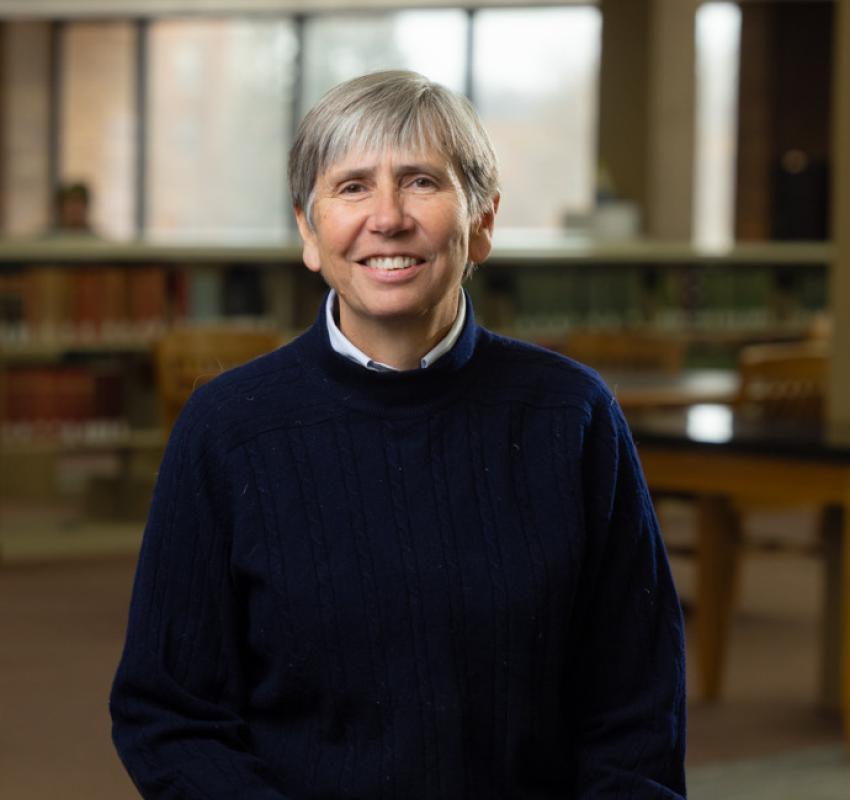
Stephanie Otto
A graduate of Gustavus Adolphus College herself, Stephanie was delighted to return to her undergraduate alma mater as a professor. Stephanie teaches courses both within and beyond the Exercise Physiology major, and she finds student mentorship to be among the most rewarding aspects of her work. Her teaching philosophy is grounded in the concept of vocation, emphasizing the integration of academic learning with personal purpose. She is committed to helping students discern how their skills, values, and passions can be meaningfully applied in service to others, preparing them not only for professional success but also for lives of purpose and engagement. Research is intentionally embedded within the Exercise Physiology curriculum at Gustavus, and she regularly serves as a faculty mentor for multiple student-led, independent research projects. These projects are frequently presented at local, regional, and national conferences across the country.
Her scholarly interests focus on the relationship between physical activity and bone mineral density. Most recently, she published an article in the International Journal of Fitness titled “Step Count, Calcium Intake, and Bone Mineral Density Among Women Using Depo-Provera.”
Stephanie is an active presenter and attendee at national meetings of the American College of Sports Medicine (ACSM), where she has earned Fellow status. She has also served on the ACSM Women, Sport, and Physical Activity Committee.
Our People
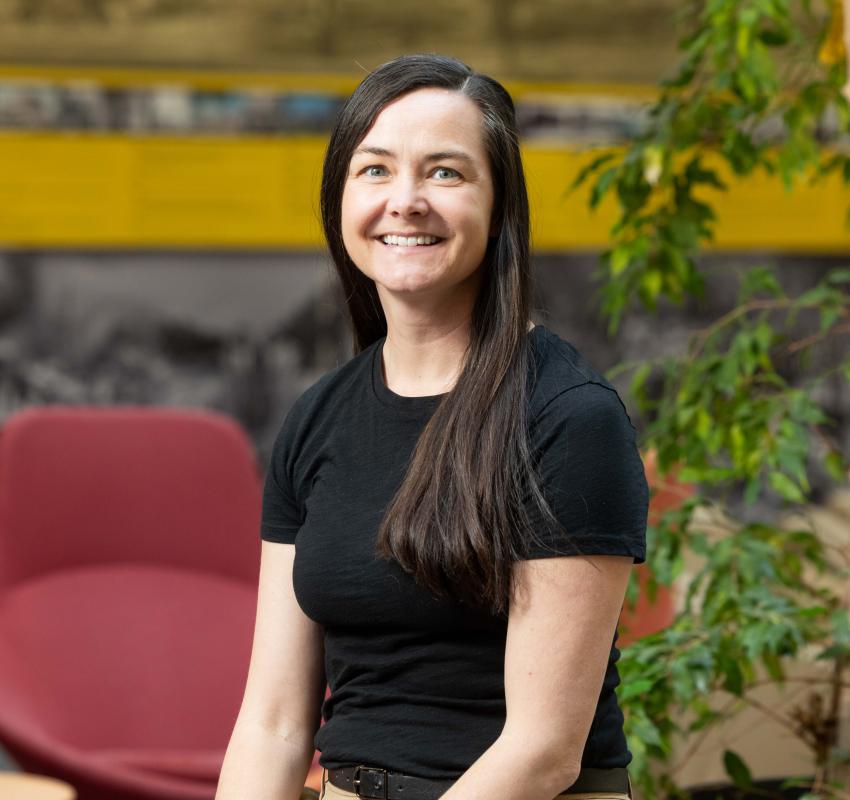
Pamela Kittelson
Professor Pamela Kittelson enjoys collaborating with students and colleagues. Her teaching has focused on ecology, plant physiology, evolution and general biology. Over 35 undergraduates from her lab have examined how habitat fragmentation affects plant populations, specifically how genetic variation, herbivory and plant traits change with population size and isolation. Students in her lab have published or presented this work and built scientific skills in writing, experimental design and analysis. After graduation, her advisees and former research students excel in careers ranging from natural resource management to education, research, medicine, biotechnology, law, and scientific writing.
Dr. Kittelson is the director of the Gustavus Fellowships Office. She supports and encourages all undergraduates by helping them identify and apply for nationally competitive funding which furthers their goals while in college or as alumni. These organizations include the Fulbright U.S. Student Program, Critical Language Scholarship, National Science Foundation, and the Goldwater, Truman, Udall and Boren Scholarships.
She also serves as the Director of the Midstates Consortium for Math and Science, which is an organization that promotes excellence in STEM research and teaching. She organizes professional development programs for faculty and undergraduate students from ten liberal arts colleges and two research universities. Each year, she runs two undergraduate research conferences where Gustavus and other Consortium students present their research at the University of Chicago or Washington University in St. Louis.
As a first generation college graduate, Dr. Kittelson understands the importance of having a good mentor who encourages one’s education. She enjoys the advising and mentoring relationships she has built with Gusties over the years.
Pamela relishes opportunities to be in natural areas with students; she has led students on several travel and wilderness courses. In her spare time, she enjoys hiking, canoeing, going fast downhill on skis or a bike, and camping. She putters around in gardens, museums or while watching birds. Travel near and wide is treasured. She relaxes with good books or music and the company of friends.
Our People
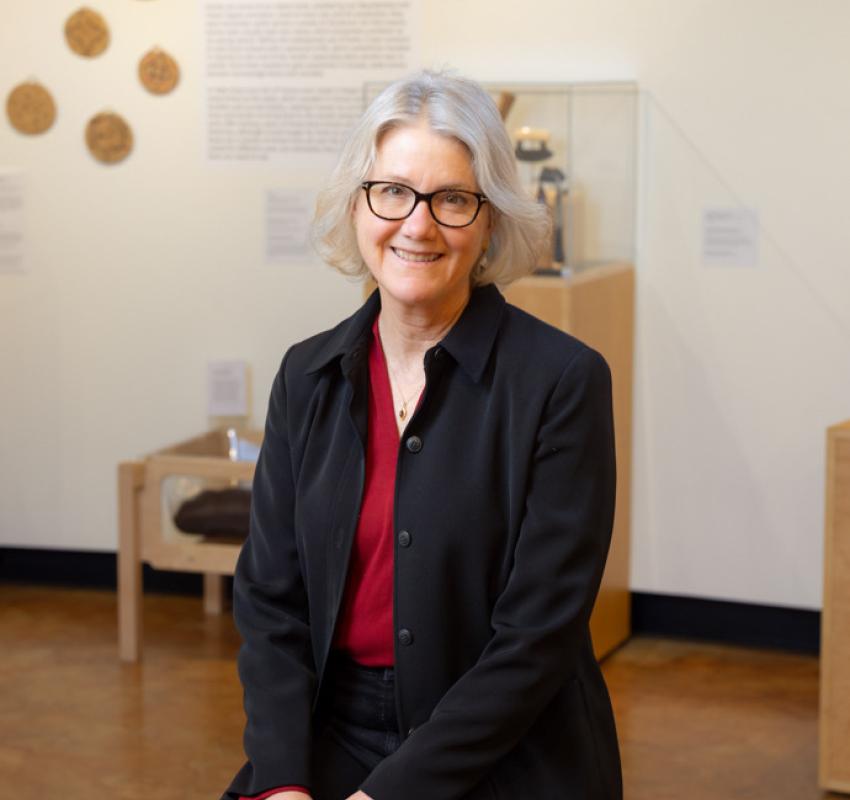
Laura Triplett
Dr. Laura D. Triplett began her Gustavus career in 2008 with a faculty appointment in geology. Now established in the department of Environment, Geography and Earth Sciences, she teaches courses related to earth surface processes, environmental geochemistry, hydrogeology and climate change. She has authored multiple peer-reviewed publications on topics as varied as reconstructing past water quality conditions in lakes and rivers, quantifying impacts of invasive species on freshwater geochemical cycling, and creating state-wide landslide susceptibility maps. In all her research, Dr. Triplett seeks out collaborations with community stakeholders. And, Dr. Triplett has involved Gustavus students in almost all aspects of her research program from designing preliminary studies, to executing major multi-year projects funded by external foundations and government agencies, to presenting findings at national scientific conferences.
Our People
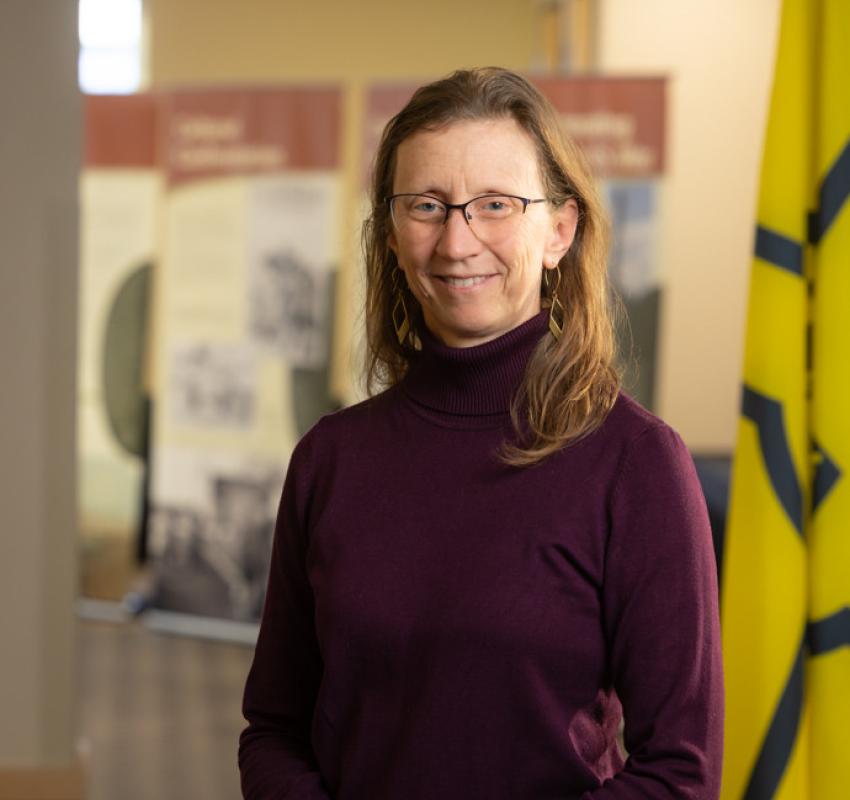
Julie K. Bartley
As a Professor in the Department of Environment, Geography, and Earth Sciences (EGE), Julie K. Bartley teaches courses in the Geology and Environmental Studies programs. With a background in chemistry and geology, Professor Bartley brings an interdisciplinary perspective to the study of the Earth’s past and present. As a teacher, she strives to know her students as individuals and to inspire interest in the Earth’s past and care for its future. She has also held significant leadership roles at Gustavus, including serving as chair of EGE, as the project director for the Inclusive Excellence Project, and as Associate Provost and Dean of Sciences and Education.
Professor Bartley’s expertise lies in interpreting ancient environments, with a particular focus on the Precambrian. Her research explores how microbial communities shaped and were shaped by the environments in which they lived. She and her students study the fossil record and the chemical signatures left by life hundreds of millions or even billions of years ago. At Gustavus, she actively involves students in this discovery process, supervising numerous undergraduate research projects that range from evaluating stromatolites in Minnesota to analyzing the Martian surface signs of habitability.
Students who collaborate with Professor Bartley might conduct fieldwork, perform laboratory analyses, analyze imagery, work with databases, or some combination of these. In the classroom, Professor Bartley teaches a wide array of courses taken by students across campus. Her teaching philosophy is characterized by a commitment to effective and inclusive instruction and a firm belief that every student is equipped to succeed. Whether a geology major, a general education student, or a first-semester Gustie, students can expect to take an active role in class, have many opportunities for hands-on experiences, and be challenged to grow as they learn.
Beyond her teaching and research, Professor Bartley serves Gustavus and the broader scientific community in many ways. She recently served as the Faculty Shepherd for the Nobel Hall of Science renovation and addition project and has co-chaired the Nobel Conference. She is a trained facilitator for two national programs: the ADVANCEGeo Partnership, which aims to improve workplace climate in the geosciences, and the Traveling Workshop Program, whose workshops help strengthen geoscience departments.
As the curator of the Chester Johnson Geology Museum, Professor Bartley regularly shares her passion for geology with K-12 students and the public. Whether leading fossil collecting field trips or presenting to local community organizations, she enjoys helping others see the landscape as a "time machine." Her dedication to service was recently honored with the Gustavus Faculty Service Award.
Outside of her professional life, she has served as the chair of a local charter school board and remains an active member of several professional societies, including the Geological Society of America, the National Association of Geoscience Teachers, and the Association of Women Geoscientists.
Our People
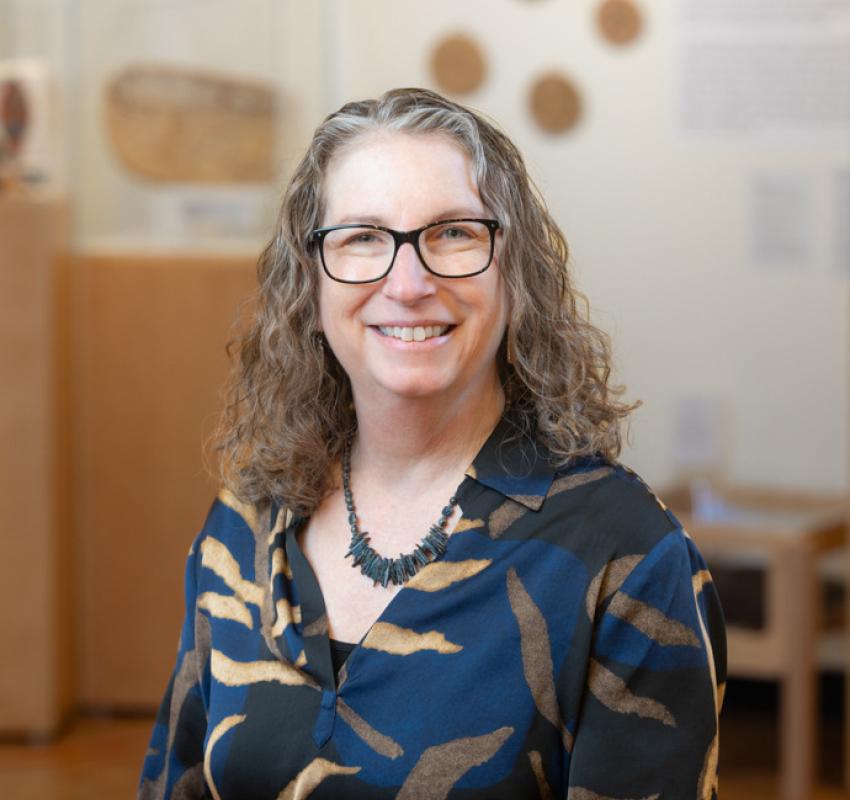
Shu-Ling Wang
Dr. Shu-Ling Wang is an associate professor of Economics. She joined Gustavus in 2016 after a two-year appointment at The College of Wooster. Her teaching interests include Intermediate Macroeconomics, Money and Banking, International Finance, Public Finance, and Principles of Economics. As an active instructor in an interactive and interdisciplinary liberal arts environment, she enjoys developing and experimenting with innovative pedagogies to enrich students’ learning experiences. She also values mentoring undergraduate research that fosters critical and independent thinking. At Wooster, she advised several year-long senior independent studies, and at Gustavus, she offers writing-in-the-discipline courses in economics and mentors class-based research projects. In October 2023, her Money and Banking students’ paper titled “The Asian Crisis of 1997” won third place in the Economic Communication category of the Minnesota Economic Association (MEA) Undergraduate Paper Contest. In 2025, Dr. Wang served as a faculty panelist at the MAYDAY! Peace Conference at Gustavus, participating in the teach-in model addressing issues of peace, human rights, and social justice. More recently, she served on the Nobel Conference '63 Planning Committee (theme: AI and Human Agency).
Dr. Wang’s research focuses on Macroeconomics, Monetary Economics, and International Finance. She studies fiscal and monetary policy issues—such as fiscal stimulus, public debt, tax policy, income distributional effects, and monetary policy, using dynamic stochastic general equilibrium (DSGE) models with representative or heterogeneous agents. Her papers have been published in the Journal of Macroeconomics, Review of International Economics, and Economic Modelling. She received the Mansergh Faculty Scientific Research Award at Gustavus in both 2022 and 2025. Her recent project examines the debt-financed stimulus effects in a high-debt economy without monetary independence, considering different schemes and speeds of debt adjustment in a two-sector New Keynesian model. Future projects will examine the redistribution effects between savers and hand-to-mouth agents of debt-financing policies. She regularly presents her work at the The Midwest Economics Association, Canadian Economics Association, Western Economics Association, and Liberal Arts Macroeconomics conferences.
In addition to her research, Dr. Wang actively contributes to professional service. She serves as a reviewer for the Journal of Macroeconomics, Economic Modelling, Contemporary Economic Policy, Cambridge University Press, and the Bulletin of Economic Research. She has also served on the steering and program committees for the Liberal Arts Macroeconomics Conference and was a member of the Board of the Minnesota Economic Association. In 2025 she served as a mentor and a panelist for junior women economists at the CeMENT workshop sponsored by the AEA at the Federal Reserve Bank of Chicago.
Beyond academia, Dr. Wang is a mother of three children. She enjoys architecture, art, photography, and music. Her favorite architects include Frank Lloyd Wright, Louis Sullivan, and Zaha Hadid. She is also inspired by the works of Georgia O’Keeffe, Edward Hopper, and Claude Monet. A musician herself, she plays the piano, violin, and pipa (a Chinese lute). Her favorite composer is Johann Sebastian Bach of the Baroque period.
Our People
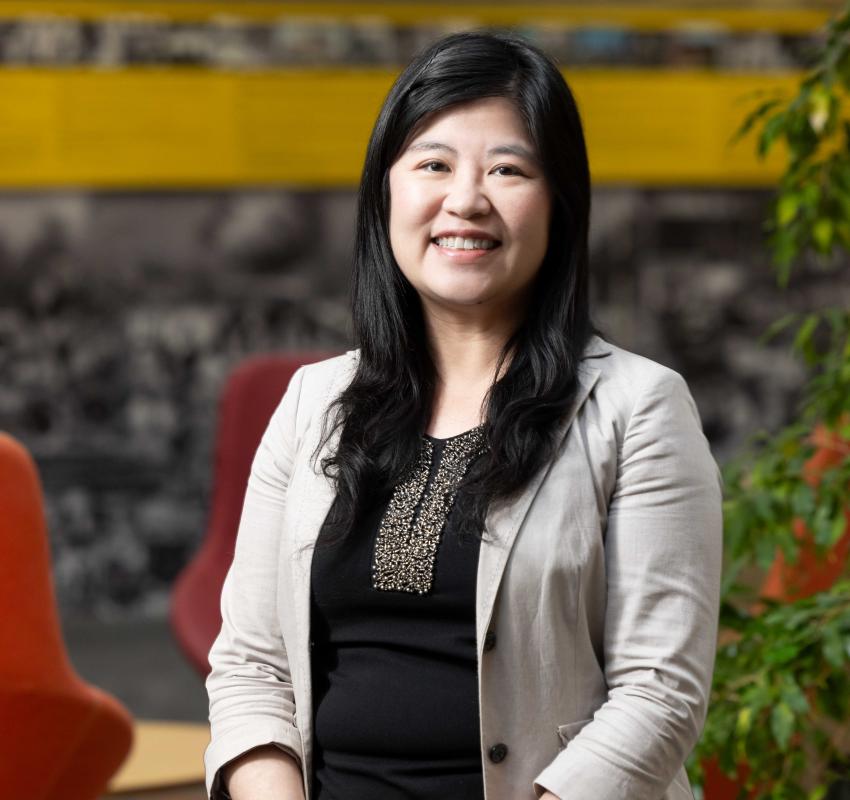
Lynnea Myers
Lynnea H. Myers, PhD, PhD MSN, RN is a dual PhD-trained nurse and researcher specializing in pediatrics, child development, asthma, and digital health. She currently serves as the faculty mentor for the Gustavus team for the Innovation Scholars Program. She most recently worked as a Postdoctoral Researcher at Karolinska Institutet in Stockholm, Sweden and a Visiting Research Fellow at Mayo Clinic in Rochester, Minnesota. Prior to those roles, she was an Associate Professor of Nursing at Gustavus Adolphus College. Her research interests focus on leveraging artificial intelligence and remote monitoring devices to improve pediatric asthma management.
Our People
Kathy Lund Dean
Kathy Lund Dean holds the Board of Trustees Distinguished Chair in Leadership and Ethics, a position uniquely designed to engage external stakeholders with students, faculty, and program opportunities. This role supports three main strategic focus areas:
- Increase Gustavus’ national and international footprint through scholarship and high profile recognitions
- Increase and broaden career readiness through alumni engagement
- Increase and deepen opportunities for experiential learning for students across campus
Kathy explores experiential education’s impacts on students, learning outcomes, and teaching practice, especially links between student mental health and experiential learning. In managerial practice, she examines remote work and why managers and executives resist remote work so strongly. Last, her partnership with the City of St. Peter and City Council allows her research insights into how municipal leaders prioritize very different constituent issues and resolve serious conflict.
Her scholarship encompasses more than 100 journal articles, book chapters, and books. Books include “The Ethical Professor: A Practical Guide to Research, Teaching and Professional Life” (published both in English and Chinese); "Course Design and Assessment" (2022, Edward Elgar) and "How to Become an Effective Journal Editor in Business and Management A Guide to Developing Authors" (2024, Edward Elgar).
Getting Gustavus' brand recognized outside the United States is a key focus. She won a Fulbright Specialist role to assist institutions under-represented in academic scholarship, an editorial role she will be continuing with the Journal of Management Inquiry. She has worked with business school colleagues at Rikkyo University supported by a Fulbright award, creating an exchange agreement between Rikkyo College of Business and Gustavus. Kathy holds joint appointments at the University of Canterbury, New Zealand, and University of St. Andrews in Scotland.
Kathy is passionate about engaging students in learning about investing and markets. She advises student members on the Board of Trustees Investment Committee as well as the E. Terry Skone Investment Club on campus, where students work with large endowments and portfolios and make important decisions. The Skone Club won a Magnuson Leadership & Service Award for its long-term positive impact on learning, outreach, and philanthropy, donating more than $135,000 in scholarship money back to the College.
Her conflict resolution practice takes many forms. As a certified mediator, a Minnesota Rule 114 qualified neutral, and faculty Ombuds, she helps others talk through and resolve complex issues from an impartial and non-judgmental perspective. At the Academy of Management, Kathy supports ethical practice and manages difficult situations as a member of the Ethics Adjudication Committee and the Ethics Education Committee.
She is a Chicago native and has lived in seven U.S. states and two countries. Prior to joining the Gustavus faculty, Kathy was Professor of Management at Idaho State University for ten years.
Our People
Christine Nessler
For more than twenty years, Christine Nessler worked as a marketing and public relations professional across government, nonprofit, and for-profit sectors. As a former entrepreneur and franchise owner, she has experience building brands from the ground up and maintaining a strong community presence. Beyond the business world, creative writing is her primary passion. As a freelance writer, she contributed articles to various regional publications. Her short stories and essays are featured in Half and One online literary journal and The Motherly Collective.
In 2024, Nessler joined the faculty at Gustavus. Students in her courses gain hands-on experience and the practical skills necessary to thrive in the workplace by applying classroom concepts to real-world community and business projects. In Nessler’s marketing courses, her favorite part of the semester is watching the students gain confidence as they serve as consultants for local business clients. As they develop strategic marketing plans, students also develop communication, project management, and leadership skills. Similarly, in Introduction to Management, her students build their own business from the ground up. According to Nessler, watching their final business plan presentations makes her optimistic about their futures as business and community leaders.
Outside of the classroom, Nessler serves on the Board of Directors for the Harry Meyering Center, volunteers as a reader of creative nonfiction for The Good Life Review, and cheers on her three kids at their various activities.
Our People
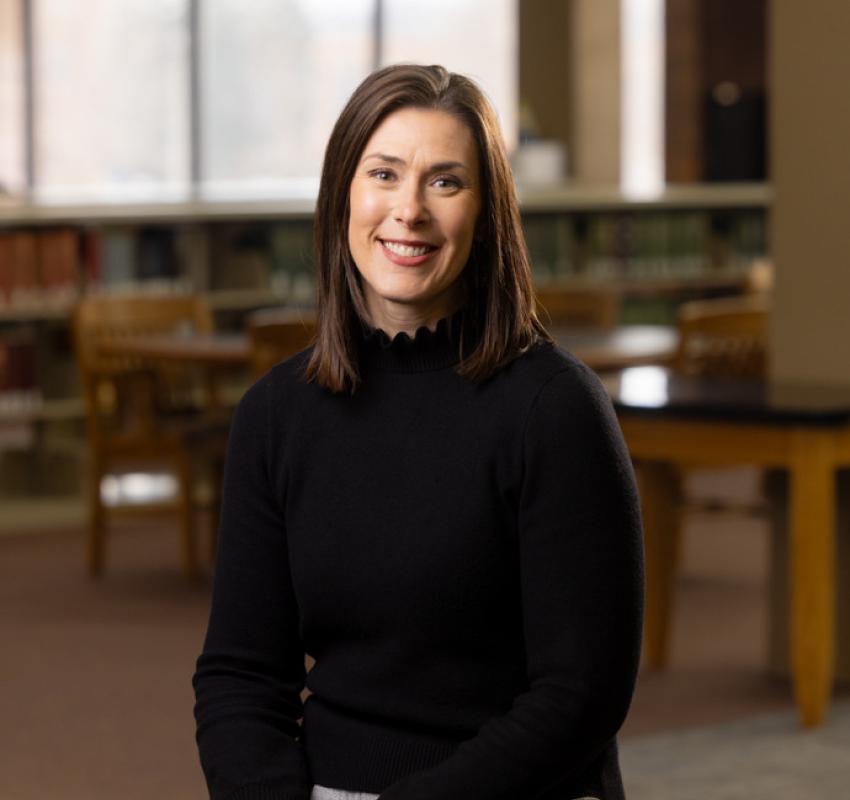
John Volin
John C. Volin, PhD serves as the 18th President of Gustavus.
Following a postdoctoral fellowship in plant physiological ecology at the University of Wisconsin-Madison, Volin accepted a faculty position at Florida Atlantic University, where he rose to the rank of full professor in the Department of Biological Sciences and served as the director of the Environmental Sciences graduate program. Volin joined the University of Connecticut in 2007 to head the Department of Natural Resources and the Environment, advancing to serve as Vice Provost of Academic Affairs. From 2020-2025, Volin served as the Executive Vice President for Academic Affairs and Provost at the University of Maine, where his portfolio included oversight of more than 1,000 faculty and staff and a budget of over $250 million. Volin is recognized as a national leader in using evidence-based practices to support holistic student wellbeing. He serves on the Executive Committee of the LearningWell Coalition and is a co-founder and senior advisor of LearningWell magazine.
Born and raised in Sioux Falls, South Dakota, Volin holds a BS in botany and biology and an MS in agronomy from the South Dakota State University, and a PhD in forestry from the University of Wisconsin-Madison. Volin and his wife, Valeria, have five children and six grandchildren.
Our People
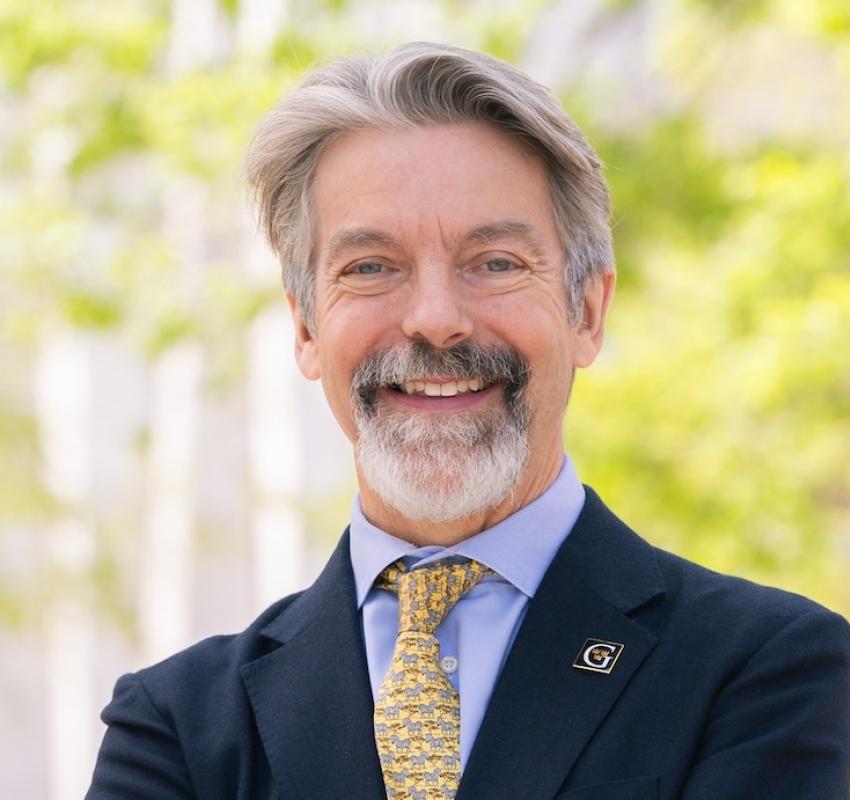
Maddalena Marinari
Maddalena Marinari is a Professor of History and the Dorothy Peterson, Mildred Peterson Hanson, and Arthur Jennings Hanson Endowed Professor of Liberal Studies. She is the author of Unwanted: Italian and Jewish Mobilization Against Restrictive Immigration Laws, 1882–1965 (University of North Carolina Press, 2020) and of several articles on immigration restriction, U.S. immigration policy, and immigrant mobilization in the Journal of American History, Journal of Policy History, Journal of American Ethnic History, Journal of the Gilded Age and Progressive Era, and Social Science History Journal. She has also co-edited four volumes on different aspects of US immigration history in the twentieth century, a special issue of the Journal of American History on the centennials of the immigration restriction acts of the 1920s, and a special issue of the Journal of American Ethnic History on migration and citizenship. Her next book explores the history of family, marriage, and sexuality in U.S. immigration policy from 1875 to 2025. She is also one of the scholars who created the Immigration Syllabus, an online tool for anyone interested in understanding the history behind current debates on immigration, and of Immigrants in COVID America, a curated collection of resources that chronicles the impact of the pandemic on migrant and refugee communities in the United States. Professor Marinari is currently president of the Immigration and Ethnic History Society and Editor in Chief of the Oxford Research Encyclopedia of Migration Studies. She has received funding from the American Philosophical Society, the Gilder Lehrman Institute of American History, the Immigration History Research Center, the Social Science Research Council, and the American Society for Legal History for her research and her public projects.
At Gustavus, she teaches a broad range of courses in U.S. history since 1865 and is an active member of the community. Her service to the College includes her tenure on the Faculty Senate and the Personnel Committee as well as her roles as the Kendall Center Associate for Faculty, Research, and Scholarship and as the Kendall Center Associate for Excellence in Teaching. In 2023, she received the Gustavus Faculty Service Award for her work on the Faculty Task Force. In 2021, Gustavus Adolphus College awarded her the Gustavus Faculty Scholarly Accomplishment Award in recognition of her scholarship accomplishments.
Our People
Lisa Heldke
Lisa Heldke teaches in the philosophy department and the gender, women and sexuality studies program, of which she was a founding faculty member. Among her favorite courses to teach are modern philosophy (which, believe it or not, focuses on the eighteenth century); aesthetics; and gender, knowledge and reality. But her real passion is the philosophy of food, which she holds in the teaching kitchen of the Nobel Hall of Science, where students can cook together each week.
The philosophy of food is not only a teaching passion, it has also been a focus of much of her service work on campus. She is the co-founder of the Kitchen Cabinet, an advisory committee to the Gustavus Dining Service that works to enhance the ways it serves the mission of the College. The committee includes representation from all the campus constituencies, including students.
Food is also the focus of Heldke’s scholarly research; she is one of the first contemporary philosophers to treat food as a serious philosophical topic. She is the author or editor of a number of books in the field, including Philosophers at Table: On Food and Being Human; Exotic Appetites: Ruminations of a Food Adventurer; Cooking, Eating Thinking: Transformative Philosophies of Food; and (most recently) Parasitic Personhood and the Ontology of Eating. Her research has led to her being invited to teach each year in a master’s program at the University of Gastronomic Sciences in Pollenzo, Italy, a kind of “liberal arts college of food” founded by the Slow Food founder Carlo Petrini. Her scholarly work has also garnered her awards from the Agriculture, Food and Human Values Society and the John Dewey Society.
For ten years, she served as director of Gustavus’s Nobel Conference, a role she described as being the “chief learner” for this science-and-ethics extravaganza which is a highlight of the Gustavus academic year, and has brought more than 100 Nobel laureates to campus.
Her newest book project bears the working title “Yurtitude is Experience”; it’s a philosophical exploration of her summertime life in a yurt on the coast of Maine where she lives (mostly) off the grid with her Siberian husky, writing, baking bread in a wood-fired brick oven, and kayaking and sailing in Eggemoggin Reach. Winter finds her and her husky skijoring in the Gustavus Arboretum whenever the snow cover allows.