

Transfer Student Admission
Gustavus transfer admission is free and holistic. Test‑optional applicants with ≥2.4 GPA are accepted with up to 64 credits, with merit scholarships up to $40,000 per year. Learn more here.
Our People
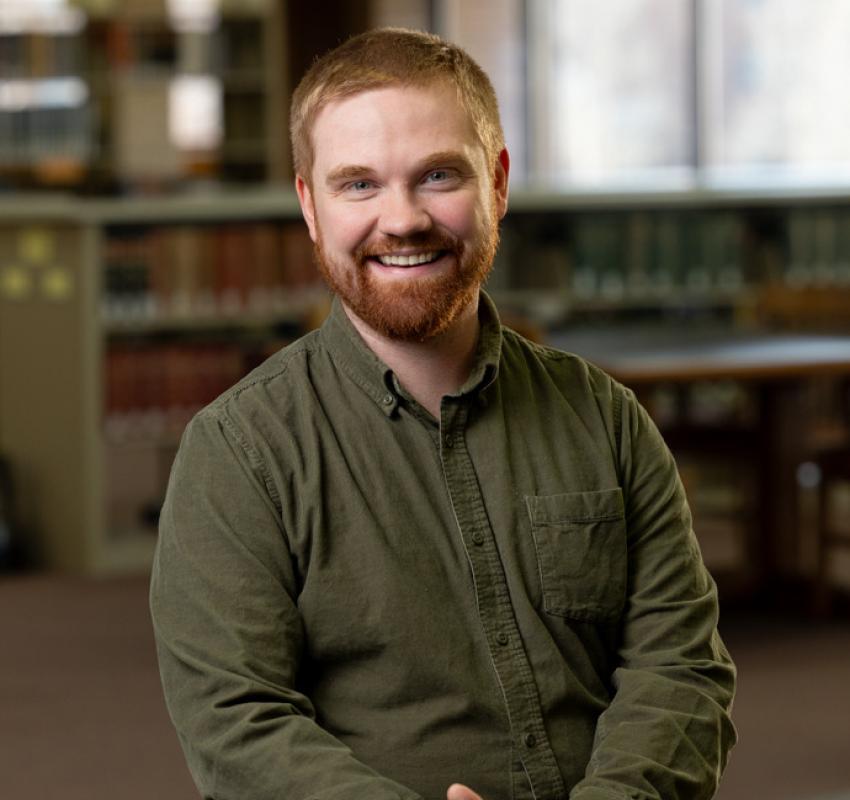
Chris Nolting
Chris Nolting has been a Visiting Assistant Professor of Physics at Gustavus since 2023. In his classes, he focuses on including many worked example problems and opportunities for hands on learning in groups, and as many physics demonstrations as possible. As a computational astrophysicist, he enjoys showcasing examples related to astronomy whenever possible. His research focuses on the study of galaxy cluster environments and powerful jets from active galactic nuclei, supermassive black holes at the centers of galaxies that accrete matter and power some of the brightest objects in the universe. This work is mainly done through numerical simulations on compute clusters and supercomputers using up to tens of thousands of processors simultaneously. Gustavus students working on research with Chris learn coding languages and data visualization techniques, and even 3D print some of the structures they simulate.
Chris is the faculty advisor to the Society of Physics Students and the Gustavus Engineering Club.
Outside of Gustavus, Chris a self-identifying nerd. He is a lover of board games, magic the gathering, Marvel movies, anime, and going on walks with his dog.
Our People
Steven Mellema
A Minnesota native, Steve Mellema received his undergraduate degree (with majors in physics and mathematics) from Gustavus Adolphus College in 1972. Following his graduation, he spent six years in Malaysia as a teacher and trainer with the United States Peace Corps. He subsequently attended graduate school at Ohio University, receiving a Ph.D. in experimental nuclear physics in 1983.
Following postdoctoral positions at Ohio University and the University of Wisconsin, he joined the faculty at Gustavus in 1986. He taught in the physics department through 40 years of graduating classes, and also served three terms as chair of the department.
As an active member of the American Association of Physics Teachers, Steve incorporated the results of physics-education research into his own teaching of physics for more than three decades, including peer instruction, cooperative-group problem solving, computer simulations, and studio methods. Steve was fortunate to receive two Fulbright Scholar appointments to Malaysia, and used them to bring some of those advancements in physics pedagogy to his adopted "second home'", teaching at the School of Physics at Universiti Sains Malaysia in Penang.
Over the years, he has also led four study-abroad courses taking Gustavus students to visit and study Malaysia. Steve retired from active teaching in 2025, and is currently a Research Professor of Physics.
Our People
Catherine Harms
Cathy Harms is a Senior Continuing Faculty member specializing in Marketing, Digital Marketing, and Marketing Research, and holds the George B. Torrey Endowed Chair of Management Marketing. She is currently the Business and Economics Department Chair. She joined the Gustavus faculty in 2016, bringing extensive professional experience from careers in banking, product management, venture capital, and marketing management.
Her teaching philosophy is centered on preparing students for the professional world. All of her courses incorporate experiential learning, pairing student teams with non-profits and businesses to develop marketing strategies, conduct market research, or implement digital marketing campaigns. This approach allows students to build critical skills in teamwork, project management, communication, and problem-solving. The world of marketing is constantly changing, so she brings in several guest speakers each semester to share their journey and the current marketing careers.
Beyond the classroom, Cathy manages the Content Managers for the Business and Economics Department. In this role, she oversees the creation of content for the department's social media platforms, which targets prospective students and undecided undergraduates. The content highlights departmental events, features students and alums, and educates the audience on the value of a Business, Accounting or Economics degree.
Cathy is deeply passionate about advising students and guiding them in their preparation for life after graduation. She has actively partnered with the Career Development Center to promote their services to students. As a proud alumna of Gustavus, she remains actively involved as a Class Agent and maintains close friendships established during her freshman year.
In her free time, she enjoys playing piano at a local nursing home, playing pickleball and volleyball, biking, hiking, walking in the Linnaeus Arboretum, and traveling. Her favorite role is being Nana to her four grandsons.
VA Benefits & Rewards
Learn how to use military education benefits at Gustavus, including eligibility, certification steps, and how military service connects to financial aid and tuition support.
Our People
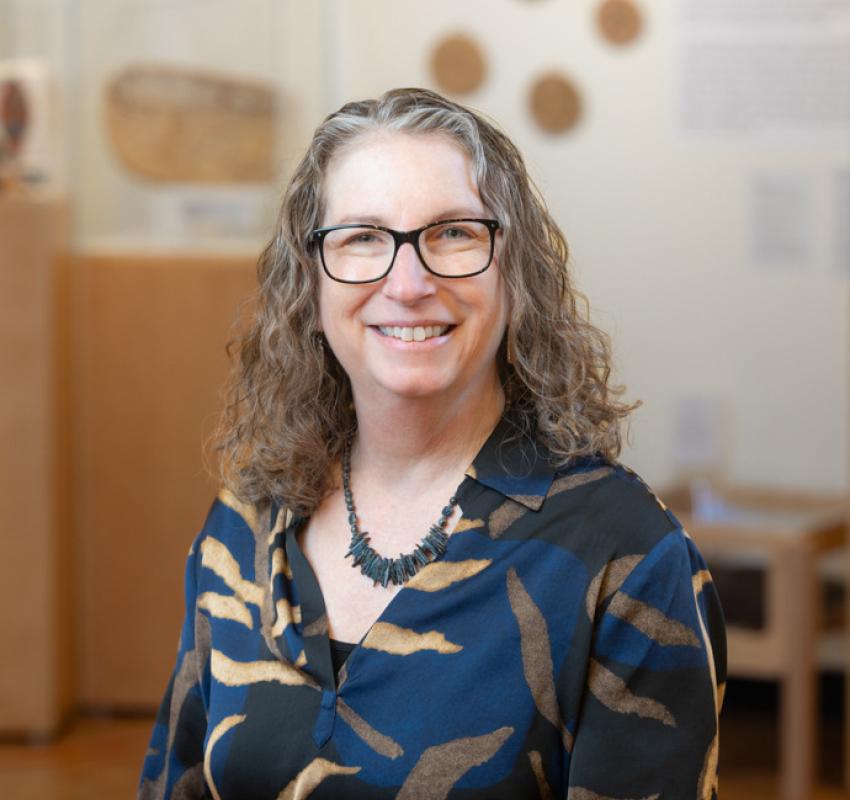
Julia Bartley
As a Professor in the Department of Environment, Geography, and Earth Sciences (EGE), Julie K. Bartley teaches courses in the Geology and Environmental Studies programs. With a background in chemistry and geology, Professor Bartley brings an interdisciplinary perspective to the study of the Earth’s past and present. As a teacher, she strives to know her students as individuals and to inspire interest in the Earth’s past and care for its future. She has also held significant leadership roles at Gustavus, including serving as chair of EGE, as the project director for the Inclusive Excellence Project, and as Associate Provost and Dean of Sciences and Education.
Professor Bartley’s expertise lies in interpreting ancient environments, with a particular focus on the Precambrian. Her research explores how microbial communities shaped and were shaped by the environments in which they lived. She and her students study the fossil record and the chemical signatures left by life hundreds of millions or even billions of years ago. At Gustavus, she actively involves students in this discovery process, supervising numerous undergraduate research projects that range from evaluating stromatolites in Minnesota to analyzing the Martian surface signs of habitability.
Students who collaborate with Professor Bartley might conduct fieldwork, perform laboratory analyses, analyze imagery, work with databases, or some combination of these. In the classroom, Professor Bartley teaches a wide array of courses taken by students across campus. Her teaching philosophy is characterized by a commitment to effective and inclusive instruction and a firm belief that every student is equipped to succeed. Whether a geology major, a general education student, or a first-semester Gustie, students can expect to take an active role in class, have many opportunities for hands-on experiences, and be challenged to grow as they learn.
Beyond her teaching and research, Professor Bartley serves Gustavus and the broader scientific community in many ways. She recently served as the Faculty Shepherd for the Nobel Hall of Science renovation and addition project and has co-chaired the Nobel Conference. She is a trained facilitator for two national programs: the ADVANCEGeo Partnership, which aims to improve workplace climate in the geosciences, and the Traveling Workshop Program, whose workshops help strengthen geoscience departments.
As the curator of the Chester Johnson Geology Museum, Professor Bartley regularly shares her passion for geology with K-12 students and the public. Whether leading fossil collecting field trips or presenting to local community organizations, she enjoys helping others see the landscape as a "time machine." Her dedication to service was recently honored with the Gustavus Faculty Service Award.
Outside of her professional life, she has served as the chair of a local charter school board and remains an active member of several professional societies, including the Geological Society of America, the National Association of Geoscience Teachers, and the Association of Women Geoscientists.
Our People
Shu-Ling Wang
Dr. Shu-Ling Wang is an associate professor of Economics. She joined Gustavus in 2016 after a two-year appointment at The College of Wooster. Her teaching interests include Intermediate Macroeconomics, Money and Banking, International Finance, Public Finance, and Principles of Economics. As an active instructor in an interactive and interdisciplinary liberal arts environment, she enjoys developing and experimenting with innovative pedagogies to enrich students’ learning experiences. She also values mentoring undergraduate research that fosters critical and independent thinking. At Wooster, she advised several year-long senior independent studies, and at Gustavus, she offers writing-in-the-discipline courses in economics and mentors class-based research projects. In October 2023, her Money and Banking students’ paper titled “The Asian Crisis of 1997” won third place in the Economic Communication category of the Minnesota Economic Association (MEA) Undergraduate Paper Contest. In 2025, Dr. Wang served as a faculty panelist at the MAYDAY! Peace Conference at Gustavus, participating in the teach-in model addressing issues of peace, human rights, and social justice. More recently, she served on the Nobel Conference '63 Planning Committee (theme: AI and Human Agency).
Dr. Wang’s research focuses on Macroeconomics, Monetary Economics, and International Finance. She studies fiscal and monetary policy issues—such as fiscal stimulus, public debt, tax policy, income distributional effects, and monetary policy, using dynamic stochastic general equilibrium (DSGE) models with representative or heterogeneous agents. Her papers have been published in the Journal of Macroeconomics, Review of International Economics, and Economic Modelling. She received the Mansergh Faculty Scientific Research Award at Gustavus in both 2022 and 2025. Her recent project examines the debt-financed stimulus effects in a high-debt economy without monetary independence, considering different schemes and speeds of debt adjustment in a two-sector New Keynesian model. Future projects will examine the redistribution effects between savers and hand-to-mouth agents of debt-financing policies. She regularly presents her work at the The Midwest Economics Association, Canadian Economics Association, Western Economics Association, and Liberal Arts Macroeconomics conferences.
In addition to her research, Dr. Wang actively contributes to professional service. She serves as a reviewer for the Journal of Macroeconomics, Economic Modelling, Contemporary Economic Policy, Cambridge University Press, and the Bulletin of Economic Research. She has also served on the steering and program committees for the Liberal Arts Macroeconomics Conference and was a member of the Board of the Minnesota Economic Association. In 2025 she served as a mentor and a panelist for junior women economists at the CeMENT workshop sponsored by the AEA at the Federal Reserve Bank of Chicago.
Beyond academia, Dr. Wang is a mother of three children. She enjoys architecture, art, photography, and music. Her favorite architects include Frank Lloyd Wright, Louis Sullivan, and Zaha Hadid. She is also inspired by the works of Georgia O’Keeffe, Edward Hopper, and Claude Monet. A musician herself, she plays the piano, violin, and pipa (a Chinese lute). Her favorite composer is Johann Sebastian Bach of the Baroque period.
Office
Billing - Student Accounts
Information on billing for tuition and other costs such as payment dates, methods (online via Touchnet, check, cash), and payment plans.