

Our People
Julie K. Bartley
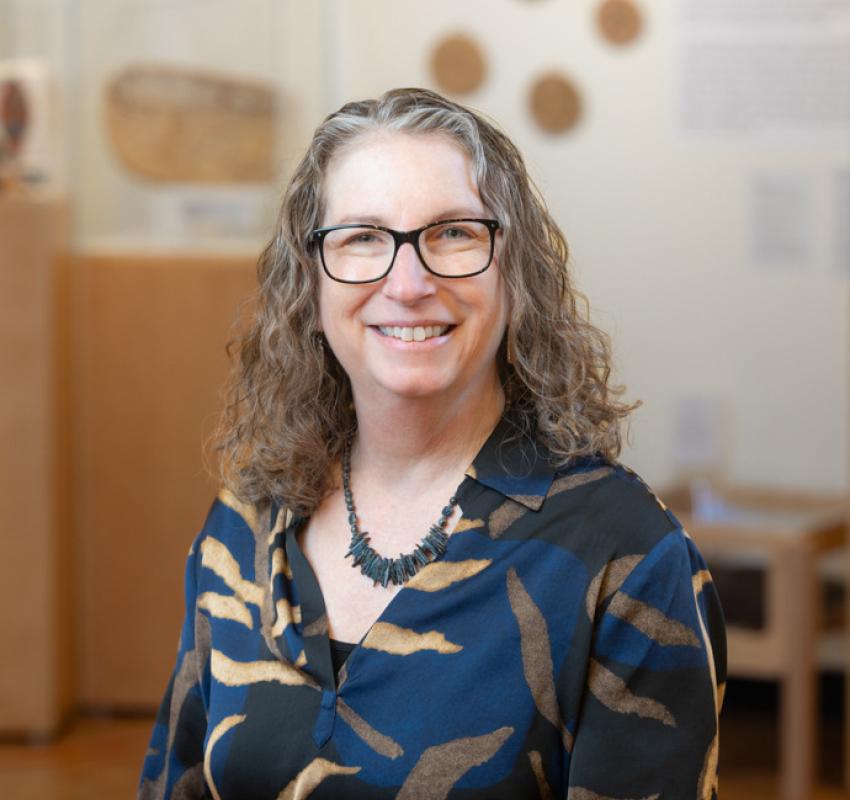
As a Professor in the Department of Environment, Geography, and Earth Sciences (EGE), Julie K. Bartley teaches courses in the Geology and Environmental Studies programs. With a background in chemistry and geology, Professor Bartley brings an interdisciplinary perspective to the study of the Earth’s past and present. As a teacher, she strives to know her students as individuals and to inspire interest in the Earth’s past and care for its future. She has also held significant leadership roles at Gustavus, including serving as chair of EGE, as the project director for the Inclusive Excellence Project, and as Associate Provost and Dean of Sciences and Education.
Professor Bartley’s expertise lies in interpreting ancient environments, with a particular focus on the Precambrian. Her research explores how microbial communities shaped and were shaped by the environments in which they lived. She and her students study the fossil record and the chemical signatures left by life hundreds of millions or even billions of years ago. At Gustavus, she actively involves students in this discovery process, supervising numerous undergraduate research projects that range from evaluating stromatolites in Minnesota to analyzing the Martian surface signs of habitability.
Students who collaborate with Professor Bartley might conduct fieldwork, perform laboratory analyses, analyze imagery, work with databases, or some combination of these. In the classroom, Professor Bartley teaches a wide array of courses taken by students across campus. Her teaching philosophy is characterized by a commitment to effective and inclusive instruction and a firm belief that every student is equipped to succeed. Whether a geology major, a general education student, or a first-semester Gustie, students can expect to take an active role in class, have many opportunities for hands-on experiences, and be challenged to grow as they learn.
Beyond her teaching and research, Professor Bartley serves Gustavus and the broader scientific community in many ways. She recently served as the Faculty Shepherd for the Nobel Hall of Science renovation and addition project and has co-chaired the Nobel Conference. She is a trained facilitator for two national programs: the ADVANCEGeo Partnership, which aims to improve workplace climate in the geosciences, and the Traveling Workshop Program, whose workshops help strengthen geoscience departments.
As the curator of the Chester Johnson Geology Museum, Professor Bartley regularly shares her passion for geology with K-12 students and the public. Whether leading fossil collecting field trips or presenting to local community organizations, she enjoys helping others see the landscape as a "time machine." Her dedication to service was recently honored with the Gustavus Faculty Service Award.
Outside of her professional life, she has served as the chair of a local charter school board and remains an active member of several professional societies, including the Geological Society of America, the National Association of Geoscience Teachers, and the Association of Women Geoscientists.
Our People
Mary McHugh
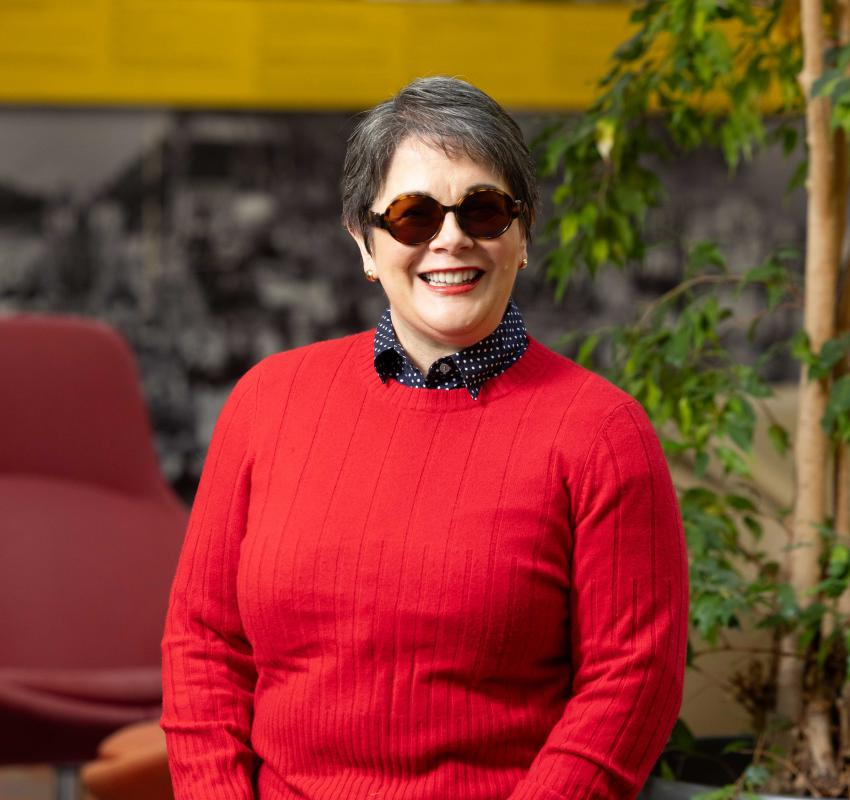
Mary R. McHugh is a Professor in the Department of Greek, Latin, and Classical Studies. She is a social historian whose wide-ranging scholarship encompasses political history, intellectual and cultural cross-pollination, and the history of food production and culture. A recently published chapter examines how Plato’s Timaeus shaped conceptions of time and cosmology within the intellectual milieu of Western Greece. McHugh argues that its call for cosmological models influenced a tradition of mathematical and mechanical innovation, from Archimedes’ devices to medieval and Renaissance astronomical clocks.
McHugh is adept at pursuing leads and situating the particular within its broader context. She has taught courses at all levels of Greek and Latin to those spanning Near Eastern and Greco-Roman history to Chinese and Islamic cultural exchanges with the West. She also teaches courses in art and archaeology, bringing her expertise in material culture directly into her research.
Our People
Sarah Erickson-Lume
Sarah Erickson Lume grew up near Ann Arbor, MI and had the privilege of spending summers at the international music camp, Interlochen Center for the Arts. This experience instilled in her the love of music making and she began to cultivate the artistic discipline of practicing, rehearsing, and performing within the context of a supportive community. Valuing a liberal arts education, she attended Sarah Lawrence College, outside of New York City while continuing to study oboe with Laura Ahlbeck (Metropolitan Opera) and Randall Wolfgang (New York City Ballet).
Sarah worked at NYC’s Carnegie Hall before entering graduate school at Carnegie Mellon University, where she was the student of her most influential teacher, Cynthia Koledo DeAlmeida (Principal Oboist of the Pittsburgh Symphony). While pursuing a master’s degree in music performance, her momentum flourished both as a musician and as a reed maker. The Philadelphia style of reed making, and the resulting benefits to the oboist, is a specialty she now passes on to her own students. During this time, Sarah also attended Aspen Music Festival in Colorado, and Orford Music Festival, in Quebec.
Her work in the Twin Cities includes chamber music and freelance performances as well as previous work with the Duluth Symphony Orchestra, South Dakota Symphony Orchestra, and Minnesota Waldorf School. Having been an oboe instructor at Gustavus Adolphus College for more than twenty years, Sarah has found teaching to be one of the most fulfilling jobs of her career. She maintains a private home studio and teaches as an adjunct faculty member at other area colleges. Her interests include Alexander Technique, optimal performance psychology, practicing the piano, and recorder, as well as running. Sarah and her husband, a visual artist and professor, have two daughters.
Our People
Pamela Kittelson
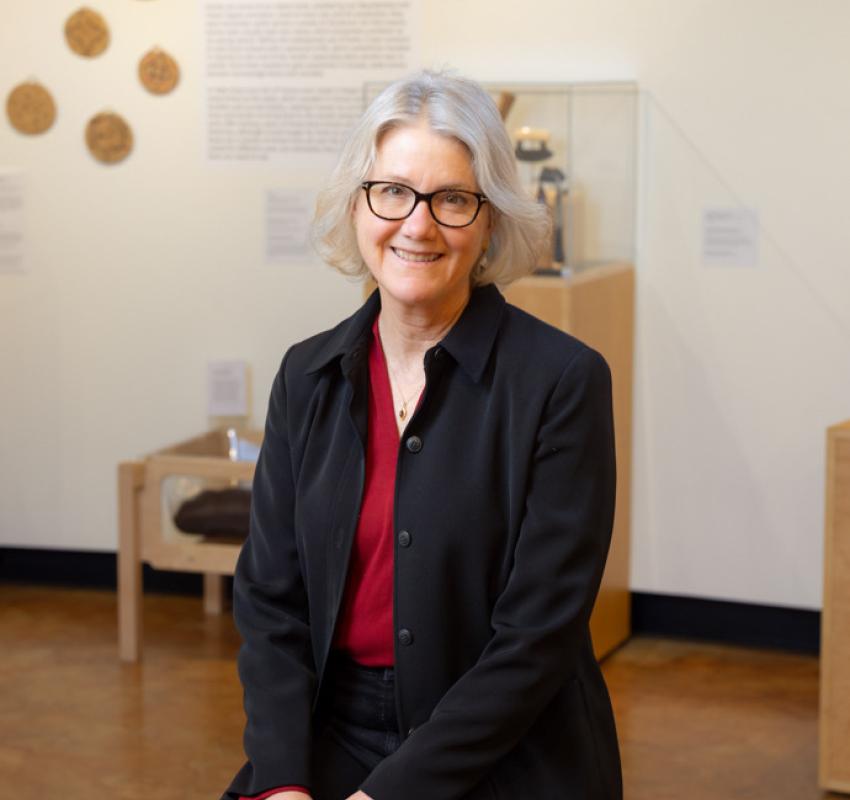
Professor Pamela Kittelson enjoys collaborating with students and colleagues. Her teaching has focused on ecology, plant physiology, evolution and general biology. Over 35 undergraduates from her lab have examined how habitat fragmentation affects plant populations, specifically how genetic variation, herbivory and plant traits change with population size and isolation. Students in her lab have published or presented this work and built scientific skills in writing, experimental design and analysis. After graduation, her advisees and former research students excel in careers ranging from natural resource management to education, research, medicine, biotechnology, law, and scientific writing.
Dr. Kittelson is the director of the Gustavus Fellowships Office. She supports and encourages all undergraduates by helping them identify and apply for nationally competitive funding which furthers their goals while in college or as alumni. These organizations include the Fulbright U.S. Student Program, Critical Language Scholarship, National Science Foundation, and the Goldwater, Truman, Udall and Boren Scholarships.
She also serves as the Director of the Midstates Consortium for Math and Science, which is an organization that promotes excellence in STEM research and teaching. She organizes professional development programs for faculty and undergraduate students from ten liberal arts colleges and two research universities. Each year, she runs two undergraduate research conferences where Gustavus and other Consortium students present their research at the University of Chicago or Washington University in St. Louis.
As a first generation college graduate, Dr. Kittelson understands the importance of having a good mentor who encourages one’s education. She enjoys the advising and mentoring relationships she has built with Gusties over the years.
Pamela relishes opportunities to be in natural areas with students; she has led students on several travel and wilderness courses. In her spare time, she enjoys hiking, canoeing, going fast downhill on skis or a bike, and camping. She putters around in gardens, museums or while watching birds. Travel near and wide is treasured. She relaxes with good books or music and the company of friends.
Our People
Rebecca Fremo
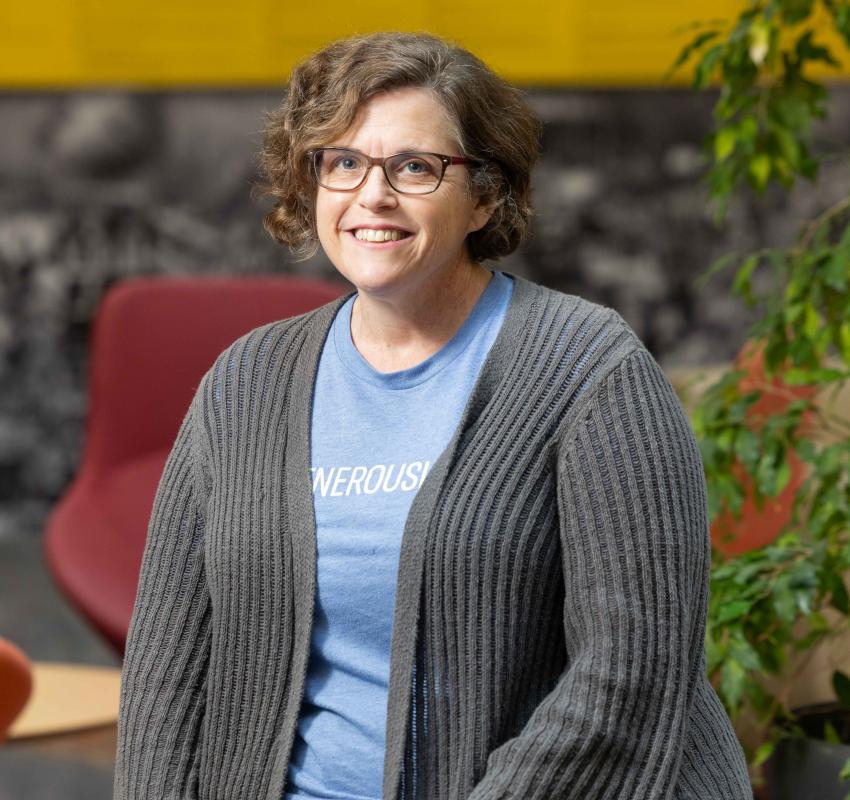
Rebecca Taylor Fremo (Professor of English) earned her Ph.D. in Rhetoric and Composition at Ohio State University after completing her BA and MA in English at Virginia Tech. In the nearly three decades she’s spent at Gustavus, she’s served as English department chair, English co-chair, Director of Writing Across the Curriculum, and Director of the Writing Center. But Fremo’s real passion is teaching writing, and she’s been awarded the Edgar M. Carlson Award and the Swenson and Bunn Award for this work. Fremo likes nothing better than rolling up her sleeves and sitting side by side with student writers as they work through the challenges of sharing their stories. Fremo has published a variety of scholarly essays about teaching writing, but she’s most excited about her work as a creative writer. She recently completed a memoir titled Controlled Burn, which applies her observations as a gardener to her experiences raising three neurodivergent sons. Her poems and essays appear in journals including Mud Season Review, Mankato Magazine, Full Grown People, Paper Darts, and Water~Stone Review. She is also the author of one collection of poetry, Moving This Body, and a chapbook of poems titled Chasing Northern Lights. When she’s not at work, she’s probably in her garden or daydreaming about her next visit to the North Shore. She’s originally from Richmond, Virginia and still dreads the Minnesota winters–but the summers are worth it!
Our People
Priscilla Briggs
Priscilla Briggs is a professor of Art & Art History, the advisor for the Film & Media Arts major, and supports the Film & Media Studies interdisciplinary program. Priscilla teaches Digital Photography, Video Art, Graphic Design, the Zines for Sustainability challenge seminar, and the Arts Now professional practice seminar for junior art majors.
She enjoys teaching within the liberal arts mission of Gustavus and guiding students in their experience of the visual arts as both an intuitive and intellectual process that contributes to well-being and supports our curiosity as human beings. She enjoys collaborating with students and has led multiple faculty/student summer research projects.
Priscilla is a practicing artist who investigates the intersections of capitalism, identity, social justice and the environment through photography, collage and book-making. Her research has been supported by numerous grants, most notably the McKnight Foundation, the Puffin Foundation, and the Minnesota State Arts Board. Her work has been exhibited internationally at venues such as the Saatchi Gallery in London, the Landskrona Photo Salon in Sweden, the National Museum of Modern and Contemporary Art in Seoul, the National Gallery of Victoria in Melbourne, the Musei San Domenico in Forlì, Italy, and the Minneapolis Institute of Art.
Her artist monograph, Impossible Is Nothing: China’s Theater of Consumerism, was published by Daylight Books. Many images from the book were created during artist residencies at the Chinese European Art Center in Xiamen and Art Channel in Beijing. Priscilla recently launched Rose Bramble Books, an artist zine/book platform. Her work has been featured in print and online publications such as European Photography Magazine, Newsweek Japan, Photo District News, Hyperallergic, L’oeil de la Photographie, Lenscratch, and F-Stop Magazine. Priscilla is a member of both Rosalux Gallery and the FotoMatter Collective.
Priscilla’s research has taken her near and far from the Badlands to China and India, but her travels began in her early twenties when she taught English in Tokyo and backpacked through Southeast Asia for two years. She has led travel courses in Thailand and Ireland. Wherever she goes, she looks for the nearest hiking trail.
Our People
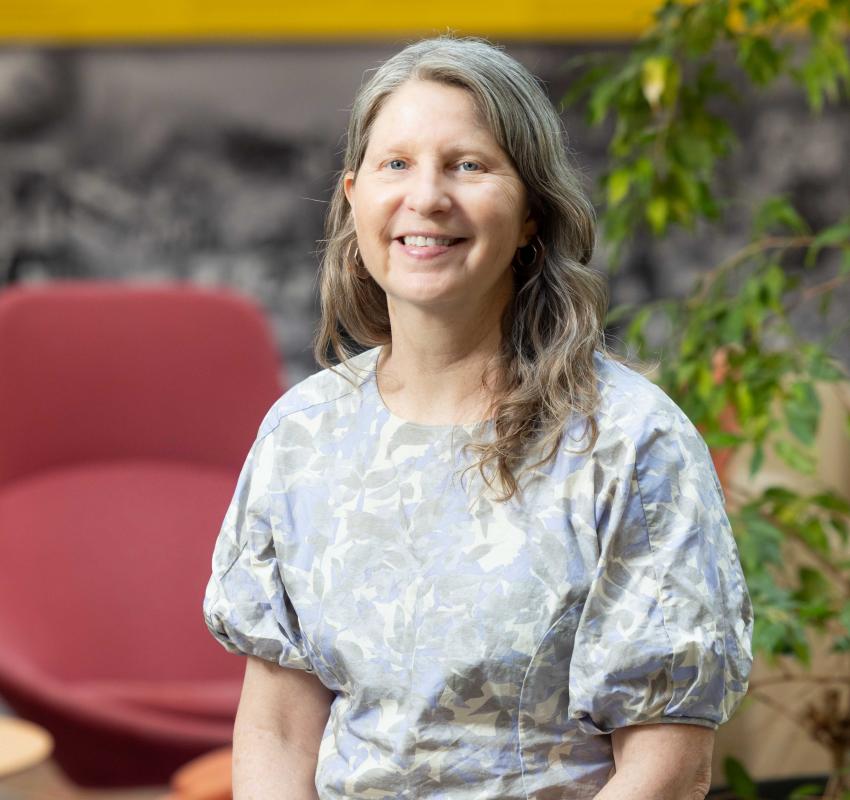
Maria Isabel Kalbermatten
Maria Kalbermatten is a scholar and educator in Hispanic Studies. She teaches courses in Spanish language, culture, and linguistics. Her work centers on the study of humor in discourse, with a particular focus on verbal irony, political humor, and the ways humor operates in contexts of power, ideology, and social interaction. Drawing on approaches from pragmatics, discourse analysis, and critical literacy, her research examines how humor functions not only as entertainment but also as a tool for critique, affiliation, and meaning-making in everyday communication.
Her scholarship includes analyses of spontaneous conversations and media texts, exploring how speakers use irony and humor to negotiate relationships, express stance, and challenge dominant narratives. She has a particular interest in humor in Spanish-speaking contexts, including Latin America, and her recent work engages with questions of political discourse, manipulation, and the role of humor in shaping public opinion. Her research has been presented at national and international conferences and contributes to ongoing interdisciplinary conversations about language, culture, and society.
Kalbermatten is deeply committed to student-centered teaching and to creating an engaging, inclusive classroom environment. Her teaching philosophy emphasizes active learning, critical thinking, and the development of interpretive skills that allow students to analyze language and culture in meaningful ways. She frequently integrates her research into her courses, designing classes that invite students to explore authentic materials such as political cartoons, media discourse, and everyday interactions. In courses like Political Humor and Manipulation, she applies a critical literacy framework to help students examine how humor can both reinforce and challenge systems of power.
Kalbermatten teaches across the Spanish curriculum, from introductory language courses to advanced content courses, and contributes to interdisciplinary programs that engage with global perspectives, media, and cultural studies. She values mentoring students at all levels and enjoys supporting them in developing linguistic proficiency alongside cultural awareness and analytical skills.
In addition to her teaching and research, Kalbermatten is actively involved in service at the College and within the broader academic community. She contributes to curriculum development, participates in collaborative initiatives, and engages in professional activities that connect her work to wider scholarly and educational networks.
One of her favorite aspects of teaching at Gustavus is the opportunity to work closely with students in a liberal arts setting, where discussion, curiosity, and intellectual exploration are central. She values the strong sense of community on campus and the ways in which students bring diverse perspectives into the classroom.
Outside of her academic work, Kalbermatten enjoys creative and cultural activities that complement her scholarly interests, including drawing, exploring global cuisines, and engaging with music and the arts. These interests often inform her teaching and contribute to the dynamic, culturally rich learning experiences she fosters in her courses.
Our People
Tara Cadenhead
Tara Cadenhead serves as the Instructor of the Practice in Entrepreneurship and Innovation, where she is also the Director of the Center for Innovative & Entrepreneurial Leadership (CIEL). A Gustavus alumna herself, Tara brings a unique blend of high-level corporate strategy and "maker" entrepreneurship to the Hill, providing students with a practical roadmap for turning creative ideas into sustainable ventures.
Tara’s teaching is informed by nearly two decades of leadership in the corporate sector. During her tenure at FICO, a leading provider of analytics and CRM software, she led talent management and organizational change initiatives, specializing in aligning human capital with strategic business goals. Later, at Target Corporation, she served as a key advisor to Supply Chain leadership, and then played a strategic communication and change leadership role in launching a new enterprise-wide talent system and related processes for a workforce of more than 70,000 users.
In addition to her corporate background, Tara is the founder of Marquess Studios, a creative venture based in Stillwater, Minnesota, that emphasizes intentional design and community-focused commerce. Experience as a small business owner allows her to mentor students with authentic insights into brand storytelling, lean product development, and the resilience required to launch a startup.
In the classroom, Tara emphasizes experiential learning and vocational discovery. She views entrepreneurship as a multidisciplinary mindset relevant to every major, from the fine arts to the hard sciences. Her courses function as laboratories where students are encouraged to iterate, take calculated risks, and solve complex problems through "failing forward."
As the Director of CIEL, Tara spearheads initiatives that foster a culture of innovation across the entire campus. She oversees the Gustie Cup, the college’s premier entrepreneurship competition which offers significant seed money prizes across "Scalable" and "Sustainable" categories. In this role, she mentors student founders through intensive Start-Up Labs and 1:1 consulting sessions, while engaging alumni and industry experts to enhance the viability of students' plans. Gustie Cup winners have advanced as semi-finalists in the statewide Minnesota Cup. Her service extends to the regional entrepreneurial ecosystem, where she builds bridges between Gustavus and Minnesota’s business leaders, alumni mentors, and economic organizations, and recently represented Gustavus on an International Economic Development trip to Ireland.
Outside of her work at the College, Tara is deeply committed to community-driven service and regional development. She is most interested in exploring public-private partnerships to maximize social and economic impact. Tara is a founding Board member for Connect Lake Elmo, where she helps guide initiatives that enhance local connectivity and economic vitality. Her dedication to service is further highlighted by her previous involvement with Rotary International, various non-profit organizations, and was recently nominated as "Volunteer of the Year" by the Stillwater Area Chamber of Commerce. When not mentoring the next generation of innovators and entrepreneurs, she enjoys traveling, cooking, gardening, and spending time with her family.
Our People
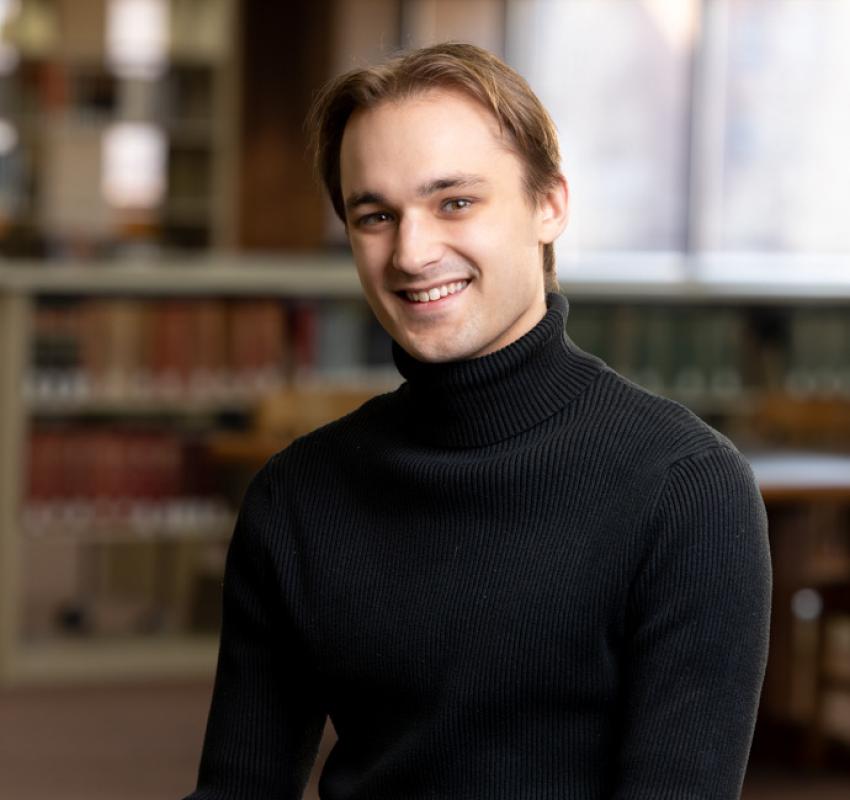
Espen Fredrick
Espen Fredrick is a Visiting Assistant Professor of Physics. A 2021 Gustavus alumnus, Dr. Fredrick earned his Ph.D. in Physics from the University of Texas at Arlington in 2025 before returning to the college, bringing with him a strong commitment to undergraduate education and student-centered research.
In the classroom, Dr. Fredrick emphasizes preparing students for future careers in science and related fields through a teaching philosophy centering on helping students develop the habits needed for independent problem solving. His favorite courses to teach include electromagnetic theory and quantum mechanics, where he enjoys helping students contextualize new mathematical formalisms to build their own physical intuition.
Dr. Fredrick’s research focuses on space plasma physics, particularly the interaction between the solar wind and Earth’s magnetic field. His work aims to improve predictions of how and when solar wind disturbances impact near-Earth space, contributing to a broader understanding of space weather and its effects on technological systems. At Gustavus, he is interested in involving undergraduates in research that emphasizes the accessibility of computational physics and empowers students to conduct meaningful research beyond traditional settings.
Beyond teaching and research, Dr. Fredrick currently assists students who operate the Olin Observatory, helping them gain hands-on experience with astronomical instrumentation. He values close collaboration with students and sees mentoring as one of the most rewarding aspects of his role. He is excited to help students grow as scientists, problem solvers, and future leaders.
Our People
Lisa Heldke
Lisa Heldke teaches in the philosophy department and the gender, women and sexuality studies program, of which she was a founding faculty member. Among her favorite courses to teach are modern philosophy (which, believe it or not, focuses on the eighteenth century); aesthetics; and gender, knowledge and reality. But her real passion is the philosophy of food, which she holds in the teaching kitchen of the Nobel Hall of Science, where students can cook together each week.
The philosophy of food is not only a teaching passion, it has also been a focus of much of her service work on campus. She is the co-founder of the Kitchen Cabinet, an advisory committee to the Gustavus Dining Service that works to enhance the ways it serves the mission of the College. The committee includes representation from all the campus constituencies, including students.
Food is also the focus of Heldke’s scholarly research; she is one of the first contemporary philosophers to treat food as a serious philosophical topic. She is the author or editor of a number of books in the field, including Philosophers at Table: On Food and Being Human; Exotic Appetites: Ruminations of a Food Adventurer; Cooking, Eating Thinking: Transformative Philosophies of Food; and (most recently) Parasitic Personhood and the Ontology of Eating. Her research has led to her being invited to teach each year in a master’s program at the University of Gastronomic Sciences in Pollenzo, Italy, a kind of “liberal arts college of food” founded by the Slow Food founder Carlo Petrini. Her scholarly work has also garnered her awards from the Agriculture, Food and Human Values Society and the John Dewey Society.
For ten years, she served as director of Gustavus’s Nobel Conference, a role she described as being the “chief learner” for this science-and-ethics extravaganza which is a highlight of the Gustavus academic year, and has brought more than 100 Nobel laureates to campus.
Her newest book project bears the working title “Yurtitude is Experience”; it’s a philosophical exploration of her summertime life in a yurt on the coast of Maine where she lives (mostly) off the grid with her Siberian husky, writing, baking bread in a wood-fired brick oven, and kayaking and sailing in Eggemoggin Reach. Winter finds her and her husky skijoring in the Gustavus Arboretum whenever the snow cover allows.
Our People
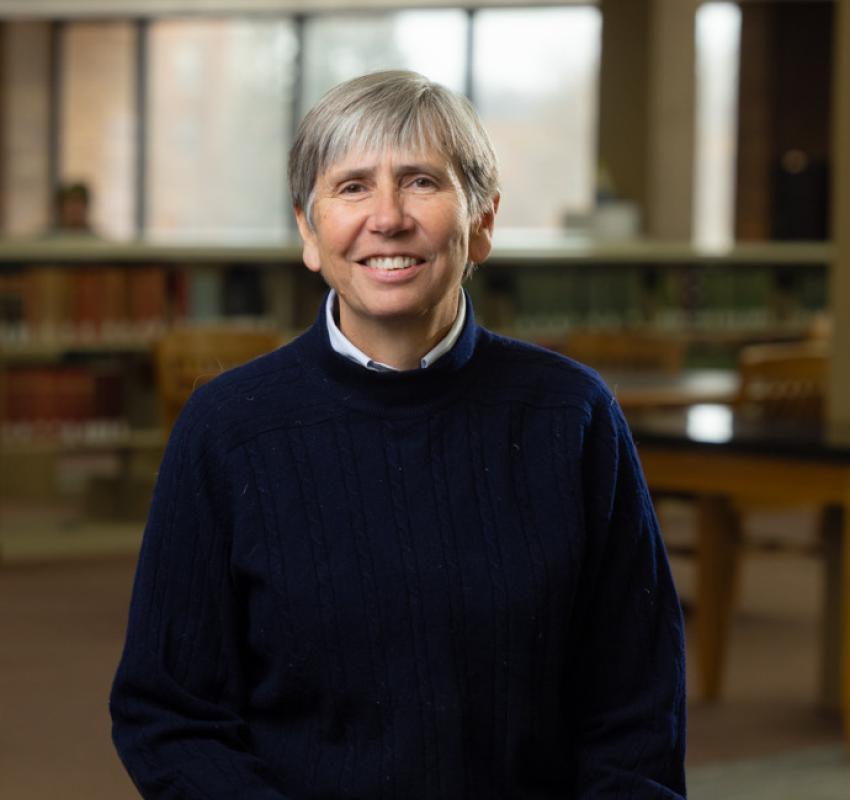
Carol Lagergren
Carol Lagergren is a Visiting Instructor in the Education Department. After working 32 years in K-12 education as a classroom teacher and administrator, she moved to Gustavus and taught for several years focusing on Middle and Secondary School Education courses. She currently supervises and supports student teachers in the Education Program.