Our People
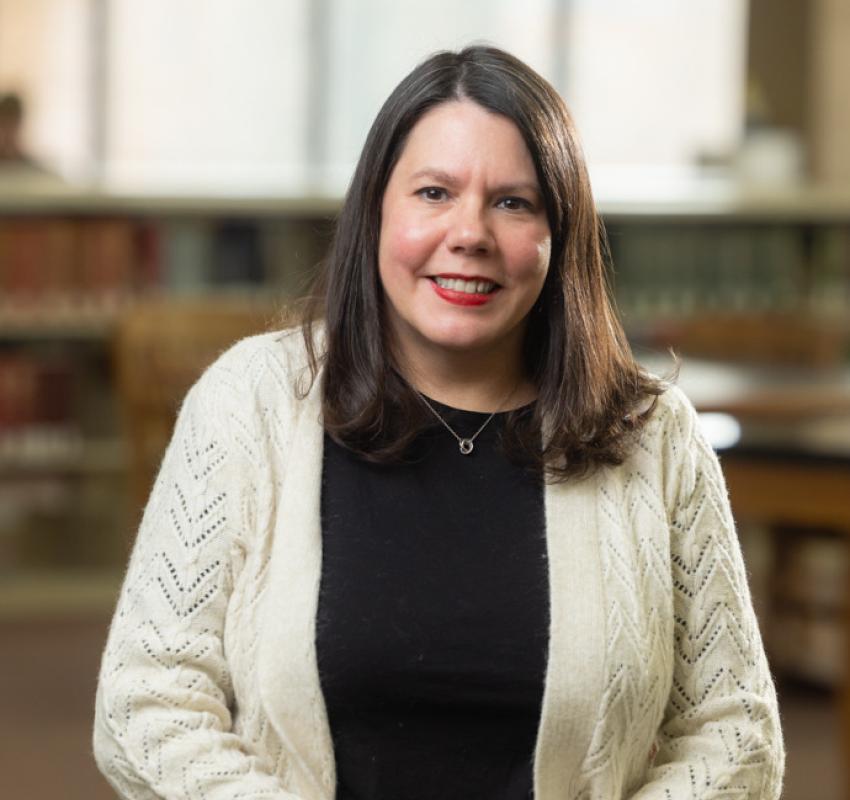
Jeffrey Ford
Dr. Jeff Ford has been a visiting assistant professor of mathematics at Gustavus since 2016. He has taught almost every mathematics course offered at Gustavus. His research is in topology, dynamical systems, and mathematics education. Dr. Ford has supervised three honors theses, two interdisciplinary research projects, and six independent studies. He has co-authored two books in dynamical systems and one in linear algebra. He is committed to providing open access educational materials to students and encouraging teachers to use active and inclusive pedagogy. To that end, he has presented more than 20 times at conferences on active learning and alternative grading.
Our People
Tiffany Grobelski
Dr. Tiffany Grobelski is a human geographer who works at the intersection of energy geography and peace studies. Her research (and much of her teaching) is focused on energy conflicts, social movement-led energy transition, and how grassroots movements build positive peace. Tiffany earned her PhD in Geography and a graduate certificate in Socio-Legal Studies from the University of Washington, Seattle. Her doctoral research examined how Polish environmental advocates mobilize administrative law. Immediately after graduate school, Dr. Grobelski served as an asylum officer for the U.S. Department of Homeland Security. In that role, she adjudicated hundreds of humanitarian protection claims and gained extensive experience in non-adversarial, trauma-informed interviewing.
She has since received training in Conflict Management and Mediation from the Institute of Peace and Conflict Studies at Conrad Grebel University College in Ontario, Canada. Dr. Grobelski's recent projects focus on energy conflicts in Minnesota. She is actively involved in the Peace & Justice Studies Association, as well as the Energy & Environment Specialty Group of the American Association of Geographers.
Dr. Grobelski is passionate about creative, effective teaching and sharing best practices with colleagues. She and geographer colleagues have received national attention for their approach to designing world geography classes. Dr. Grobelski has also convened a Working Group on Teaching Energy Geographies, which has international membership; the group aims to create a durable space for energy geography educators to build community and collective expertise.
Selected Publications:
- "Pipelines and Peacebuilding: Conflicting Sovereignties and Environmental Knowledge Creation along Line 3." In Handbook of Environmental Conflicts. Edward Elgar Publishing. (2026)
- “Changing the Coal Status Quo through Scalar Practices: The Anti-Smog Movement’s Contributions to Polish Energy Transition.” Environment and Planning C: Politics and Space 43 (7): 1369–90. (2025)
- (with Anna Versluis, and Jesse McClelland) “Discovering Geography through Doing Geography: Project-Based Learning in an Introductory Undergraduate World Geography Course.” Journal of Geography 122 (2): 31–42. (2023)
Our People
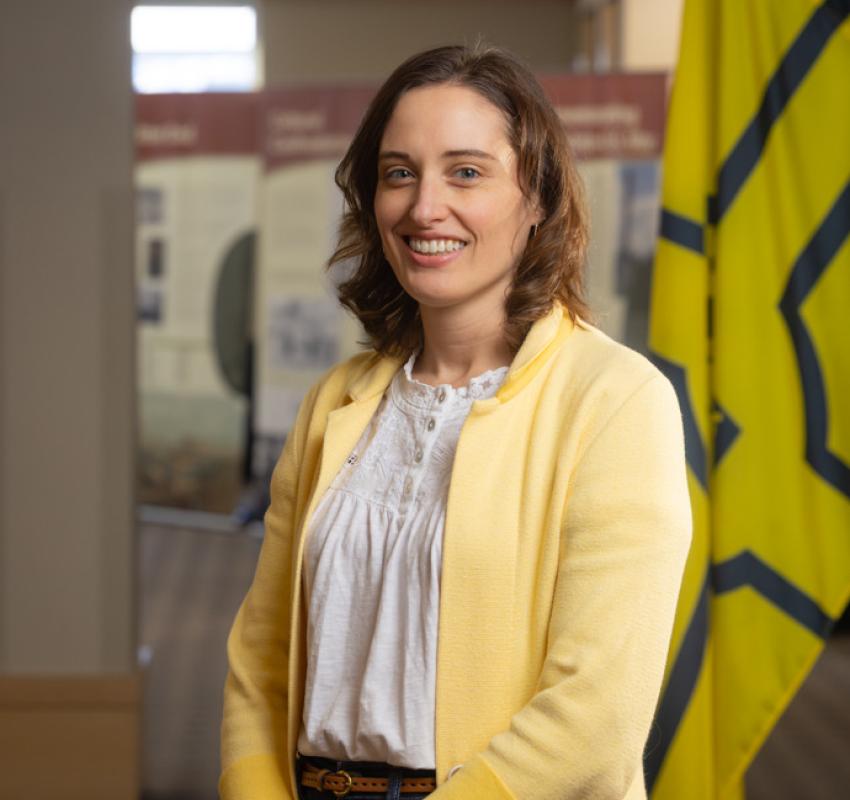
Julie Gilbert
Professor Julie Gilbert teaches information literacy to students across the curriculum. Her work is grounded in a deep belief that libraries play a vital role in student learning, wellbeing, and belonging, and that equitable access to information is fundamental to academic success and civic engagement. Through her teaching, research, and service, she is committed to making libraries and information accessible to all members of the campus community.
As an educator, Julie collaborates with faculty across disciplines to design instruction that supports students at every stage of their academic journey. Her teaching focuses on critical thinking, research strategies, source evaluation, and the ethical use of information in an increasingly complex landscape. She is especially passionate about demystifying research for students who may feel uncertain or overwhelmed by academic inquiry, and she strives to create learning environments that are inclusive, welcoming, and student-centered. By meeting students where they are, she helps them build confidence as researchers and lifelong learners.
In addition to her academic work, Julie is an award-winning author of books for young readers. Her writing reflects a lifelong engagement with libraries, storytelling, and literacy, and she brings this creative perspective into her teaching and librarianship. She believes strongly in the value of reading for pleasure and its role in intellectual growth, empathy, and wellness. In her role at the library, she takes particular pride in developing and curating collections, with a special emphasis on building vibrant, relevant current fiction holdings that invite students into the library as a place of discovery, connection, and enjoyment.
Julie’s research interests are interdisciplinary and evolving, reflecting the broad and changing role of libraries in higher education. She is especially interested in libraries as wellness spaces and in the ways library environments, services, and collections support not only academic achievement but also mental health, reflection, and community connection. Her work explores how libraries contribute to a holistic student experience and reinforce their importance as both intellectual and restorative centers of campus life.
A certified meditation teacher, Julie also coordinates the Gustavus Meditation Program. Through this work, she integrates contemplative practices into the academic environment and supports students, faculty, and staff in cultivating mindfulness, resilience, and balance. Whether teaching in the classroom, developing collections, supporting research, or leading meditation sessions, Julie’s work is guided by a belief in the transformative power of libraries and learning, and their central role in shaping a meaningful and supportive student experience.
Our People
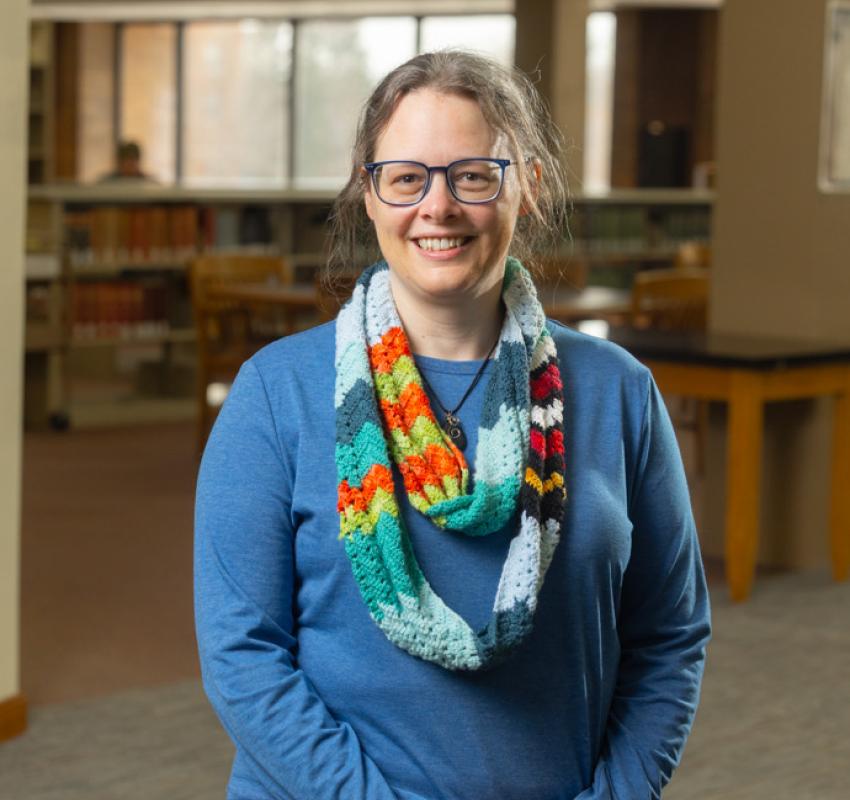
Andrew Kendall
Dr. Andrew Kendall serves as Associate Director of Choral Activities as well as Conductor of the Lucia Singers and the Choir of Christ Chapel. In addition to conducting his ensembles, he teaches courses in music education methods and conducting. Prior to his appointment at Gustavus, he served as Visiting Instructor and Conductor of The Gustavus Choir during the Spring 2023 semester. He earned his DMA in choral conducting at The University of Iowa, his MM in choral conducting at Louisiana State University, and his BA in music education from Gustavus Adolphus College. He has served as conductor of The Gustavus Choir, the LSU Chamber Singers, The University of Iowa Voxman Chorale, The University of Iowa University Choir, Musicorum, The St. John's Boys' Choir, and has held church music positions in Minnesota, Louisiana, and Iowa. He is a frequent choral clinician, guest conductor, and adjudicator.
Our People
Chris Nolting
Chris Nolting has been a Visiting Assistant Professor of Physics at Gustavus since 2023. In his classes, he focuses on including many worked example problems and opportunities for hands on learning in groups, and as many physics demonstrations as possible. As a computational astrophysicist, he enjoys showcasing examples related to astronomy whenever possible. His research focuses on the study of galaxy cluster environments and powerful jets from active galactic nuclei, supermassive black holes at the centers of galaxies that accrete matter and power some of the brightest objects in the universe. This work is mainly done through numerical simulations on compute clusters and supercomputers using up to tens of thousands of processors simultaneously. Gustavus students working on research with Chris learn coding languages and data visualization techniques, and even 3D print some of the structures they simulate.
Chris is the faculty advisor to the Society of Physics Students and the Gustavus Engineering Club.
Outside of Gustavus, Chris a self-identifying nerd. He is a lover of board games, magic the gathering, Marvel movies, anime, and going on walks with his dog.
Our People
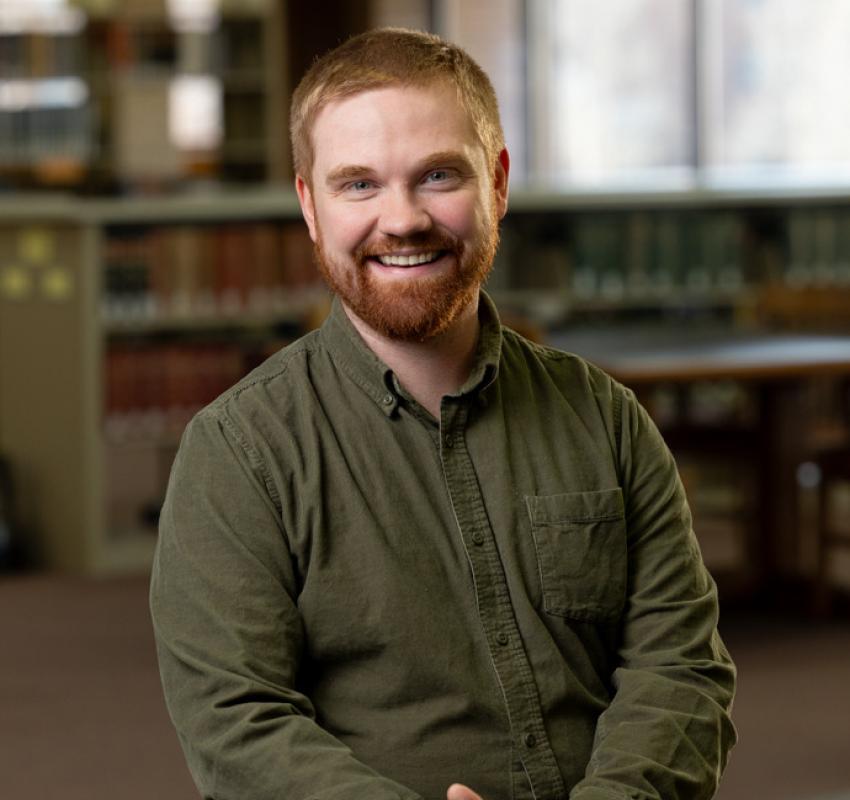
Jessica Helget
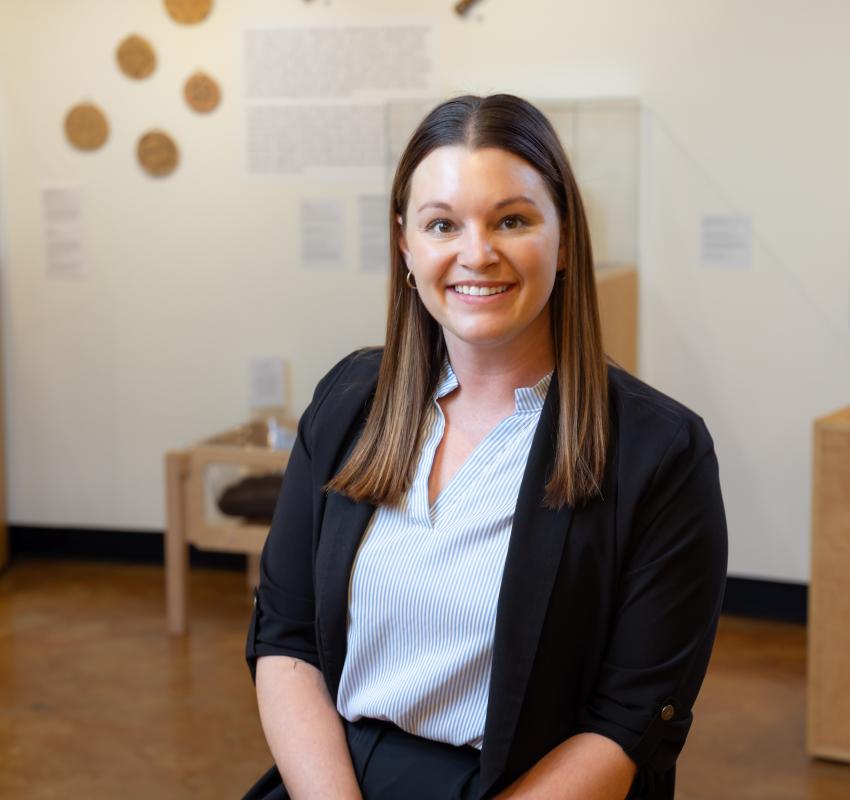
Jessica Helget, MS, RN, PHN is Senior Continuing Faculty in the Department of Nursing, where she serves as Simulation Faculty and teaches across the undergraduate nursing curriculum. She earned her Master of Science in Nursing Education from Saint Catherine University and her Bachelor of Arts in Nursing from Gustavus Adolphus College.
At Gustavus, Jessica leads the design, integration, and evaluation of simulation-based education across all levels of the program. Her expertise centers on high-quality clinical simulation aligned with the AACN Essentials and the International Nursing Association for Clinical Simulation and Learning (INACSL) Standards of Best Practice. She has developed a comprehensive simulation curriculum map that scaffolds student learning from foundational skills to complex clinical judgment, ensuring students graduate practice-ready and confident. In addition to simulation, she teaches medical-surgical nursing, and pre-health professions courses, blending didactic and experiential learning.
Helget’s teaching philosophy is deeply student-centered and grounded in experiential learning theory. She intentionally creates space for reflection, critical thinking, and application, often integrating mannequins and real-time clinical decision-making into classroom case studies. Her simulations follow structured pre-briefing and debriefing models such as PEARLS and Debriefing for Meaningful Learning, fostering psychological safety while challenging students to grow. Students frequently describe her courses as engaging, rigorous, and inspiring, reflecting her commitment to excellence and enthusiasm for the profession.
Her scholarly work focuses on simulation effectiveness, debriefing methodology, and NCLEX preparation. She has published in the Journal of Nursing Education and has presented regionally on innovative simulation practices. She currently collaborates with statistics students on research examining the impact of simulation on student outcomes and clinical readiness. She is actively involved in professional organizations including the National League for Nursing and INACSL, and she is pursuing Certified Healthcare Simulation Educator (CHSE) credentialing to further advance simulation scholarship and mentorship at Gustavus.
Within the College, Jessica serves on the Institutional Review Board, Nobel Committee, advises the Gustavus Student Nurses Association, participates in faculty mentoring and search committees, and contributes to campus initiatives such as Wellness as a Community. She is passionate about embedding equity, inclusion, and belonging principles into simulation scenarios, preparing students to provide culturally responsive care and address health disparities.
Beyond Gustavus, Helget continues to practice as a Registered Nurse at Mayo Clinic Health System in a progressive care setting, ensuring her teaching remains grounded in current clinical practice. She is also deeply engaged in community service, including board membership with the St. Peter Free Clinic and youth mentorship through local athletics and church programs.
Jessica believes nursing education is both an art and a science. She is committed to forming compassionate, competent leaders who will serve their communities with integrity, faith, and excellence—hallmarks of a Gustavus education.
Our People
Shu-Ling Wang
Dr. Shu-Ling Wang is an associate professor of Economics. She joined Gustavus in 2016 after a two-year appointment at The College of Wooster. Her teaching interests include Intermediate Macroeconomics, Money and Banking, International Finance, Public Finance, and Principles of Economics. As an active instructor in an interactive and interdisciplinary liberal arts environment, she enjoys developing and experimenting with innovative pedagogies to enrich students’ learning experiences. She also values mentoring undergraduate research that fosters critical and independent thinking. At Wooster, she advised several year-long senior independent studies, and at Gustavus, she offers writing-in-the-discipline courses in economics and mentors class-based research projects. In October 2023, her Money and Banking students’ paper titled “The Asian Crisis of 1997” won third place in the Economic Communication category of the Minnesota Economic Association (MEA) Undergraduate Paper Contest. In 2025, Dr. Wang served as a faculty panelist at the MAYDAY! Peace Conference at Gustavus, participating in the teach-in model addressing issues of peace, human rights, and social justice. More recently, she served on the Nobel Conference '63 Planning Committee (theme: AI and Human Agency).
Dr. Wang’s research focuses on Macroeconomics, Monetary Economics, and International Finance. She studies fiscal and monetary policy issues—such as fiscal stimulus, public debt, tax policy, income distributional effects, and monetary policy, using dynamic stochastic general equilibrium (DSGE) models with representative or heterogeneous agents. Her papers have been published in the Journal of Macroeconomics, Review of International Economics, and Economic Modelling. She received the Mansergh Faculty Scientific Research Award at Gustavus in both 2022 and 2025. Her recent project examines the debt-financed stimulus effects in a high-debt economy without monetary independence, considering different schemes and speeds of debt adjustment in a two-sector New Keynesian model. Future projects will examine the redistribution effects between savers and hand-to-mouth agents of debt-financing policies. She regularly presents her work at the The Midwest Economics Association, Canadian Economics Association, Western Economics Association, and Liberal Arts Macroeconomics conferences.
In addition to her research, Dr. Wang actively contributes to professional service. She serves as a reviewer for the Journal of Macroeconomics, Economic Modelling, Contemporary Economic Policy, Cambridge University Press, and the Bulletin of Economic Research. She has also served on the steering and program committees for the Liberal Arts Macroeconomics Conference and was a member of the Board of the Minnesota Economic Association. In 2025 she served as a mentor and a panelist for junior women economists at the CeMENT workshop sponsored by the AEA at the Federal Reserve Bank of Chicago.
Beyond academia, Dr. Wang is a mother of three children. She enjoys architecture, art, photography, and music. Her favorite architects include Frank Lloyd Wright, Louis Sullivan, and Zaha Hadid. She is also inspired by the works of Georgia O’Keeffe, Edward Hopper, and Claude Monet. A musician herself, she plays the piano, violin, and pipa (a Chinese lute). Her favorite composer is Johann Sebastian Bach of the Baroque period.
Our People
Steven Mellema
A Minnesota native, Steve Mellema received his undergraduate degree (with majors in physics and mathematics) from Gustavus Adolphus College in 1972. Following his graduation, he spent six years in Malaysia as a teacher and trainer with the United States Peace Corps. He subsequently attended graduate school at Ohio University, receiving a Ph.D. in experimental nuclear physics in 1983.
Following postdoctoral positions at Ohio University and the University of Wisconsin, he joined the faculty at Gustavus in 1986. He taught in the physics department through 40 years of graduating classes, and also served three terms as chair of the department.
As an active member of the American Association of Physics Teachers, Steve incorporated the results of physics-education research into his own teaching of physics for more than three decades, including peer instruction, cooperative-group problem solving, computer simulations, and studio methods. Steve was fortunate to receive two Fulbright Scholar appointments to Malaysia, and used them to bring some of those advancements in physics pedagogy to his adopted "second home'", teaching at the School of Physics at Universiti Sains Malaysia in Penang.
Over the years, he has also led four study-abroad courses taking Gustavus students to visit and study Malaysia. Steve retired from active teaching in 2025, and is currently a Research Professor of Physics.
Our People
Rebecca Fremo
Rebecca Taylor Fremo (Professor of English) earned her Ph.D. in Rhetoric and Composition at Ohio State University after completing her BA and MA in English at Virginia Tech. In the nearly three decades she’s spent at Gustavus, she’s served as English department chair, English co-chair, Director of Writing Across the Curriculum, and Director of the Writing Center. But Fremo’s real passion is teaching writing, and she’s been awarded the Edgar M. Carlson Award and the Swenson and Bunn Award for this work. Fremo likes nothing better than rolling up her sleeves and sitting side by side with student writers as they work through the challenges of sharing their stories. Fremo has published a variety of scholarly essays about teaching writing, but she’s most excited about her work as a creative writer. She recently completed a memoir titled Controlled Burn, which applies her observations as a gardener to her experiences raising three neurodivergent sons. Her poems and essays appear in journals including Mud Season Review, Mankato Magazine, Full Grown People, Paper Darts, and Water~Stone Review. She is also the author of one collection of poetry, Moving This Body, and a chapbook of poems titled Chasing Northern Lights. When she’s not at work, she’s probably in her garden or daydreaming about her next visit to the North Shore. She’s originally from Richmond, Virginia and still dreads the Minnesota winters–but the summers are worth it!
Our People
Espen Fredrick
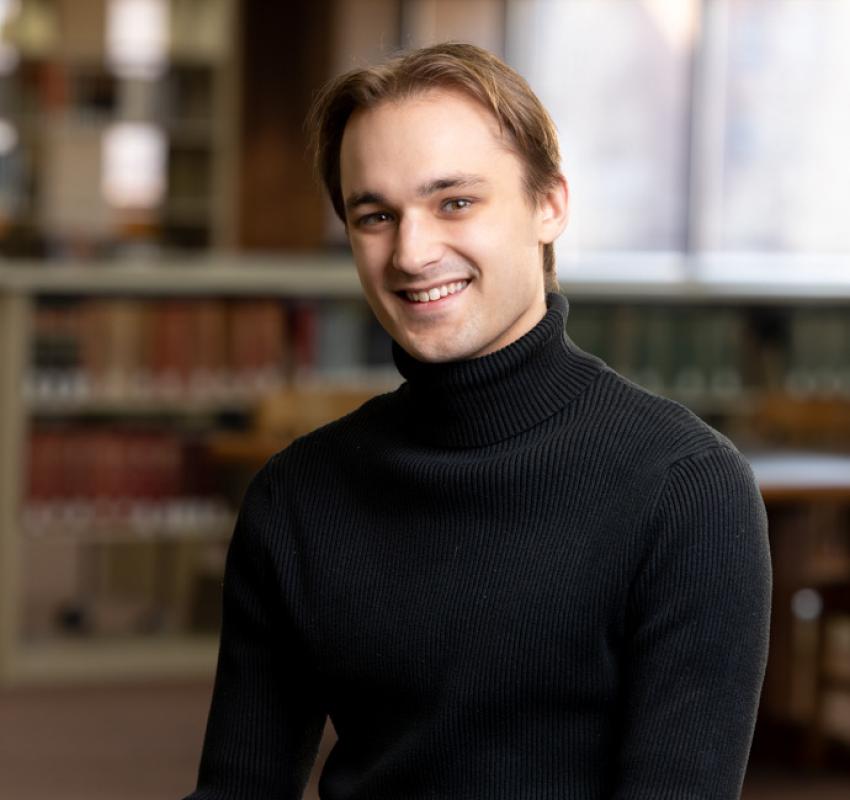
Espen Fredrick is a Visiting Assistant Professor of Physics. A 2021 Gustavus alumnus, Dr. Fredrick earned his Ph.D. in Physics from the University of Texas at Arlington in 2025 before returning to the college, bringing with him a strong commitment to undergraduate education and student-centered research.
In the classroom, Dr. Fredrick emphasizes preparing students for future careers in science and related fields through a teaching philosophy centering on helping students develop the habits needed for independent problem solving. His favorite courses to teach include electromagnetic theory and quantum mechanics, where he enjoys helping students contextualize new mathematical formalisms to build their own physical intuition.
Dr. Fredrick’s research focuses on space plasma physics, particularly the interaction between the solar wind and Earth’s magnetic field. His work aims to improve predictions of how and when solar wind disturbances impact near-Earth space, contributing to a broader understanding of space weather and its effects on technological systems. At Gustavus, he is interested in involving undergraduates in research that emphasizes the accessibility of computational physics and empowers students to conduct meaningful research beyond traditional settings.
Beyond teaching and research, Dr. Fredrick currently assists students who operate the Olin Observatory, helping them gain hands-on experience with astronomical instrumentation. He values close collaboration with students and sees mentoring as one of the most rewarding aspects of his role. He is excited to help students grow as scientists, problem solvers, and future leaders.
Our People
John Tengwall
Mr. Tengwall is a visiting professor in the Department of Business & Economics, where he engages students on a range of topics including Management & Leadership, Business Models & Growth Strategy, Sales & Marketing, and Supply Chain/Operations Management. He also serves on the Boards of two companies and provides management consulting services to a range of businesses.
Previously, Mr. Tengwall had a 12-year career with the Marmon Group, a Berkshire Hathaway Company. During this time he was President of EcoWater Systems LLC (2019 – 2024), a leading North American manufacturer and marketer of residential and light commercial water softening and filtration systems. Prior to that, he was president of Marmon Food & Beverage Solutions Group (2013 – 2019), which was comprised of two different businesses, Marmon Link and Marmon Renew. Marmon Link (previous dba 3Wire Group Inc) is a provider of parts, training and service for foodservice and beverage dispensing equipment. Marmon Renew is a re-manufacturer of commercial beverage dispensing and related foodservice equipment.
Prior to his executive leadership roles with Marmon/Berkshire Hathaway, he had a 17-year career with Ecolab (NYSE: ECL). There he held several progressively more responsible leadership roles in the Institutional and Food & Beverage operating divisions. He led the marketing function for both business segments and engaged in multiple acquisitions as part of the overall business growth strategy.
Mr. Tengwall began his career as a microbiologist in the Sterilization Technology & Process Control Validation group at The Upjohn Company (now Pfizer). He then pivoted into marketing and business development roles with IMI Cornelius Inc., a subsidiary (at the time) of IMI plc.
Our People
Kathleen Keller
Kathleen Keller is a professor of History. Keller’s research specialization is in the history of France and West Africa in the twentieth century. Keller did research in archives in Paris, Aix-en-Provence, France and Dakar, Senegal to write her first book, “Colonial Suspects: Suspicion, Imperial Rule, and Colonial Society in Interwar French West Africa.” This book, published by University of Nebraska Press uses police sources to understand police surveillance, anti-colonial activity, and the cosmopolitan society that emerged in the cities of French West Africa in the 1920s and 1930s.
Keller’s latest book project, “A Magnificent Fraud: An African Life in Twentieth Century France,” under contract with Louisiana State University Press, considers the life of Alioune Kane, an African migrant to France who reinvented himself many times over decades, especially during the German occupation during World War II. The book manuscript provides new insight into what it meant to be a Black Frenchmen and traces the story through the Second World War when Kane faced dangerous choices.
Keller has published academic articles in the journals French Historical Studies, French Colonial History, and the Oxford Research Encyclopedia of African History. She has also published public history essays in the Washington Post.
Keller’s teaching at Gustavus covers a wide range of topics in world, imperial, European, African, and women’s history. Her favorite courses to teach delve into complex and morally fraught moments of twentieth century history—France under Nazi Occupation and South Africa and Apartheid. She most enjoys working with students to improve their writing and to find research topics that match their personal interests.
At Gustavus since 2011, Keller also serves as the director of the African/African Diaspora Studies program and director of Writing across the Curriculum.