Our People
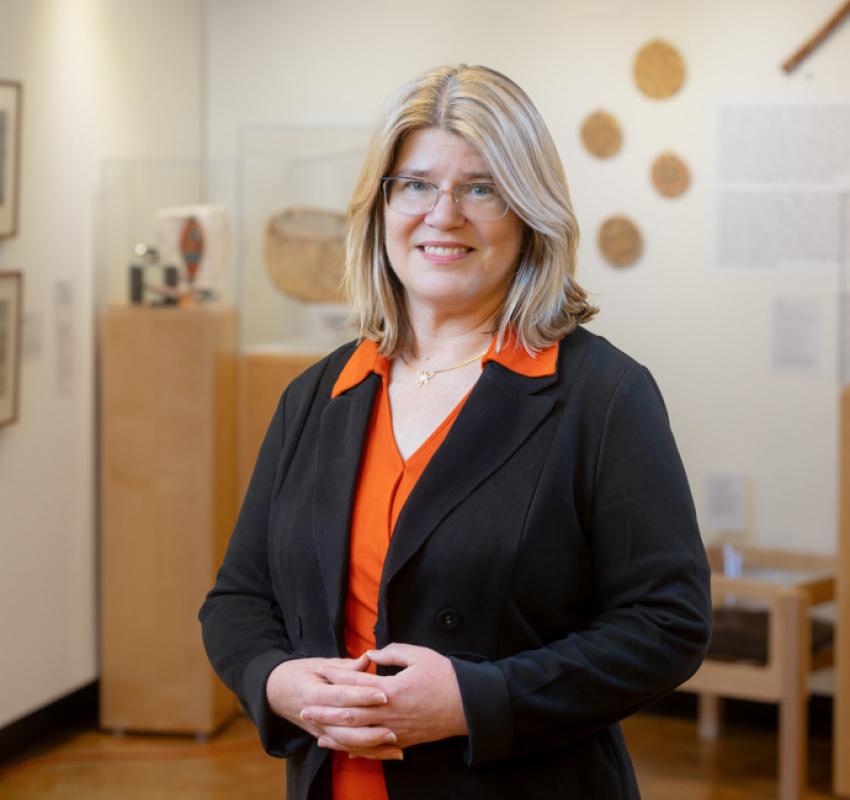
Matthew Panciera
Matt Panciera is an associate professor of Greek, Latin, and Classical Studies. He truly enjoys teaching the languages - all levels of Greek and Latin - in addition to a wide range of classical studies courses; everything from Greek tragedy to Roman history. His research focuses on the incredible treasure trove of information found in the Pompeian graffiti scratched into the walls of the ancient city by its beautifully ordinary inhabitants before it was buried under the eruption of Mount Vesuvius. He is extremely grateful to have been awarded on three occasions a NEH Summer Seminar for K-12 teachers where they, together with a team of distinguished scholars, explored the topic of of Roman daily life as seen in the Roman novelist Petronius and the archaeological and epigraphical remains of Pompeii. He has also worked on Roman funerary inscriptions including the epitaph of the unforgettable freedwoman, Allia Potestas.
Matt feels fortunate to have been hired on four different occasions by the Intercollegiate Center for Classical Studies in Rome and he is a passionate advocate for teaching and learning on site. He always finds himself experiencing ideas, making connections, and asking questions that would never occur to him without the inspiration of standing in the place where the ancient Greeks and Romans once lived their lives. He is happy to teach a class where the students "nerd out" and dive deep into the Greeks and Romans for their own sake. But ultimately he believes, both for himself and his students, the greatest benefit of spending time with the Greeks and Romans is how much we learn about ourselves and what we want to make of our own world.
If pressed, on most days he would say his favorite classical authors to read in the original language are Homer and Ovid. He recognizes the beauty of Greek and the genius of so much that came to fruition in Athens in the 5th century BCE—the histories of Herodotus and Thucydides, the birth of western philosophy, tragedy (Sophocles is his favorite)—but he is more at home in Latin and loves the way that reading Petronius and Pompeian graffiti feels like looking through a window directly at the ancient Romans. His favorite classical building is the Pantheon in Rome and his favorite site is Segesta in Sicily.
Outside of work he loves to cook for his family, visit the Boundary Waters, root for all the Boston teams (but also the Vikings), play golf, and exercise.
Our People
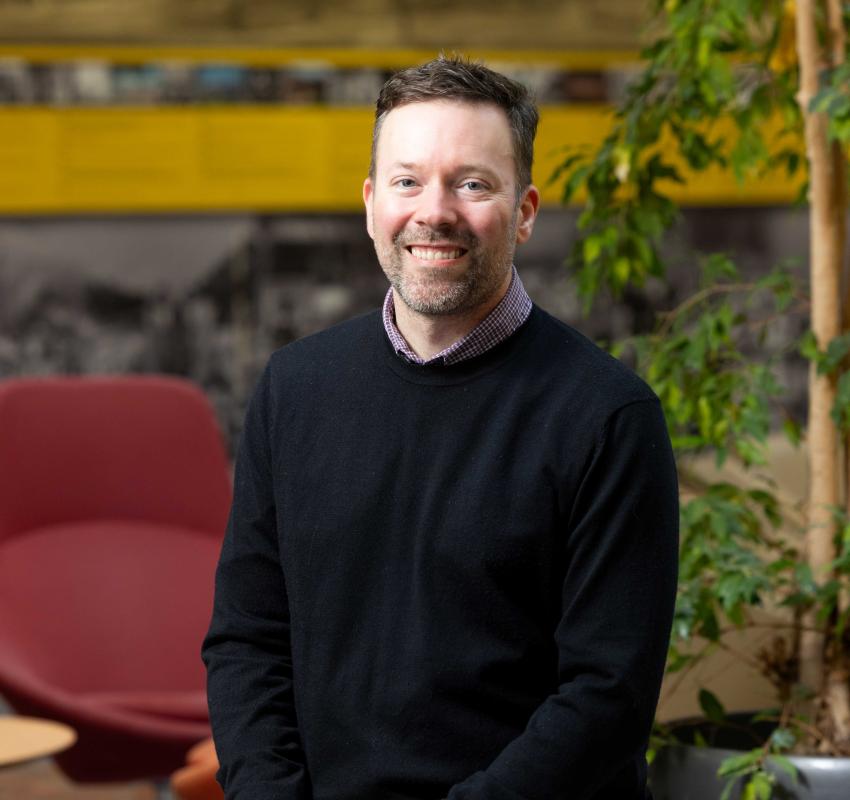
Justin Knoepfel
Dr. Justin Knoepfel, recipient of the Dr. Carlo A. Sperati Award, joined the Gustavus faculty in 2009. He currently serves as the Chair of the Department of Music, conductor of the Gustavus Symphony Orchestra (GSO), and instructor of viola. Transitioning from a career as a professional string player to the podium, Dr. Knoepfel brings a deep understanding of technical complexity and expressive nuance to his conducting, providing a rigorous yet engaging experience for his ensembles.
Beyond campus, Dr. Knoepfel is a highly sought-after clinician, guest conductor, and adjudicator. He recently served as the guest festival conductor for the Dorian Orchestra Festival. Under his leadership, the Gustavus Symphony Orchestra maintains a robust performance schedule—including high-profile events like Christmas in Christ Chapel and the Nobel Conference—and tours annually. The GSO embarks on international tours every four years, with the most recent journey to Ireland and Scotland.
As an accomplished violist, Dr. Knoepfel’s performance credits include the Minnesota Orchestra, Minnesota Opera, and the South Dakota, Mankato, and La Crosse Symphony Orchestras. His artistry has taken him across the United States and Europe, performing at prestigious venues. He frequently collaborates with members of the Minnesota Orchestra and the Saint Paul Chamber Orchestra. A dedicated educator, he has served on the faculty for programs such as the Lutheran Summer Music Academy, MNSOTA Summer String Camp, and the International Viola Congress. His freelance career is equally diverse, ranging from sharing the stage with legends like The Eagles and Idina Menzel to performing privately for King Carl XVI Gustaf and Queen Silvia of Sweden.
Dr. Knoepfel resides with his wife, Elisa, and their five children. The household is completed by Regan, a Bernedoodle, and Avery, a Ragdoll cat. Above all his professional achievements, family remains the center of his life.
Our People
Thomas Young
Thomas has over 35 years of international professional fundraising experience including 20 years at Gustavus. His career is marked with a successful track record of campaigns for a variety of non-profit organizations throughout the United States as well as overseas.
The Advancement Office at Gustavus includes responsibility for the annual fund, major gift fundraising as well as alumni and parent engagement. As Vice President, Young led his team through two successful comprehensive campaigns for physical initiatives as well as endowment growth. The campaigns generated over $400 million of documented commitments to the College including the largest commitments in the history of the College.
His position at Gustavus includes responsibility for representing the College in Sweden and has been instrumental in maintaining the College’s relationship with the Nobel Foundation and the Royal Court. He has helped recruit three Board members from Sweden and raised nearly $5 million from Swedish sources.
Our People
Hannah Drea
Hannah Drea, MS, BSN, PHN is Nursing Faculty, a Clinical Instructor, and the Clinical Coordinator within the Gustavus Nursing Program. She has taught a variety of courses across the nursing curriculum, including Medical–Surgical Clinical, Pre-Health Professions, Public Health, and Public Health Clinical. Through these diverse teaching experiences, she supports students at different stages of their academic and professional development. She is committed to the College’s liberal arts mission, striving to help students reach their full potential, foster a passion for lifelong learning, and prepare them for lives of leadership and service. Her teaching pedagogy emphasizes student-centered and collaborative learning, encouraging students to actively construct knowledge through experiential learning while adapting to diverse learning styles.
In her role as Clinical Coordinator, Hannah facilitates high-quality clinical learning experiences by securing, scheduling, and managing student placements across healthcare settings while ensuring compliance with accreditation and regulatory standards. She serves as a liaison between the nursing program and clinical partners, overseeing site contracts, coordinating student and faculty orientations, and tracking required clinical hours. Her responsibilities include clinical placement management, partnership development with healthcare organizations, and comprehensive compliance and documentation oversight—such as immunizations, CPR certification, background checks, HIPAA training, and adherence to site-specific policies. She also monitors and evaluates the quality and effectiveness of clinical experiences to support continuous improvement and student success.
Hannah brings clinical expertise to her teaching, with a strong background in medical–surgical and endoscopy nursing. Her experience in the Endoscopy Unit includes colonoscopies, esophagogastroduodenoscopies (EGDs), endoscopic retrograde cholangiopancreatography (ERCPs), BRAVO placements, dilations, pre-operative EGDs for bariatric surgery, and bronchoscopies. She has also been involved in the implementation of robotic bronchoscopies, reflecting her engagement with advancing clinical technologies.
In her medical–surgical nursing practice, Hannah specialized in the care of patients with gastrointestinal and urinary conditions, hospice and end-of-life needs, cancer-related complications, post-surgical recovery, withdrawal management, and a wide range of other medical and surgical conditions. This breadth of experience informs her ability to connect theory to practice and prepare students for the complexities of clinical care.
In addition to her clinical coordination and teaching responsibilities, Hannah is actively engaged in professional service and collaboration through the Gustavus Nursing Program Local Advisory Board, the Minnesota Nursing Student Internship Consortium, and the MN Academic Networking Group. These collaborative groups provide guidance and direction to support best student outcomes by strengthening the connection between didactic course knowledge and clinical practice.
She actively participates in ongoing continuing education to remain current in nursing practice and education. Her professional memberships include the National League for Nursing and the National Center for Faculty Development and Diversity, through which she stays connected to best practices in nursing education and clinical coordination, further enriching her work with students and colleagues.
Our People
Kathleen Keller
Kathleen Keller is a professor of History. Keller’s research specialization is in the history of France and West Africa in the twentieth century. Keller did research in archives in Paris, Aix-en-Provence, France and Dakar, Senegal to write her first book, “Colonial Suspects: Suspicion, Imperial Rule, and Colonial Society in Interwar French West Africa.” This book, published by University of Nebraska Press uses police sources to understand police surveillance, anti-colonial activity, and the cosmopolitan society that emerged in the cities of French West Africa in the 1920s and 1930s.
Keller’s latest book project, “A Magnificent Fraud: An African Life in Twentieth Century France,” under contract with Louisiana State University Press, considers the life of Alioune Kane, an African migrant to France who reinvented himself many times over decades, especially during the German occupation during World War II. The book manuscript provides new insight into what it meant to be a Black Frenchmen and traces the story through the Second World War when Kane faced dangerous choices.
Keller has published academic articles in the journals French Historical Studies, French Colonial History, and the Oxford Research Encyclopedia of African History. She has also published public history essays in the Washington Post.
Keller’s teaching at Gustavus covers a wide range of topics in world, imperial, European, African, and women’s history. Her favorite courses to teach delve into complex and morally fraught moments of twentieth century history—France under Nazi Occupation and South Africa and Apartheid. She most enjoys working with students to improve their writing and to find research topics that match their personal interests.
At Gustavus since 2011, Keller also serves as the director of the African/African Diaspora Studies program and director of Writing across the Curriculum.
Our People
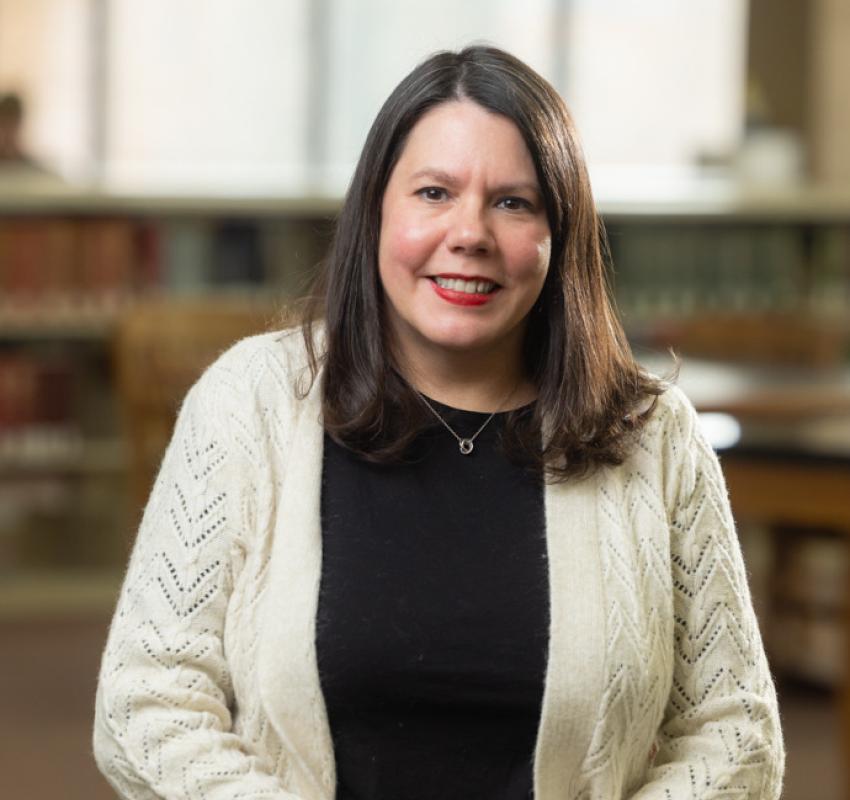
Julie Gilbert
Professor Julie Gilbert teaches information literacy to students across the curriculum. Her work is grounded in a deep belief that libraries play a vital role in student learning, wellbeing, and belonging, and that equitable access to information is fundamental to academic success and civic engagement. Through her teaching, research, and service, she is committed to making libraries and information accessible to all members of the campus community.
As an educator, Julie collaborates with faculty across disciplines to design instruction that supports students at every stage of their academic journey. Her teaching focuses on critical thinking, research strategies, source evaluation, and the ethical use of information in an increasingly complex landscape. She is especially passionate about demystifying research for students who may feel uncertain or overwhelmed by academic inquiry, and she strives to create learning environments that are inclusive, welcoming, and student-centered. By meeting students where they are, she helps them build confidence as researchers and lifelong learners.
In addition to her academic work, Julie is an award-winning author of books for young readers. Her writing reflects a lifelong engagement with libraries, storytelling, and literacy, and she brings this creative perspective into her teaching and librarianship. She believes strongly in the value of reading for pleasure and its role in intellectual growth, empathy, and wellness. In her role at the library, she takes particular pride in developing and curating collections, with a special emphasis on building vibrant, relevant current fiction holdings that invite students into the library as a place of discovery, connection, and enjoyment.
Julie’s research interests are interdisciplinary and evolving, reflecting the broad and changing role of libraries in higher education. She is especially interested in libraries as wellness spaces and in the ways library environments, services, and collections support not only academic achievement but also mental health, reflection, and community connection. Her work explores how libraries contribute to a holistic student experience and reinforce their importance as both intellectual and restorative centers of campus life.
A certified meditation teacher, Julie also coordinates the Gustavus Meditation Program. Through this work, she integrates contemplative practices into the academic environment and supports students, faculty, and staff in cultivating mindfulness, resilience, and balance. Whether teaching in the classroom, developing collections, supporting research, or leading meditation sessions, Julie’s work is guided by a belief in the transformative power of libraries and learning, and their central role in shaping a meaningful and supportive student experience.
Our People
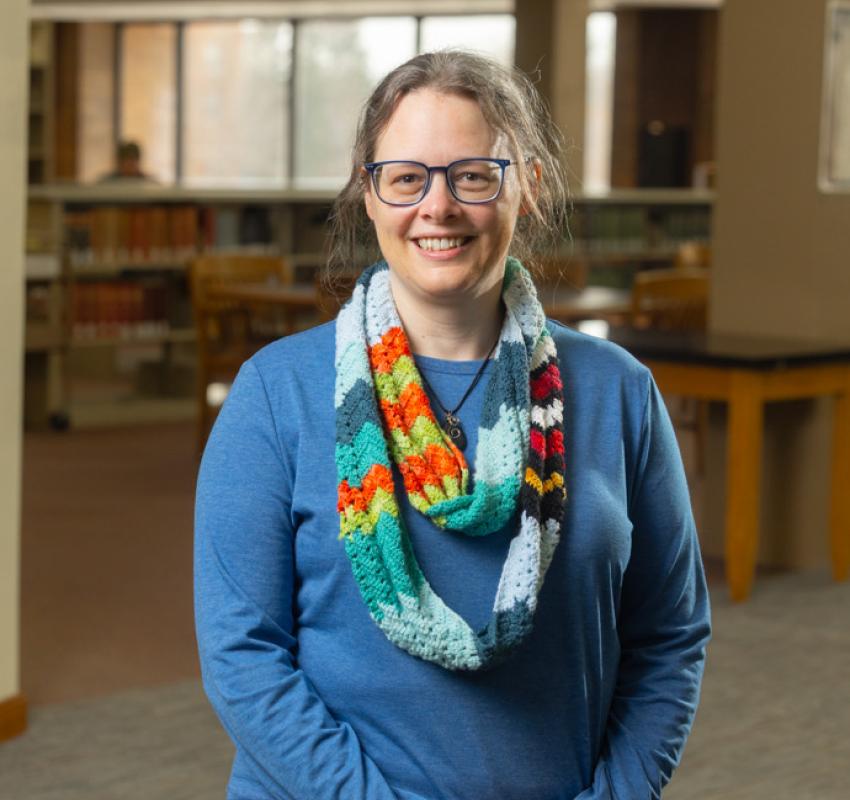
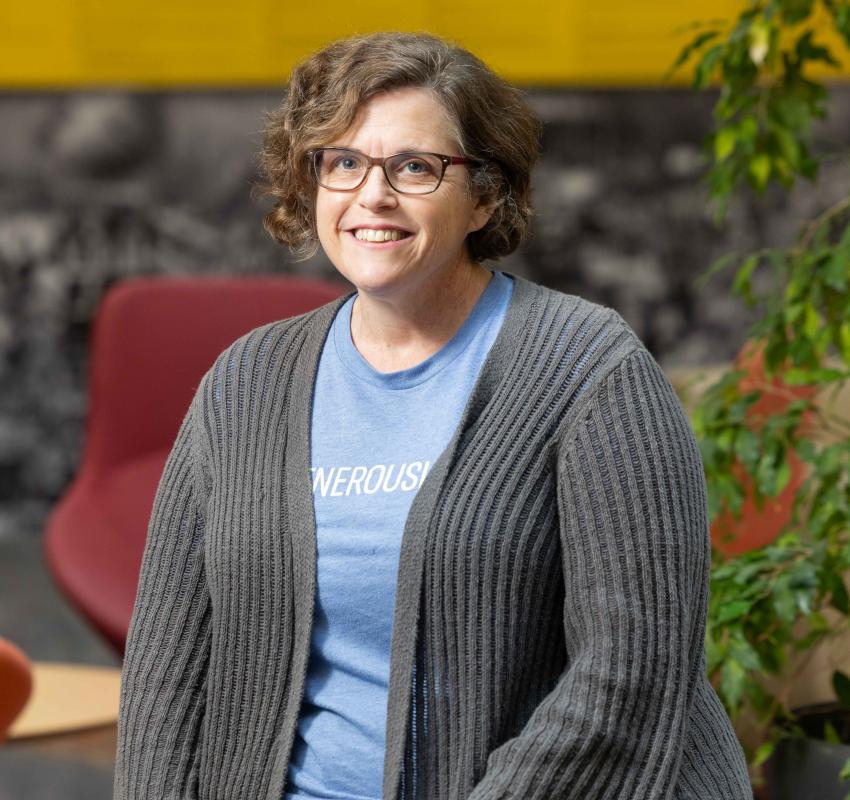
Rebecca Fremo
Rebecca Taylor Fremo (Professor of English) earned her Ph.D. in Rhetoric and Composition at Ohio State University after completing her BA and MA in English at Virginia Tech. In the nearly three decades she’s spent at Gustavus, she’s served as English department chair, English co-chair, Director of Writing Across the Curriculum, and Director of the Writing Center. But Fremo’s real passion is teaching writing, and she’s been awarded the Edgar M. Carlson Award and the Swenson and Bunn Award for this work. Fremo likes nothing better than rolling up her sleeves and sitting side by side with student writers as they work through the challenges of sharing their stories. Fremo has published a variety of scholarly essays about teaching writing, but she’s most excited about her work as a creative writer. She recently completed a memoir titled Controlled Burn, which applies her observations as a gardener to her experiences raising three neurodivergent sons. Her poems and essays appear in journals including Mud Season Review, Mankato Magazine, Full Grown People, Paper Darts, and Water~Stone Review. She is also the author of one collection of poetry, Moving This Body, and a chapbook of poems titled Chasing Northern Lights. When she’s not at work, she’s probably in her garden or daydreaming about her next visit to the North Shore. She’s originally from Richmond, Virginia and still dreads the Minnesota winters–but the summers are worth it!
Our People
Lucas Rapisarda
Dr. Lucas Rapisarda is a visiting professor of biology. As an environmental social scientist, his research interests sit at the nexus of environment and society, specifically how physical and sociocultural access to the environment impacts the sense of place and natural resource use of historically marginalized communities in the outdoors. At Gustavus, Dr. Rapisarda teaches introductory and organismal biology, as well as an upper-level ornithology course.
Our People
Maddalena Marinari
Maddalena Marinari is a Professor of History and the Dorothy Peterson, Mildred Peterson Hanson, and Arthur Jennings Hanson Endowed Professor of Liberal Studies. She is the author of Unwanted: Italian and Jewish Mobilization Against Restrictive Immigration Laws, 1882–1965 (University of North Carolina Press, 2020) and of several articles on immigration restriction, U.S. immigration policy, and immigrant mobilization in the Journal of American History, Journal of Policy History, Journal of American Ethnic History, Journal of the Gilded Age and Progressive Era, and Social Science History Journal. She has also co-edited four volumes on different aspects of US immigration history in the twentieth century, a special issue of the Journal of American History on the centennials of the immigration restriction acts of the 1920s, and a special issue of the Journal of American Ethnic History on migration and citizenship. Her next book explores the history of family, marriage, and sexuality in U.S. immigration policy from 1875 to 2025. She is also one of the scholars who created the Immigration Syllabus, an online tool for anyone interested in understanding the history behind current debates on immigration, and of Immigrants in COVID America, a curated collection of resources that chronicles the impact of the pandemic on migrant and refugee communities in the United States. Professor Marinari is currently president of the Immigration and Ethnic History Society and Editor in Chief of the Oxford Research Encyclopedia of Migration Studies. She has received funding from the American Philosophical Society, the Gilder Lehrman Institute of American History, the Immigration History Research Center, the Social Science Research Council, and the American Society for Legal History for her research and her public projects.
At Gustavus, she teaches a broad range of courses in U.S. history since 1865 and is an active member of the community. Her service to the College includes her tenure on the Faculty Senate and the Personnel Committee as well as her roles as the Kendall Center Associate for Faculty, Research, and Scholarship and as the Kendall Center Associate for Excellence in Teaching. In 2023, she received the Gustavus Faculty Service Award for her work on the Faculty Task Force. In 2021, Gustavus Adolphus College awarded her the Gustavus Faculty Scholarly Accomplishment Award in recognition of her scholarship accomplishments.
Our People
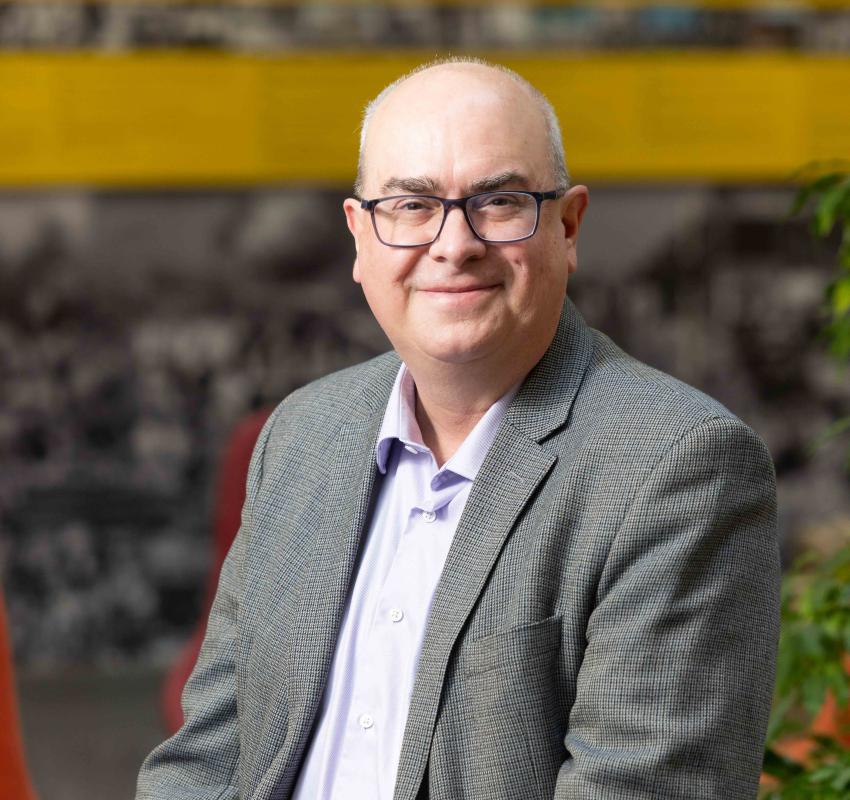
Scott Moore
Scott Moore has enjoyed more than four decades of experience as a musician and educator. His career includes over a thousand concerts with renowned American orchestras and jazz legends to collaborating with pop music icons and touring Broadway productions. He is the only bass trombonist to have studied in the Juilliard School's Professional Studies program.
Now that he has moved beyond the stage, Dr. Moore is a dedicated mentor at the College, where he challenges students to rethink their attitudes and perspectives. His core message to students is to cultivate resilience by embracing a positive outlook and understanding the powerful idea that we can become what we think about. He has served as a department chair and has taught a wide range of courses, from music theory and history to technology and academic research. Currently, his courses on pop music and seminars for first-year and advanced students focus on a powerful lesson: the joy of creation should always be celebrated over the stress of competition.
Our People
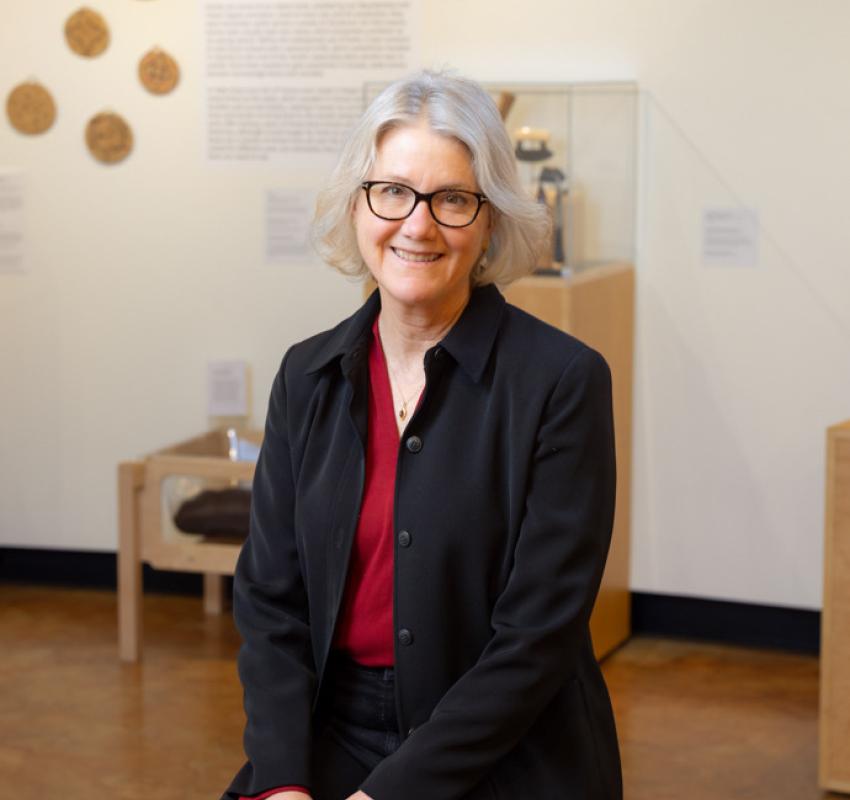
Pamela Kittelson
Professor Pamela Kittelson enjoys collaborating with students and colleagues. Her teaching has focused on ecology, plant physiology, evolution and general biology. Over 35 undergraduates from her lab have examined how habitat fragmentation affects plant populations, specifically how genetic variation, herbivory and plant traits change with population size and isolation. Students in her lab have published or presented this work and built scientific skills in writing, experimental design and analysis. After graduation, her advisees and former research students excel in careers ranging from natural resource management to education, research, medicine, biotechnology, law, and scientific writing.
Dr. Kittelson is the director of the Gustavus Fellowships Office. She supports and encourages all undergraduates by helping them identify and apply for nationally competitive funding which furthers their goals while in college or as alumni. These organizations include the Fulbright U.S. Student Program, Critical Language Scholarship, National Science Foundation, and the Goldwater, Truman, Udall and Boren Scholarships.
She also serves as the Director of the Midstates Consortium for Math and Science, which is an organization that promotes excellence in STEM research and teaching. She organizes professional development programs for faculty and undergraduate students from ten liberal arts colleges and two research universities. Each year, she runs two undergraduate research conferences where Gustavus and other Consortium students present their research at the University of Chicago or Washington University in St. Louis.
As a first generation college graduate, Dr. Kittelson understands the importance of having a good mentor who encourages one’s education. She enjoys the advising and mentoring relationships she has built with Gusties over the years.
Pamela relishes opportunities to be in natural areas with students; she has led students on several travel and wilderness courses. In her spare time, she enjoys hiking, canoeing, going fast downhill on skis or a bike, and camping. She putters around in gardens, museums or while watching birds. Travel near and wide is treasured. She relaxes with good books or music and the company of friends.
Our People
Ursula Lindqvist
Ursula Lindqvist, PhD, is Thorstensson, McKnight, Nordstrom Endowed Chair and Professor in Scandinavian Studies and a founder of the interdisciplinary minor in Comparative Literature. She is known for her research in Nordic global cinema and in postcolonial studies, commitment to undergraduate teaching and mentorship, and her leadership within the College and in her field. Before coming to Gustavus in 2013, Dr. Lindqvist directed the undergraduate program in Scandinavian Studies and founded the Scandinavian Languages Program at Harvard University.
A passion for interdisciplinary teaching and research brought her to Gustavus, where she contributes to programs in Gender, Women, & Sexuality Studies; Peace, Justice, & Conflict Studies; African & African Diaspora Studies; Film & Media Studies; Latin American, Latinx & Caribbean Studies; and Comparative Literature. She leads a college-wide grant project, “Storytelling and Sensemaking at a Settler Institution: Walking a Shared Path with Dakota Neighbors,” funded by the Council of Independent Colleges/the Lilly Endowment.
Dr. Lindqvist’s research has focused on Nordic cinema, global literatures, and unsettling colonial narratives. Her first book, Roy Andersson’s Songs from the Second Floor: Contemplating the Art of Existence, was published in the University of Washington Press’ Nordic Film Classics series. She also co-edited two global anthologies: A Companion to Nordic Cinema (Wiley-Blackwell) with Mette Hjort, and New Dimensions of Diversity in Nordic Culture and Society (Cambridge Scholars) with Jenny Björklund. She has published articles in peer-reviewed journals including PMLA, Modernism/Modernity, and African and Black Diaspora. Her most influential work, “The Cultural Archive of the IKEA Store” (Space and Culture, 2009), has been taught at colleges worldwide. Her expertise as a Nordic film scholar has been sought by media outlets such as the New York Times and National Public Radio as well as film festivals and retrospectives.
In recent years, Dr. Lindqvist’s research has pivoted toward settler history, culture, and decolonization. Her current monograph in progress, Unsettling the Settler Archive, includes a critical examination of the founding story of Gustavus Adolphus College on Dakota lands. She has involved Gustavus students in her research since it began in 2021 and sponsored a student advisee to present at a national scholarly conference in 2023. Dr. Lindqvist recently received external grants to support additional archival work at the Swenson Center for Swedish Immigration Research at Augustana College in Illinois and at the House of Emigrants in Växjö, Sweden, where she gave an invited public lecture in 2024. From this work she developed the college’s first approved Signature Experience (SigX) research course, SCA-290 Unsettling the Archive, to immerse students in archival research and to train them to carry out sensitive, intercultural interviews with Indigenous people, bringing their stories in dialogue with settler archives.
Dr. Lindqvist spent five years as news writer and investigative reporter in the Arabian Gulf, India, and Florida prior to earning her PhD. Her roots are in Finland’s Swedish-speaking minority, and she is bilingual in Swedish and English.