

Our People
Pamela Kittelson
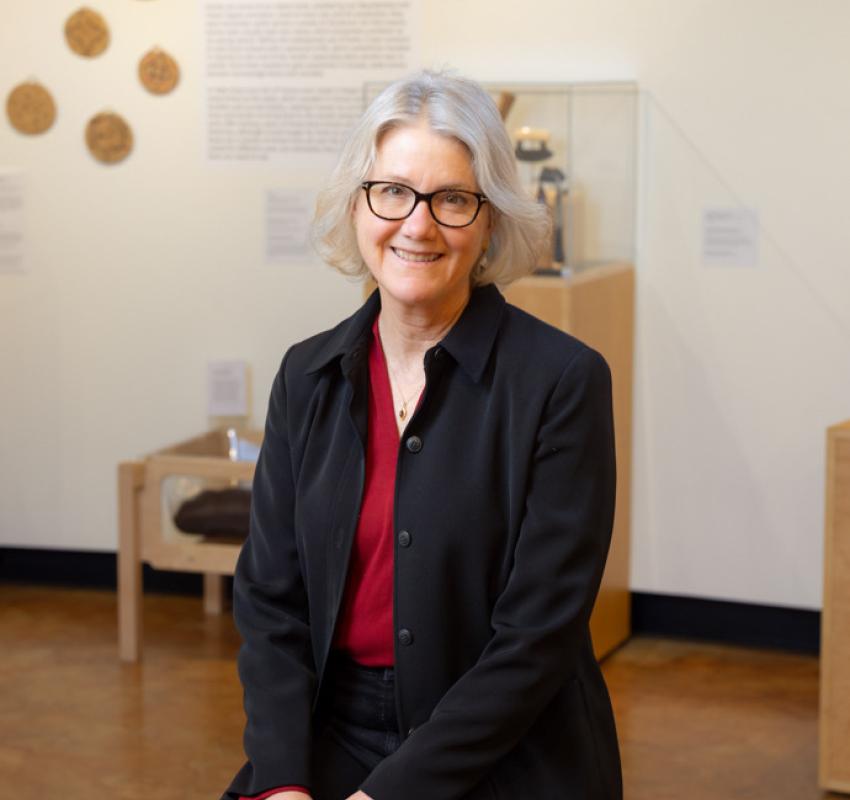
Professor Pamela Kittelson enjoys collaborating with students and colleagues. Her teaching has focused on ecology, plant physiology, evolution and general biology. Over 35 undergraduates from her lab have examined how habitat fragmentation affects plant populations, specifically how genetic variation, herbivory and plant traits change with population size and isolation. Students in her lab have published or presented this work and built scientific skills in writing, experimental design and analysis. After graduation, her advisees and former research students excel in careers ranging from natural resource management to education, research, medicine, biotechnology, law, and scientific writing.
Dr. Kittelson is the director of the Gustavus Fellowships Office. She supports and encourages all undergraduates by helping them identify and apply for nationally competitive funding which furthers their goals while in college or as alumni. These organizations include the Fulbright U.S. Student Program, Critical Language Scholarship, National Science Foundation, and the Goldwater, Truman, Udall and Boren Scholarships.
She also serves as the Director of the Midstates Consortium for Math and Science, which is an organization that promotes excellence in STEM research and teaching. She organizes professional development programs for faculty and undergraduate students from ten liberal arts colleges and two research universities. Each year, she runs two undergraduate research conferences where Gustavus and other Consortium students present their research at the University of Chicago or Washington University in St. Louis.
As a first generation college graduate, Dr. Kittelson understands the importance of having a good mentor who encourages one’s education. She enjoys the advising and mentoring relationships she has built with Gusties over the years.
Pamela relishes opportunities to be in natural areas with students; she has led students on several travel and wilderness courses. In her spare time, she enjoys hiking, canoeing, going fast downhill on skis or a bike, and camping. She putters around in gardens, museums or while watching birds. Travel near and wide is treasured. She relaxes with good books or music and the company of friends.
Academic Department
English
The Gustavus English Department leads students to explore literature, film, and creative writing through inclusive global perspectives, strong writing skills, internships, and community engagement.
VA Benefits & Rewards
Learn how to use military education benefits at Gustavus, including eligibility, certification steps, and how military service connects to financial aid and tuition support.
Our People
Tiffany Grobelski
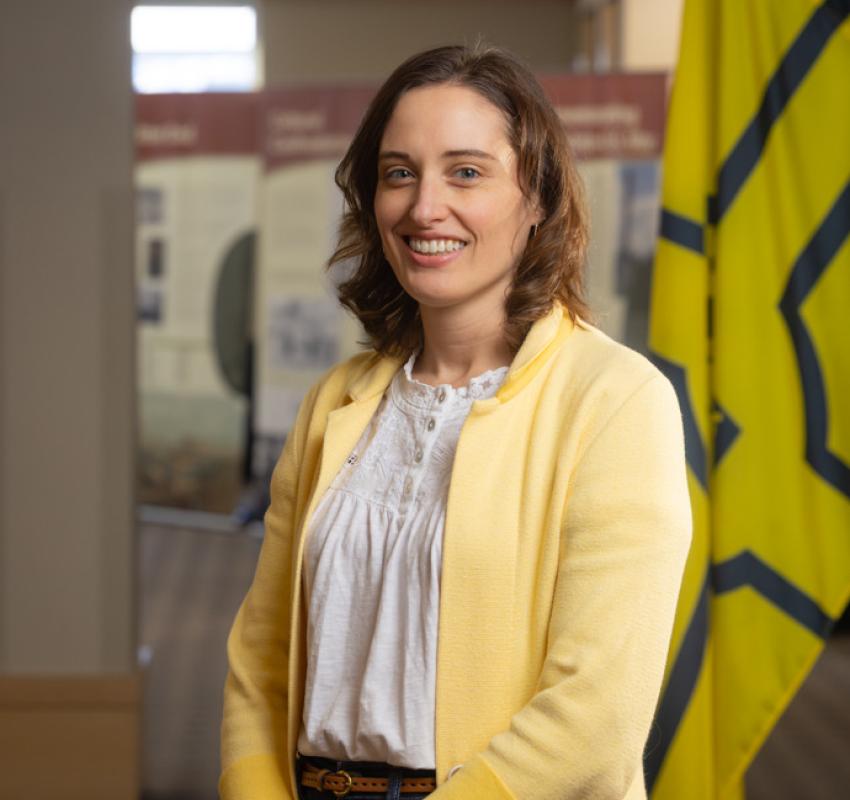
Dr. Tiffany Grobelski is a human geographer who works at the intersection of energy geography and peace studies. Her research (and much of her teaching) is focused on energy conflicts, social movement-led energy transition, and how grassroots movements build positive peace. Tiffany earned her PhD in Geography and a graduate certificate in Socio-Legal Studies from the University of Washington, Seattle. Her doctoral research examined how Polish environmental advocates mobilize administrative law. Immediately after graduate school, Dr. Grobelski served as an asylum officer for the U.S. Department of Homeland Security. In that role, she adjudicated hundreds of humanitarian protection claims and gained extensive experience in non-adversarial, trauma-informed interviewing.
She has since received training in Conflict Management and Mediation from the Institute of Peace and Conflict Studies at Conrad Grebel University College in Ontario, Canada. Dr. Grobelski's recent projects focus on energy conflicts in Minnesota. She is actively involved in the Peace & Justice Studies Association, as well as the Energy & Environment Specialty Group of the American Association of Geographers.
Dr. Grobelski is passionate about creative, effective teaching and sharing best practices with colleagues. She and geographer colleagues have received national attention for their approach to designing world geography classes. Dr. Grobelski has also convened a Working Group on Teaching Energy Geographies, which has international membership; the group aims to create a durable space for energy geography educators to build community and collective expertise.
Selected Publications:
- "Pipelines and Peacebuilding: Conflicting Sovereignties and Environmental Knowledge Creation along Line 3." In Handbook of Environmental Conflicts. Edward Elgar Publishing. (2026)
- “Changing the Coal Status Quo through Scalar Practices: The Anti-Smog Movement’s Contributions to Polish Energy Transition.” Environment and Planning C: Politics and Space 43 (7): 1369–90. (2025)
- (with Anna Versluis, and Jesse McClelland) “Discovering Geography through Doing Geography: Project-Based Learning in an Introductory Undergraduate World Geography Course.” Journal of Geography 122 (2): 31–42. (2023)
Our People
Matthew Panciera
Matt Panciera is an associate professor of Greek, Latin, and Classical Studies. He truly enjoys teaching the languages - all levels of Greek and Latin - in addition to a wide range of classical studies courses; everything from Greek tragedy to Roman history. His research focuses on the incredible treasure trove of information found in the Pompeian graffiti scratched into the walls of the ancient city by its beautifully ordinary inhabitants before it was buried under the eruption of Mount Vesuvius. He is extremely grateful to have been awarded on three occasions a NEH Summer Seminar for K-12 teachers where they, together with a team of distinguished scholars, explored the topic of of Roman daily life as seen in the Roman novelist Petronius and the archaeological and epigraphical remains of Pompeii. He has also worked on Roman funerary inscriptions including the epitaph of the unforgettable freedwoman, Allia Potestas.
Matt feels fortunate to have been hired on four different occasions by the Intercollegiate Center for Classical Studies in Rome and he is a passionate advocate for teaching and learning on site. He always finds himself experiencing ideas, making connections, and asking questions that would never occur to him without the inspiration of standing in the place where the ancient Greeks and Romans once lived their lives. He is happy to teach a class where the students "nerd out" and dive deep into the Greeks and Romans for their own sake. But ultimately he believes, both for himself and his students, the greatest benefit of spending time with the Greeks and Romans is how much we learn about ourselves and what we want to make of our own world.
If pressed, on most days he would say his favorite classical authors to read in the original language are Homer and Ovid. He recognizes the beauty of Greek and the genius of so much that came to fruition in Athens in the 5th century BCE—the histories of Herodotus and Thucydides, the birth of western philosophy, tragedy (Sophocles is his favorite)—but he is more at home in Latin and loves the way that reading Petronius and Pompeian graffiti feels like looking through a window directly at the ancient Romans. His favorite classical building is the Pantheon in Rome and his favorite site is Segesta in Sicily.
Outside of work he loves to cook for his family, visit the Boundary Waters, root for all the Boston teams (but also the Vikings), play golf, and exercise.
Gustavus Magazine
Gustavus Magazine – Gustavus Adolphus College Digital Publication
The official digital magazine and storytelling platform of Gustavus Adolphus College, produced by the Office of Marketing and Communication in partnership with Alumni and Parent Engagement. Historically called the Gustavus Quarterly because it was mailed four times a year, now you can get your Gustavus news online any time.
Our People
Julie Gilbert
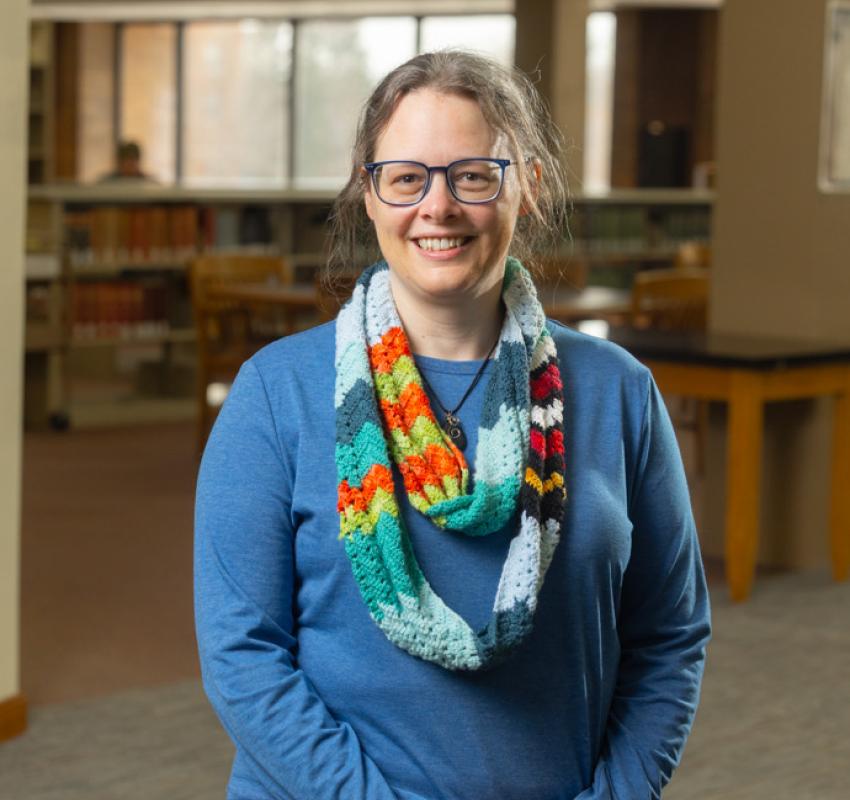
Professor Julie Gilbert teaches information literacy to students across the curriculum. Her work is grounded in a deep belief that libraries play a vital role in student learning, wellbeing, and belonging, and that equitable access to information is fundamental to academic success and civic engagement. Through her teaching, research, and service, she is committed to making libraries and information accessible to all members of the campus community.
As an educator, Julie collaborates with faculty across disciplines to design instruction that supports students at every stage of their academic journey. Her teaching focuses on critical thinking, research strategies, source evaluation, and the ethical use of information in an increasingly complex landscape. She is especially passionate about demystifying research for students who may feel uncertain or overwhelmed by academic inquiry, and she strives to create learning environments that are inclusive, welcoming, and student-centered. By meeting students where they are, she helps them build confidence as researchers and lifelong learners.
In addition to her academic work, Julie is an award-winning author of books for young readers. Her writing reflects a lifelong engagement with libraries, storytelling, and literacy, and she brings this creative perspective into her teaching and librarianship. She believes strongly in the value of reading for pleasure and its role in intellectual growth, empathy, and wellness. In her role at the library, she takes particular pride in developing and curating collections, with a special emphasis on building vibrant, relevant current fiction holdings that invite students into the library as a place of discovery, connection, and enjoyment.
Julie’s research interests are interdisciplinary and evolving, reflecting the broad and changing role of libraries in higher education. She is especially interested in libraries as wellness spaces and in the ways library environments, services, and collections support not only academic achievement but also mental health, reflection, and community connection. Her work explores how libraries contribute to a holistic student experience and reinforce their importance as both intellectual and restorative centers of campus life.
A certified meditation teacher, Julie also coordinates the Gustavus Meditation Program. Through this work, she integrates contemplative practices into the academic environment and supports students, faculty, and staff in cultivating mindfulness, resilience, and balance. Whether teaching in the classroom, developing collections, supporting research, or leading meditation sessions, Julie’s work is guided by a belief in the transformative power of libraries and learning, and their central role in shaping a meaningful and supportive student experience.
Major/Minor
Geology
Gustavus Geology majors/minors study the history of Earth and its life forms, learn about our changing global systems, and discover and preserve natural resources. Field, laboratory, and analytical research are emphasized, and you'll work with a close-knit community of faculty and students as you study landscapes, climate, natural hazards, mountain building, and the evolution and extinction of life on field trips in Minnesota and beyond. It's rocks and fossils and so much more. You'll graduate with the skills for multiple career paths.