Our People
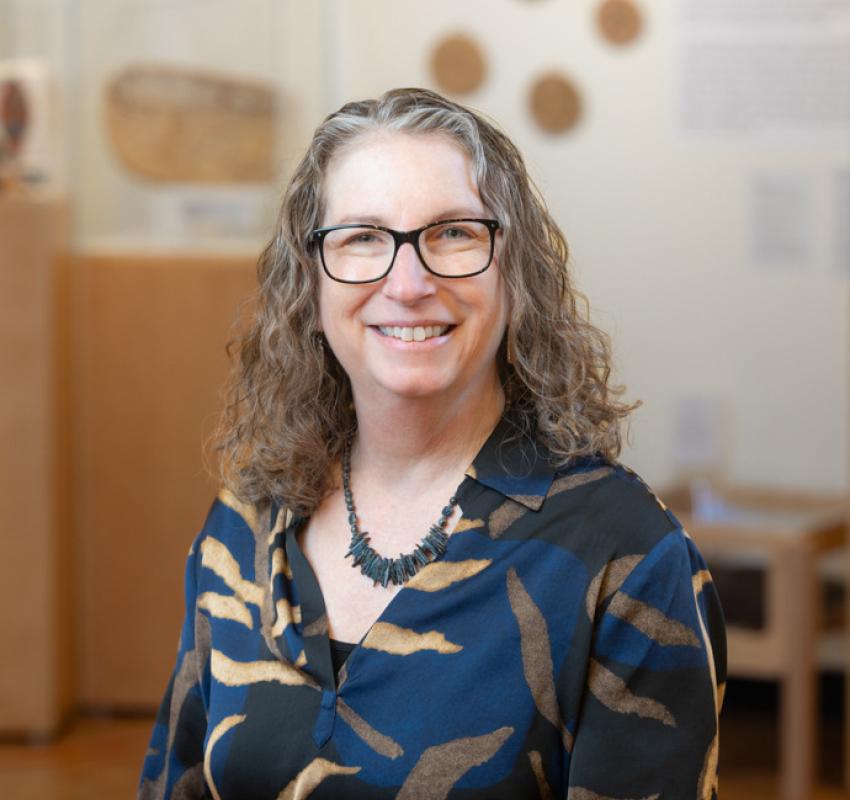
Kathleen Keller
Kathleen Keller is a professor of History. Keller’s research specialization is in the history of France and West Africa in the twentieth century. Keller did research in archives in Paris, Aix-en-Provence, France and Dakar, Senegal to write her first book, “Colonial Suspects: Suspicion, Imperial Rule, and Colonial Society in Interwar French West Africa.” This book, published by University of Nebraska Press uses police sources to understand police surveillance, anti-colonial activity, and the cosmopolitan society that emerged in the cities of French West Africa in the 1920s and 1930s.
Keller’s latest book project, “A Magnificent Fraud: An African Life in Twentieth Century France,” under contract with Louisiana State University Press, considers the life of Alioune Kane, an African migrant to France who reinvented himself many times over decades, especially during the German occupation during World War II. The book manuscript provides new insight into what it meant to be a Black Frenchmen and traces the story through the Second World War when Kane faced dangerous choices.
Keller has published academic articles in the journals French Historical Studies, French Colonial History, and the Oxford Research Encyclopedia of African History. She has also published public history essays in the Washington Post.
Keller’s teaching at Gustavus covers a wide range of topics in world, imperial, European, African, and women’s history. Her favorite courses to teach delve into complex and morally fraught moments of twentieth century history—France under Nazi Occupation and South Africa and Apartheid. She most enjoys working with students to improve their writing and to find research topics that match their personal interests.
At Gustavus since 2011, Keller also serves as the director of the African/African Diaspora Studies program and director of Writing across the Curriculum.
Our People
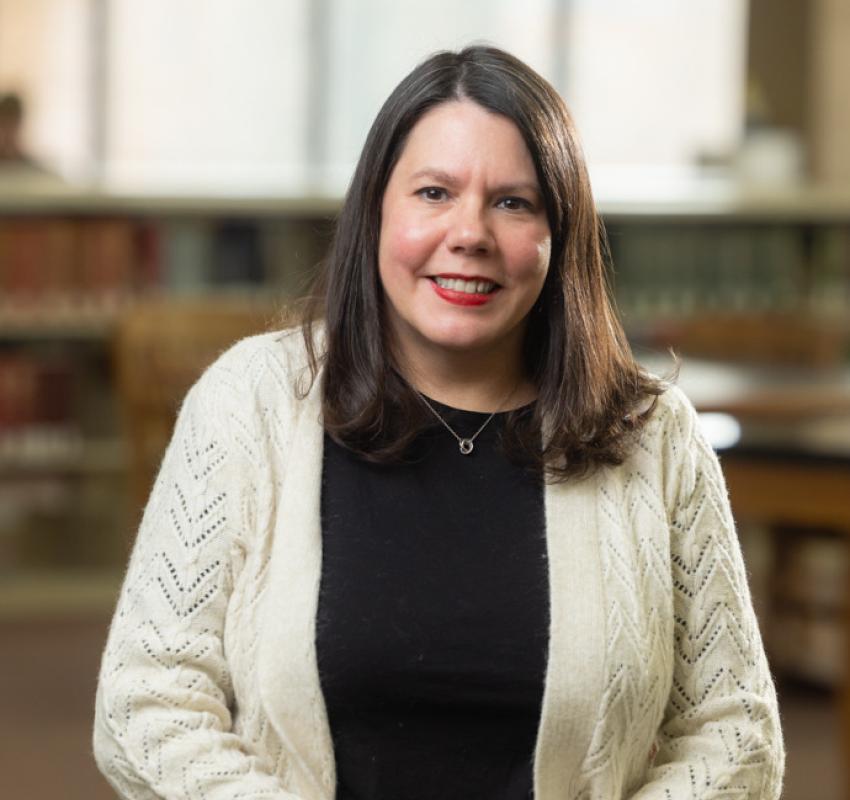
Mary Westby
Mary Westby is the Program Director for the Master of Athletic Training (MAT) program. She is responsible for the oversight of MAT, including working with the Clinical Education Coordinator and Research Coordinator to ensure curricular and clinical development, and implementation of the Commission on Accreditation of Athletic Training Education (CAATE) standards and ensuring the preparedness of students to practice independently upon graduation. She serves as one of the primary advisors for MAT current students and prospective students interested in athletic training. She teaches Foundations in Athletic Training (ATP 500), Clinical Pharmacology (NUR 337 and ATP 537 – a joint course between MAT and Nursing students), and Therapeutic Interventions in Athletic Training I and II (ATP 511 and 512). Her favorite topic to teach is therapeutic modalities – the application of physical agents and manual therapy to treat musculoskeletal injuries. This is also a research interest of hers along with assessment of student learning in athletic training programs.
She is also an Instructor and Instructor Trainer for the American Red Cross, regularly certifying current MAT students, undergraduate students, and campus faculty and staff in various levels of CPR training. As the advisor for the Gustavus Athletic Trainers' Association and Iota Tau Alpha, the national honor society for athletic training, Mary gets the opportunity to encourage community and professional service among the students in the ATP. She enjoys her opportunities to interact with students and other faculty inside and out of the classroom.
Mary is originally from Waconia, MN. She enjoys spending time with her family who are still in the area, including her niece and twin nephews. Mary, her husband and their son enjoy spending summers up north, fishing, and boating. During the long winter months Mary enjoys snowshoeing.
She is a BOC-certified athletic trainer, licensed in the state of Minnesota and a member of the National Athletic Training Association. She is involved in the athletic training profession at the national and state level as a peer reviewer for the CAATE and a member of the Minnesota Athletic Trainers Association (MATA) Governmental Affairs Committee. She is also the co-advisor of the MATA student senate.
Our People
Sharon Marquart
Sharon Marquart is a Professor of French and Gender, Women, and Sexuality Studies, and she also serves as Director of the Gender, Women, and Sexuality Studies Program. Dr. Marquart is also affiliated with the Peace, Justice, and Conflict Studies Program, the Latin American, Latinx, and Caribbean Studies Program, and the Comparative Literature Program. At Gustavus, she teaches courses on global French cinema, graphic novels, and literature, as well as topics such as the Holocaust, revolution and rebellion, feminist philosophy, disability, and trauma testimony. In May term, Dr. Marquart teaches a travel course to Paris that centers the stories of marginalized communities in the city. She holds a PhD in French literature and culture from the University of Michigan-Ann Arbor, and she has taught and studied at universities throughout the United States, Canada, and France.
Dr. Marquart’s research is located at the intersection of feminist philosophy and of literary and cultural studies. Her research has been funded by the National Endowment for the Humanities and the Lurcy Foundation, and she frequently collaborates on it with students. She has published extensively on issues of gender and trauma in Nazi camp testimonies and, most recently, on the AIDS crisis in the Caribbean. Dr. Marquart is the author of On the Defensive: Reading the Ethical in Nazi Camp Testimonies (University of Toronto Press, 2015), co-editor (with David Caron of the University of Michigan) of a volume of essays published in France on Auschwitz survivor Charlotte Delbo, and her work has been published in The Routledge Companion to Literature and Trauma, French Forum, H-France Forum, The Romanic Review, Ethnologies, and various essay collections on World War II and the Holocaust. She is completing a book on care that features a chapter co-authored with her former student at Gustavus, Ellie Hartmann. Please contact Dr. Marquart for current student research opportunities related to her work.
Dr. Marquart’s interests outside of the classroom include camping, gardening, photography, all things cats, and travel, especially in the French-speaking world. She is an advocate for students, faculty, and staff of all backgrounds and abilities and welcomes discussion about ways to create more inclusive and just communities on campus and beyond.
Our People
Anna Hulseberg
Anna Hulseberg has more than 20 years of experience teaching Gustavus students information literacy, which the Association of College & Research Libraries defines as “the set of integrated abilities encompassing the reflective discovery of information, the understanding of how information is produced and valued, and the use of information in creating new knowledge and participating ethically in communities of learning” (Framework for Information Literacy for Higher Education). Anna’s teaching ranges from course-integrated library instruction sessions to individual and group research consultations. She works with students in a variety of disciplines over their time at Gustavus, from First Term Seminars to upper level courses in the majors. Anna’s work also includes building a library collection that reflects the range of liberal arts scholarship and supports student research within the College curriculum. Over the years, she has enjoyed helping Gustavus students work to attain their full potential, with a special emphasis on facilitating their dispositions as lifelong learners and ethical consumers and creators of information.
Anna’s areas of research include information literacy, librarians in mentoring and advising, and librarianship as a profession (with an emphasis on electronic resources management). Her research has been published in journals such as College & Undergraduate Libraries, the Journal of Electronic Resources Librarianship, and College & Research Libraries News, and presented at venues including the American Library Association Annual Conference, Minnesota Library Association Annual Conference, and the Brick & Click Academic Library Conference. Anna is active in library science professional associations, having served on the boards of the Minnesota Library Association and its Academic and Research Libraries Division.
Anna’s involvement in the College has included service on a number of faculty committees, including the Faculty Personnel Committee, Faculty Development Committee (past chair), and Academic Operations Committee (past co-chair). She participates in collegial management of the Library and Archives department as co-Program Assessment Liaison (PAL) and on departmental committees. Anna works to celebrate Gustavus students’ achievements in the liberal arts as a past officer and active member of the Phi Beta Kappa honor society.
Our People
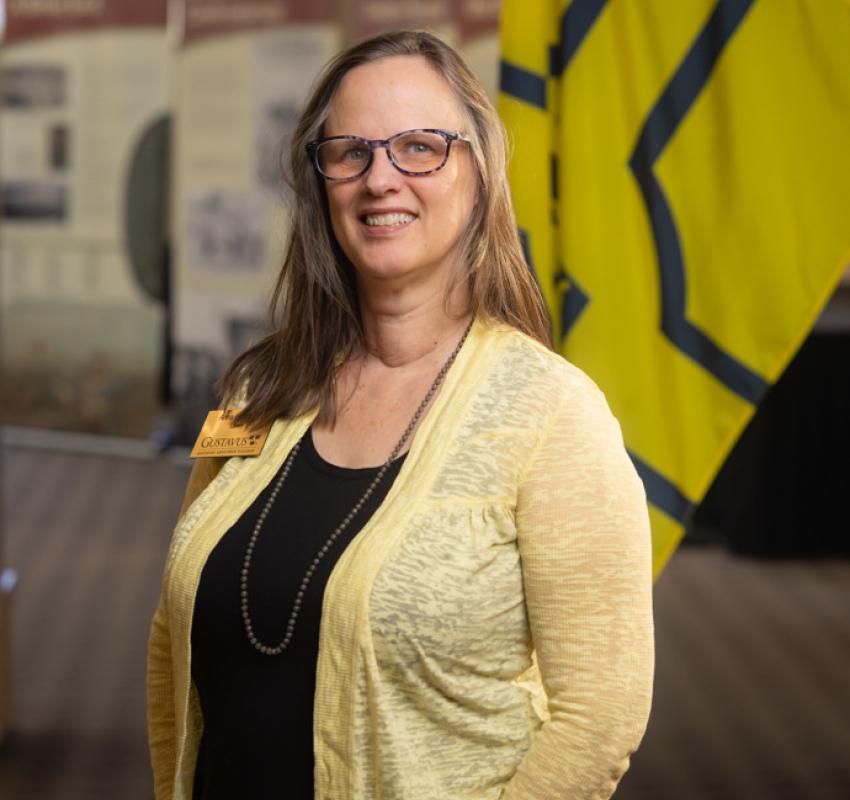
JC Sanford
Trombonist/composer/conductor, JC Sanford, is deeply rooted in the traditions of jazz and classical music, yet constantly pushing at their boundaries. He has appeared on more than 40 recordings as a trombonist, conductor, composer, and producer. A long-time student of the legendary Bob Brookmeyer, Sanford has performed as a trombonist alongside the likes of Danilo Pérez, Matt Wilson, Anthony Cox, and Donny McCaslin. A sought-after conductor of new large ensemble music across the world, he conducts the thrice-Grammy-nominated John Hollenbeck Large Ensemble, the Frank Carlberg Large Ensemble, the Alan Ferber Nonet +Strings, John Ellis’ jazz opera Ice Siren, and the Alice Coltrane Orchestra featuring Ravi Coltrane and Jack DeJohnette. He also recently conducted projects with the North German Radio (NDR) Big Band in Hamburg, Germany and Quinsin Nachoff's chamber ensemble in NYC and Toronto.
His compositions and arrangements have been performed by jazz artists such as Dave Liebman, John Abercrombie, Lew Soloff, and Ingrid Jensen, plus non-jazz artists like Japanese koto player Yumi Kurosawa, British singer-songwriter Joy Askew, and Grammy-nominated classical pianist Andrew Russo. His own 2014 JC Sanford Orchestra album Views from the Inside won international acclaim and was awarded the prestigious Aaron Copland Fund for Recording grant.
Sanford is regularly recognized as a "Rising Star” trombonist DownBeat Magazine’s Annual Critic’s Polls as well as previous acknowledgements in the Big Band and Arranger categories. He has received many grants and awards including a 2018 McKnight Composer Fellowship, grants from the MN State Arts Board to fund recording projects, and a Southeast MN Arts Council grants to help fund the Northfield Jazz Festival.
Additionally, he directs the Twin Cities Jazz Composers Workshop and curates the International Society of Jazz Arrangers and Composers (ISJAC) monthly artist blog. JC has had previous teaching positions at the School of Jazz at The New School, Long Island University - Brooklyn, St. Olaf College, LeMoyne College, Luther College, Williams College, and New England Conservatory.
Our People
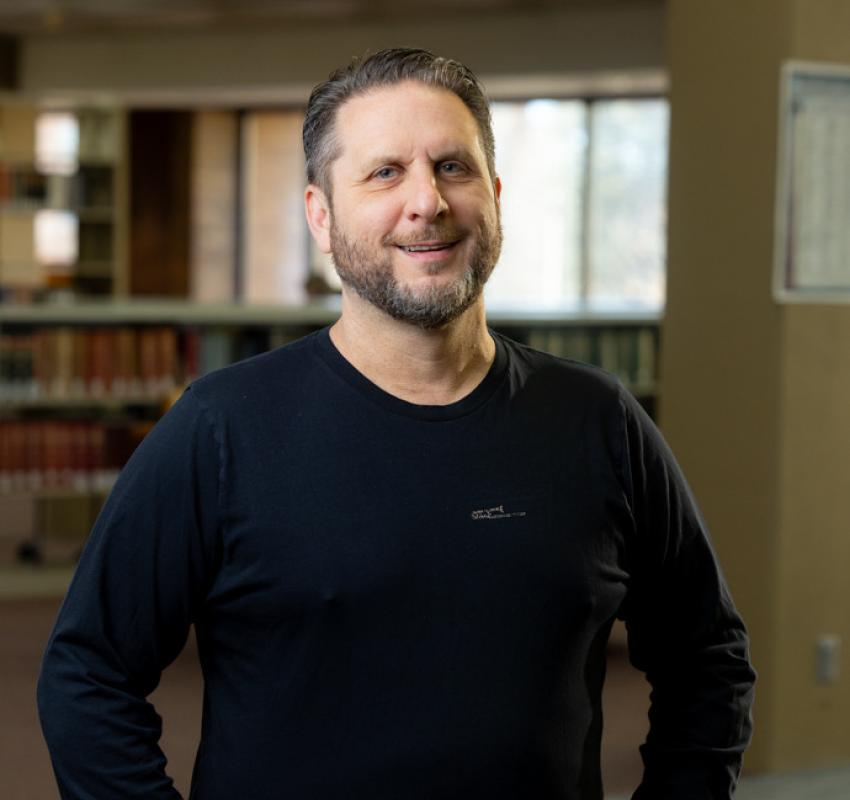
Tiffany Grobelski
Dr. Tiffany Grobelski is a human geographer who works at the intersection of energy geography and peace studies. Her research (and much of her teaching) is focused on energy conflicts, social movement-led energy transition, and how grassroots movements build positive peace. Tiffany earned her PhD in Geography and a graduate certificate in Socio-Legal Studies from the University of Washington, Seattle. Her doctoral research examined how Polish environmental advocates mobilize administrative law. Immediately after graduate school, Dr. Grobelski served as an asylum officer for the U.S. Department of Homeland Security. In that role, she adjudicated hundreds of humanitarian protection claims and gained extensive experience in non-adversarial, trauma-informed interviewing.
She has since received training in Conflict Management and Mediation from the Institute of Peace and Conflict Studies at Conrad Grebel University College in Ontario, Canada. Dr. Grobelski's recent projects focus on energy conflicts in Minnesota. She is actively involved in the Peace & Justice Studies Association, as well as the Energy & Environment Specialty Group of the American Association of Geographers.
Dr. Grobelski is passionate about creative, effective teaching and sharing best practices with colleagues. She and geographer colleagues have received national attention for their approach to designing world geography classes. Dr. Grobelski has also convened a Working Group on Teaching Energy Geographies, which has international membership; the group aims to create a durable space for energy geography educators to build community and collective expertise.
Selected Publications:
- "Pipelines and Peacebuilding: Conflicting Sovereignties and Environmental Knowledge Creation along Line 3." In Handbook of Environmental Conflicts. Edward Elgar Publishing. (2026)
- “Changing the Coal Status Quo through Scalar Practices: The Anti-Smog Movement’s Contributions to Polish Energy Transition.” Environment and Planning C: Politics and Space 43 (7): 1369–90. (2025)
- (with Anna Versluis, and Jesse McClelland) “Discovering Geography through Doing Geography: Project-Based Learning in an Introductory Undergraduate World Geography Course.” Journal of Geography 122 (2): 31–42. (2023)
Our People
Yumiko Oshima-Ryan
Dr. Yumiko Oshima-Ryan began teaching at Gustavus in 2004. She enjoys teaching private piano lessons and establishing relationships with her students that focuses on trust and integrity. At her piano studio, students cultivate musical, technical, historical, and theoretical features of piano repertoire which they select to perform for their recital. Students focus on developing piano skills which are vital for artistic self-expression. Dr. Oshima-Ryan values mentoring students as they face their challenges, find new perspectives, and most of all, promote self-belief. All of these things ultimately provide deeper meaning and joy to their performance and creativity.
A native of Japan, Yumiko also teaches keyboard courses to students of all levels, including total beginners. Along with keyboard skills courses for music majors and minors, she offers courses on how to practice and prepare performances, as well as on wellness for musicians.
Dr. Oshima-Ryan believes musical performance is one of the most valuable opportunities students can have, and that it represents a core value in the music department of a liberal arts college. As an instructor, she also values sharing the experience of her own performances with students.
Her recordings, "Piano Works for the Left Hand - Takashi Yoshimatsu" and “From Afar,” are published by the Naxos Records label and available to stream on major digital platforms, including iTunes, Spotify, and Amazon. "Piano Works for the Left Hand" was selected as a special edition in the August 2022 issue of Record Geijutsu, a top music review magazine in Japan. Dr. Oshima-Ryan hopes this album inspires and encourages people rehabilitating after injury or fighting a major illness, such as cancer. The album includes pieces which were written for the composer’s respected friend, Izumi Tateno, who lost the use of his right hand after a cerebral hemorrhage. She wants the listeners to get past the idea of the left hand as the overlooked partner of the dominant right. She wants them to see, instead, that through courage, compassion, and creativity, the limitations of human frailty can be overcome.
Recently, Dr. Oshima-Ryan started collaborating with the Department of Theatre and Dance at Gustavus by creating original music for dance performances. Performances, recordings, and lectures are available online.
Our People
Daniel Moos
Daniel C. Moos (PhD) is a professor of Education where he teaches courses in developmental and educational psychology, educational technology, and the supervision of student teachers. His work centers on understanding how students learn, particularly through the lenses of motivation, metacognition, and self-regulated learning, and how these processes can be intentionally supported through instruction and assessment.
Dr. Moos’s scholarship focuses on self-regulated learning in classroom and technology-rich environments. His research examines how learners plan, monitor, and evaluate their thinking, and how instructional design, feedback, and classroom technology can foster deeper learning. He has published extensively in leading journals and edited volumes in educational psychology, learning sciences, and educational technology, and he has collaborated frequently with undergraduate students as research co-authors. His work is nationally and internationally recognized, including invited keynote and symposium presentations and service in leadership roles within professional organizations focused on self-regulated learning.
At Gustavus, he is deeply committed to teacher preparation and evidence-based teaching. He works closely with pre-service teachers as they learn to design instruction, integrate technology meaningfully, and use assessment to support student learning. His teaching philosophy emphasizes helping future educators become reflective practitioners who understand how students learn and who can adapt instruction to meet diverse learner needs. He is particularly interested in bridging theory and practice, ensuring that research on learning, motivation, and assessment is accessible and useful for teachers in real classrooms.
In addition to his teaching and research, Dr. Moos has held several institution-wide leadership and service roles at Gustavus. These include serving as department chair, college assessment director, faculty associate for teaching excellence, and assessment coordinator for the Education Department. Through this work, he has supported faculty development, program assessment, accreditation efforts, and conversations about effective teaching and learning across the college.
Dr. Moos also contributes extensively to the broader field of education through editorial board service, grant advisory work, external reviews, and mentoring early-career scholars. He is regularly involved in reviewing research for major journals and supporting national initiatives related to self-regulated learning and teacher education. Before entering higher education, Dr. Moos was an elementary and middle school teacher, an experience that continues to shape his teaching, research, and commitment to teacher education. Outside of Gustavus, he enjoys staying active, following youth and collegiate athletics, and spending time with his family. He values the close-knit academic community at Gustavus and especially enjoys working with students as they develop into thoughtful educators and lifelong learners.
Our People
Julie Gilbert
Professor Julie Gilbert teaches information literacy to students across the curriculum. Her work is grounded in a deep belief that libraries play a vital role in student learning, wellbeing, and belonging, and that equitable access to information is fundamental to academic success and civic engagement. Through her teaching, research, and service, she is committed to making libraries and information accessible to all members of the campus community.
As an educator, Julie collaborates with faculty across disciplines to design instruction that supports students at every stage of their academic journey. Her teaching focuses on critical thinking, research strategies, source evaluation, and the ethical use of information in an increasingly complex landscape. She is especially passionate about demystifying research for students who may feel uncertain or overwhelmed by academic inquiry, and she strives to create learning environments that are inclusive, welcoming, and student-centered. By meeting students where they are, she helps them build confidence as researchers and lifelong learners.
In addition to her academic work, Julie is an award-winning author of books for young readers. Her writing reflects a lifelong engagement with libraries, storytelling, and literacy, and she brings this creative perspective into her teaching and librarianship. She believes strongly in the value of reading for pleasure and its role in intellectual growth, empathy, and wellness. In her role at the library, she takes particular pride in developing and curating collections, with a special emphasis on building vibrant, relevant current fiction holdings that invite students into the library as a place of discovery, connection, and enjoyment.
Julie’s research interests are interdisciplinary and evolving, reflecting the broad and changing role of libraries in higher education. She is especially interested in libraries as wellness spaces and in the ways library environments, services, and collections support not only academic achievement but also mental health, reflection, and community connection. Her work explores how libraries contribute to a holistic student experience and reinforce their importance as both intellectual and restorative centers of campus life.
A certified meditation teacher, Julie also coordinates the Gustavus Meditation Program. Through this work, she integrates contemplative practices into the academic environment and supports students, faculty, and staff in cultivating mindfulness, resilience, and balance. Whether teaching in the classroom, developing collections, supporting research, or leading meditation sessions, Julie’s work is guided by a belief in the transformative power of libraries and learning, and their central role in shaping a meaningful and supportive student experience.
Our People
Lisa Heldke
Lisa Heldke teaches in the philosophy department and the gender, women and sexuality studies program, of which she was a founding faculty member. Among her favorite courses to teach are modern philosophy (which, believe it or not, focuses on the eighteenth century); aesthetics; and gender, knowledge and reality. But her real passion is the philosophy of food, which she holds in the teaching kitchen of the Nobel Hall of Science, where students can cook together each week.
The philosophy of food is not only a teaching passion, it has also been a focus of much of her service work on campus. She is the co-founder of the Kitchen Cabinet, an advisory committee to the Gustavus Dining Service that works to enhance the ways it serves the mission of the College. The committee includes representation from all the campus constituencies, including students.
Food is also the focus of Heldke’s scholarly research; she is one of the first contemporary philosophers to treat food as a serious philosophical topic. She is the author or editor of a number of books in the field, including Philosophers at Table: On Food and Being Human; Exotic Appetites: Ruminations of a Food Adventurer; Cooking, Eating Thinking: Transformative Philosophies of Food; and (most recently) Parasitic Personhood and the Ontology of Eating. Her research has led to her being invited to teach each year in a master’s program at the University of Gastronomic Sciences in Pollenzo, Italy, a kind of “liberal arts college of food” founded by the Slow Food founder Carlo Petrini. Her scholarly work has also garnered her awards from the Agriculture, Food and Human Values Society and the John Dewey Society.
For ten years, she served as director of Gustavus’s Nobel Conference, a role she described as being the “chief learner” for this science-and-ethics extravaganza which is a highlight of the Gustavus academic year, and has brought more than 100 Nobel laureates to campus.
Her newest book project bears the working title “Yurtitude is Experience”; it’s a philosophical exploration of her summertime life in a yurt on the coast of Maine where she lives (mostly) off the grid with her Siberian husky, writing, baking bread in a wood-fired brick oven, and kayaking and sailing in Eggemoggin Reach. Winter finds her and her husky skijoring in the Gustavus Arboretum whenever the snow cover allows.
Our People
Heidi Meyer
Heidi M. Meyer is Associate Professor of Nursing and currently serves as the Chief Nursing Administrator for the Department of Nursing. A proud Gustavus alumna, she brings to her work a deep commitment to the College’s liberal arts mission and to preparing graduates who have strong clinical reasoning abilities, are intellectually curious, and grounded in compassionate care. She teaches across the nursing curriculum and at times contributes to interdisciplinary offerings, including the Public Health minor. Recent courses include Public Health Nursing, Transitions to Professional Practice, Capstone Clinical, Research and Ethics, and a May study-away course, Health Across Borders: Exploring Social Determinants of Health in Sweden and the U.S.
Dr. Meyer’s scholarly expertise centers on emotional intelligence, clinical reasoning, and innovative teaching strategies in nursing education. Her doctoral work examined the relationship between emotional intelligence and clinical reasoning in senior nursing students, and she is certified in the Mayer-Salovey-Caruso Emotional Intelligence Test (MSCEIT). Her research has been published in peer-reviewed journals and presented at national and international conferences, including the American Association of Colleges of Nursing (AACN), the Midwest Nursing Research Society (MNRS), and the International Nursing Association for Clinical Simulation and Learning (INACSL). She has also contributed to multisite studies focused on simulation debriefing and the development of clinical judgment in baccalaureate nursing education.
A strong advocate for active, experiential learning, Dr. Meyer has been recognized with competitive grants and scholarships that have advanced simulation-based education and strengthened the integration of clinical reasoning across the curriculum. Her teaching is informed by a belief that learning is relational and reflective; she challenges students to move beyond memorization toward deep understanding, emotional awareness, and sound professional judgment. She is particularly passionate about helping students integrate the science of nursing with the human experience of care.
At Gustavus, Dr. Meyer has served in numerous leadership roles, including Department Chair/Chief Nursing Administrator and Faculty Senate representative. She contributes to college-wide initiatives related to academic affairs, strategic planning, accreditation, and wellbeing. She is an internal facilitator for the Nursing National Advisory Board and serves on the Public Health Minor Advisory Board. Beyond campus, she is active in the Minnesota Association of Colleges of Nursing, currently serving in a leadership capacity, and has completed Commission on Collegiate Nursing Education (CCNE) evaluator training.
Dr. Meyer’s favorite aspect of her work is mentoring students and faculty—whether guiding independent student research, supporting future nurse educators as a graduate preceptor, or walking alongside seniors as they transition into professional practice. She values the close-knit Gustavus community and the opportunity to know students not only as learners, but as whole people with unique goals and gifts.
Our People
Julia Bartley
As a Professor in the Department of Environment, Geography, and Earth Sciences (EGE), Julie K. Bartley teaches courses in the Geology and Environmental Studies programs. With a background in chemistry and geology, Professor Bartley brings an interdisciplinary perspective to the study of the Earth’s past and present. As a teacher, she strives to know her students as individuals and to inspire interest in the Earth’s past and care for its future. She has also held significant leadership roles at Gustavus, including serving as chair of EGE, as the project director for the Inclusive Excellence Project, and as Associate Provost and Dean of Sciences and Education.
Professor Bartley’s expertise lies in interpreting ancient environments, with a particular focus on the Precambrian. Her research explores how microbial communities shaped and were shaped by the environments in which they lived. She and her students study the fossil record and the chemical signatures left by life hundreds of millions or even billions of years ago. At Gustavus, she actively involves students in this discovery process, supervising numerous undergraduate research projects that range from evaluating stromatolites in Minnesota to analyzing the Martian surface signs of habitability.
Students who collaborate with Professor Bartley might conduct fieldwork, perform laboratory analyses, analyze imagery, work with databases, or some combination of these. In the classroom, Professor Bartley teaches a wide array of courses taken by students across campus. Her teaching philosophy is characterized by a commitment to effective and inclusive instruction and a firm belief that every student is equipped to succeed. Whether a geology major, a general education student, or a first-semester Gustie, students can expect to take an active role in class, have many opportunities for hands-on experiences, and be challenged to grow as they learn.
Beyond her teaching and research, Professor Bartley serves Gustavus and the broader scientific community in many ways. She recently served as the Faculty Shepherd for the Nobel Hall of Science renovation and addition project and has co-chaired the Nobel Conference. She is a trained facilitator for two national programs: the ADVANCEGeo Partnership, which aims to improve workplace climate in the geosciences, and the Traveling Workshop Program, whose workshops help strengthen geoscience departments.
As the curator of the Chester Johnson Geology Museum, Professor Bartley regularly shares her passion for geology with K-12 students and the public. Whether leading fossil collecting field trips or presenting to local community organizations, she enjoys helping others see the landscape as a "time machine." Her dedication to service was recently honored with the Gustavus Faculty Service Award.
Outside of her professional life, she has served as the chair of a local charter school board and remains an active member of several professional societies, including the Geological Society of America, the National Association of Geoscience Teachers, and the Association of Women Geoscientists.