

Our People
Justin Knoepfel
Dr. Justin Knoepfel, recipient of the Dr. Carlo A. Sperati Award, joined the Gustavus faculty in 2009. He currently serves as the Chair of the Department of Music, conductor of the Gustavus Symphony Orchestra (GSO), and instructor of viola. Transitioning from a career as a professional string player to the podium, Dr. Knoepfel brings a deep understanding of technical complexity and expressive nuance to his conducting, providing a rigorous yet engaging experience for his ensembles.
Beyond campus, Dr. Knoepfel is a highly sought-after clinician, guest conductor, and adjudicator. He recently served as the guest festival conductor for the Dorian Orchestra Festival. Under his leadership, the Gustavus Symphony Orchestra maintains a robust performance schedule—including high-profile events like Christmas in Christ Chapel and the Nobel Conference—and tours annually. The GSO embarks on international tours every four years, with the most recent journey to Ireland and Scotland.
As an accomplished violist, Dr. Knoepfel’s performance credits include the Minnesota Orchestra, Minnesota Opera, and the South Dakota, Mankato, and La Crosse Symphony Orchestras. His artistry has taken him across the United States and Europe, performing at prestigious venues. He frequently collaborates with members of the Minnesota Orchestra and the Saint Paul Chamber Orchestra. A dedicated educator, he has served on the faculty for programs such as the Lutheran Summer Music Academy, MNSOTA Summer String Camp, and the International Viola Congress. His freelance career is equally diverse, ranging from sharing the stage with legends like The Eagles and Idina Menzel to performing privately for King Carl XVI Gustaf and Queen Silvia of Sweden.
Dr. Knoepfel resides with his wife, Elisa, and their five children. The household is completed by Regan, a Bernedoodle, and Avery, a Ragdoll cat. Above all his professional achievements, family remains the center of his life.
Our People
Sarah Erickson-Lume
Sarah Erickson Lume grew up near Ann Arbor, MI and had the privilege of spending summers at the international music camp, Interlochen Center for the Arts. This experience instilled in her the love of music making and she began to cultivate the artistic discipline of practicing, rehearsing, and performing within the context of a supportive community. Valuing a liberal arts education, she attended Sarah Lawrence College, outside of New York City while continuing to study oboe with Laura Ahlbeck (Metropolitan Opera) and Randall Wolfgang (New York City Ballet).
Sarah worked at NYC’s Carnegie Hall before entering graduate school at Carnegie Mellon University, where she was the student of her most influential teacher, Cynthia Koledo DeAlmeida (Principal Oboist of the Pittsburgh Symphony). While pursuing a master’s degree in music performance, her momentum flourished both as a musician and as a reed maker. The Philadelphia style of reed making, and the resulting benefits to the oboist, is a specialty she now passes on to her own students. During this time, Sarah also attended Aspen Music Festival in Colorado, and Orford Music Festival, in Quebec.
Her work in the Twin Cities includes chamber music and freelance performances as well as previous work with the Duluth Symphony Orchestra, South Dakota Symphony Orchestra, and Minnesota Waldorf School. Having been an oboe instructor at Gustavus Adolphus College for more than twenty years, Sarah has found teaching to be one of the most fulfilling jobs of her career. She maintains a private home studio and teaches as an adjunct faculty member at other area colleges. Her interests include Alexander Technique, optimal performance psychology, practicing the piano, and recorder, as well as running. Sarah and her husband, a visual artist and professor, have two daughters.
Our People
Brenda Kelly
Brenda S. Kelly, PhD serves as the Provost and Dean of the College. Since joining the institution in 2002, she has transitioned from a dedicated classroom instructor and researcher to a pivotal administrative leader, overseeing the academic mission and student experience of the college, with oversight of academic affairs, student life, and athletics.
Dr. Kelly obtained a BS in Chemistry at Creighton University in 1995. She later earned her PhD in Medicinal Chemistry from the University of Washington, followed by a post-doctoral fellowship at the Medical College of Wisconsin. Her scholarly expertise lies at the intersection of biology and chemistry, with a specific focus on enzymology, protein structure and function. Dr. Kelly and her undergraduate research students explored the kinetic and structural characterization of gamma-glutamylcysteine ligase, an enzyme vital for glutathione synthesis. She and her student co-presented at regional and national conferences such as the Midstates Consortium for Mathematics and Science and Experimental Biology. Beyond the laboratory, she has gained recognition for her co-authored textbook, now in its second edition entitled: The Science of Cooking: Understanding the Biology and Chemistry Behind Food and Cooking.
Since assuming the role of Provost in 2018, Dr. Kelly has led several transformative initiatives at Gustavus. She was instrumental in the implementation of the Gustavus ACTs Strategic Plan (2016–2026), and under her leadership the college has seen measurable success in improved student outcomes, including increases in student retention, securing of new faculty endowed positions, and curricular innovation, including comprehensive changes to the academic program.
Dr. Kelly’s influence extends into the broader higher education landscape. She serves on the Advisory Board for the Higher Education Recruitment Consortium (HERC), mentors new chief academic officers through the Council of Independent Colleges (CIC), and is a frequent presenter at national higher education meetings.
Our People
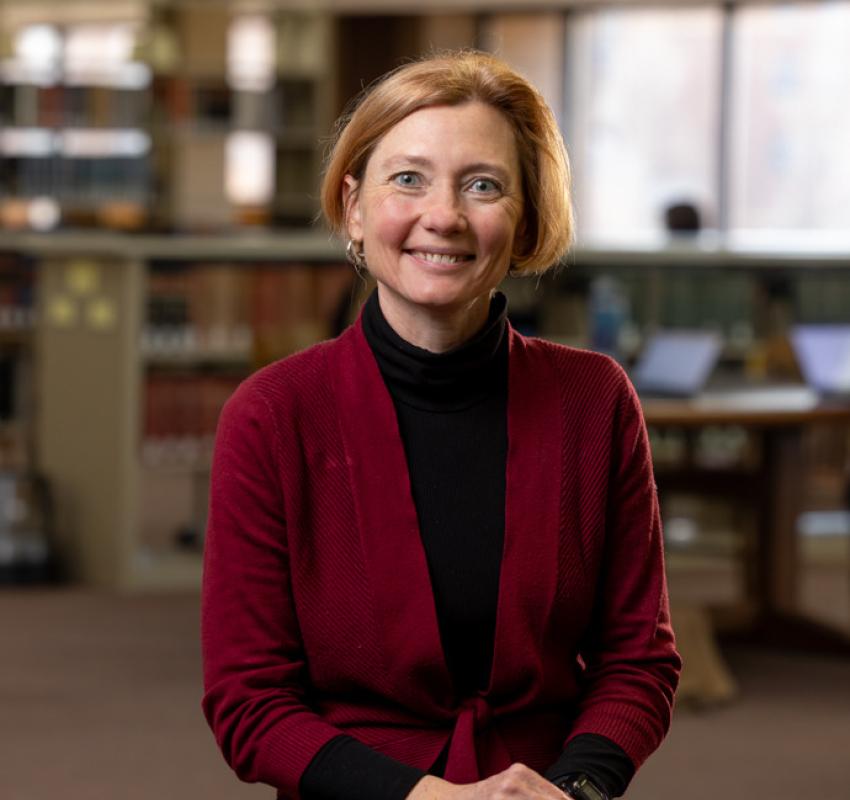
Paschal Kyoore
Paschal Baylon Kyiiripuo Kyoore is a professor of French, African/Caribbean Studies. He specializes in French literature of the 19th and 20th centuries, and Francophone Literatures of Africa and the Caribbean. He teaches a range of courses in French and in English. For courses taught in French, his "Francophone African/Caribbean Literatures & Cultures" course that he introduced many years ago marked the beginning of the French program shifting away from focusing on only France and French culture. Francophone cultures have since been the mainstream of courses offered by the French program, and this has made the program more attractive to students. Prof. Kyoore finds it pedagogically and professionally very enriching to teach about the cultures of francophone communities at all the levels of French courses. Also, he founded the African/African Diaspora Studies program, with the collaboration of colleagues, and also created a course in English.
Prof. Kyoore was the first Director of the African/African Diaspora Studies program. He has also served in other administrative positions such as being a co-chair of the Department of Modern Languages, Literatures & Cultures. One other service he renders to the institution is through his involvement with student organizations such as the Pan-Afrikan Student Organization (PASO). He is often invited to do an African xylophone performance at the annual Africa Night celebration organized by PASO; one of the student organizations event that attracts a large community crowd.
Besides journal articles and reviews, Prof. Kyoore has published three collections of folktales, two in English and one in French, and three critical works. He is currently working on a book on womanhood in Dagara folklore and culture. The Dagara are an ethnic group in Ghana, Burkina Faso, and Ivory Coast. He was a recipient of the Gustavus Faculty Scholarly Achievement award; an acknowledgement of his contributions to scholarship at the international level. Also, he was a finalist for a Fulbright Scholar grant to teach and do research abroad. His research focuses mainly on gender issues, the historical novel, and African folklore.
Our People
Mary Westby
Mary Westby is the Program Director for the Master of Athletic Training (MAT) program. She is responsible for the oversight of MAT, including working with the Clinical Education Coordinator and Research Coordinator to ensure curricular and clinical development, and implementation of the Commission on Accreditation of Athletic Training Education (CAATE) standards and ensuring the preparedness of students to practice independently upon graduation. She serves as one of the primary advisors for MAT current students and prospective students interested in athletic training. She teaches Foundations in Athletic Training (ATP 500), Clinical Pharmacology (NUR 337 and ATP 537 – a joint course between MAT and Nursing students), and Therapeutic Interventions in Athletic Training I and II (ATP 511 and 512). Her favorite topic to teach is therapeutic modalities – the application of physical agents and manual therapy to treat musculoskeletal injuries. This is also a research interest of hers along with assessment of student learning in athletic training programs.
She is also an Instructor and Instructor Trainer for the American Red Cross, regularly certifying current MAT students, undergraduate students, and campus faculty and staff in various levels of CPR training. As the advisor for the Gustavus Athletic Trainers' Association and Iota Tau Alpha, the national honor society for athletic training, Mary gets the opportunity to encourage community and professional service among the students in the ATP. She enjoys her opportunities to interact with students and other faculty inside and out of the classroom.
Mary is originally from Waconia, MN. She enjoys spending time with her family who are still in the area, including her niece and twin nephews. Mary, her husband and their son enjoy spending summers up north, fishing, and boating. During the long winter months Mary enjoys snowshoeing.
She is a BOC-certified athletic trainer, licensed in the state of Minnesota and a member of the National Athletic Training Association. She is involved in the athletic training profession at the national and state level as a peer reviewer for the CAATE and a member of the Minnesota Athletic Trainers Association (MATA) Governmental Affairs Committee. She is also the co-advisor of the MATA student senate.
Our People
Sharon Marquart
Sharon Marquart is a Professor of French and Gender, Women, and Sexuality Studies, and she also serves as Director of the Gender, Women, and Sexuality Studies Program. Dr. Marquart is also affiliated with the Peace, Justice, and Conflict Studies Program, the Latin American, Latinx, and Caribbean Studies Program, and the Comparative Literature Program. At Gustavus, she teaches courses on global French cinema, graphic novels, and literature, as well as topics such as the Holocaust, revolution and rebellion, feminist philosophy, disability, and trauma testimony. In May term, Dr. Marquart teaches a travel course to Paris that centers the stories of marginalized communities in the city. She holds a PhD in French literature and culture from the University of Michigan-Ann Arbor, and she has taught and studied at universities throughout the United States, Canada, and France.
Dr. Marquart’s research is located at the intersection of feminist philosophy and of literary and cultural studies. Her research has been funded by the National Endowment for the Humanities and the Lurcy Foundation, and she frequently collaborates on it with students. She has published extensively on issues of gender and trauma in Nazi camp testimonies and, most recently, on the AIDS crisis in the Caribbean. Dr. Marquart is the author of On the Defensive: Reading the Ethical in Nazi Camp Testimonies (University of Toronto Press, 2015), co-editor (with David Caron of the University of Michigan) of a volume of essays published in France on Auschwitz survivor Charlotte Delbo, and her work has been published in The Routledge Companion to Literature and Trauma, French Forum, H-France Forum, The Romanic Review, Ethnologies, and various essay collections on World War II and the Holocaust. She is completing a book on care that features a chapter co-authored with her former student at Gustavus, Ellie Hartmann. Please contact Dr. Marquart for current student research opportunities related to her work.
Dr. Marquart’s interests outside of the classroom include camping, gardening, photography, all things cats, and travel, especially in the French-speaking world. She is an advocate for students, faculty, and staff of all backgrounds and abilities and welcomes discussion about ways to create more inclusive and just communities on campus and beyond.
Our People
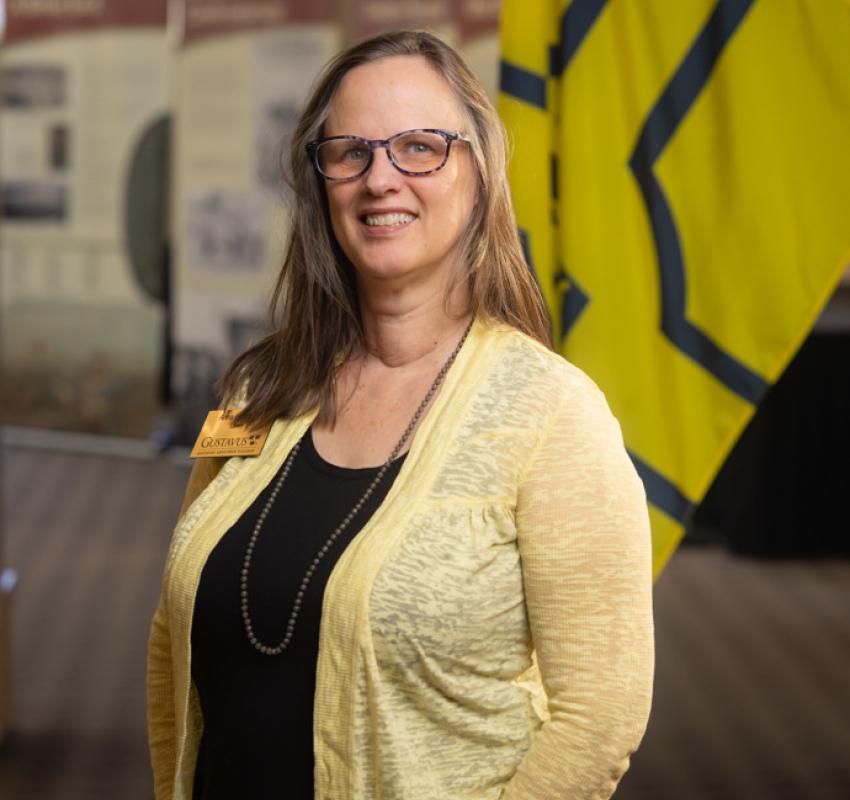
Anna Hulseberg
Anna Hulseberg has more than 20 years of experience teaching Gustavus students information literacy, which the Association of College & Research Libraries defines as “the set of integrated abilities encompassing the reflective discovery of information, the understanding of how information is produced and valued, and the use of information in creating new knowledge and participating ethically in communities of learning” (Framework for Information Literacy for Higher Education). Anna’s teaching ranges from course-integrated library instruction sessions to individual and group research consultations. She works with students in a variety of disciplines over their time at Gustavus, from First Term Seminars to upper level courses in the majors. Anna’s work also includes building a library collection that reflects the range of liberal arts scholarship and supports student research within the College curriculum. Over the years, she has enjoyed helping Gustavus students work to attain their full potential, with a special emphasis on facilitating their dispositions as lifelong learners and ethical consumers and creators of information.
Anna’s areas of research include information literacy, librarians in mentoring and advising, and librarianship as a profession (with an emphasis on electronic resources management). Her research has been published in journals such as College & Undergraduate Libraries, the Journal of Electronic Resources Librarianship, and College & Research Libraries News, and presented at venues including the American Library Association Annual Conference, Minnesota Library Association Annual Conference, and the Brick & Click Academic Library Conference. Anna is active in library science professional associations, having served on the boards of the Minnesota Library Association and its Academic and Research Libraries Division.
Anna’s involvement in the College has included service on a number of faculty committees, including the Faculty Personnel Committee, Faculty Development Committee (past chair), and Academic Operations Committee (past co-chair). She participates in collegial management of the Library and Archives department as co-Program Assessment Liaison (PAL) and on departmental committees. Anna works to celebrate Gustavus students’ achievements in the liberal arts as a past officer and active member of the Phi Beta Kappa honor society.
Our People
JC Sanford
Trombonist/composer/conductor, JC Sanford, is deeply rooted in the traditions of jazz and classical music, yet constantly pushing at their boundaries. He has appeared on more than 40 recordings as a trombonist, conductor, composer, and producer. A long-time student of the legendary Bob Brookmeyer, Sanford has performed as a trombonist alongside the likes of Danilo Pérez, Matt Wilson, Anthony Cox, and Donny McCaslin. A sought-after conductor of new large ensemble music across the world, he conducts the thrice-Grammy-nominated John Hollenbeck Large Ensemble, the Frank Carlberg Large Ensemble, the Alan Ferber Nonet +Strings, John Ellis’ jazz opera Ice Siren, and the Alice Coltrane Orchestra featuring Ravi Coltrane and Jack DeJohnette. He also recently conducted projects with the North German Radio (NDR) Big Band in Hamburg, Germany and Quinsin Nachoff's chamber ensemble in NYC and Toronto.
His compositions and arrangements have been performed by jazz artists such as Dave Liebman, John Abercrombie, Lew Soloff, and Ingrid Jensen, plus non-jazz artists like Japanese koto player Yumi Kurosawa, British singer-songwriter Joy Askew, and Grammy-nominated classical pianist Andrew Russo. His own 2014 JC Sanford Orchestra album Views from the Inside won international acclaim and was awarded the prestigious Aaron Copland Fund for Recording grant.
Sanford is regularly recognized as a "Rising Star” trombonist DownBeat Magazine’s Annual Critic’s Polls as well as previous acknowledgements in the Big Band and Arranger categories. He has received many grants and awards including a 2018 McKnight Composer Fellowship, grants from the MN State Arts Board to fund recording projects, and a Southeast MN Arts Council grants to help fund the Northfield Jazz Festival.
Additionally, he directs the Twin Cities Jazz Composers Workshop and curates the International Society of Jazz Arrangers and Composers (ISJAC) monthly artist blog. JC has had previous teaching positions at the School of Jazz at The New School, Long Island University - Brooklyn, St. Olaf College, LeMoyne College, Luther College, Williams College, and New England Conservatory.
Our People
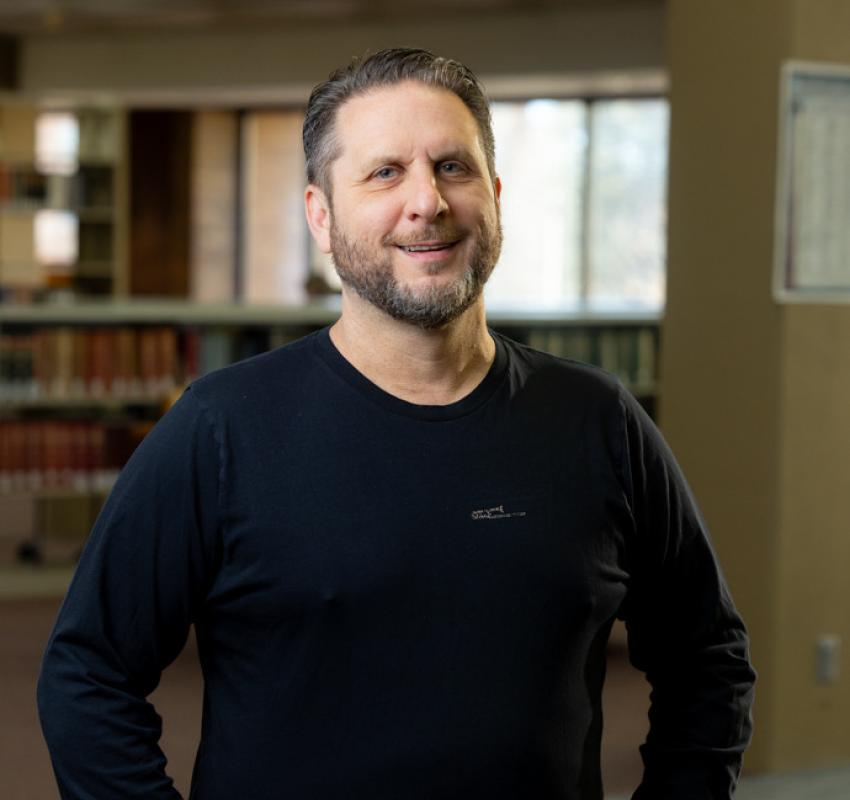
Maddalena Marinari
Maddalena Marinari is a Professor of History and the Dorothy Peterson, Mildred Peterson Hanson, and Arthur Jennings Hanson Endowed Professor of Liberal Studies. She is the author of Unwanted: Italian and Jewish Mobilization Against Restrictive Immigration Laws, 1882–1965 (University of North Carolina Press, 2020) and of several articles on immigration restriction, U.S. immigration policy, and immigrant mobilization in the Journal of American History, Journal of Policy History, Journal of American Ethnic History, Journal of the Gilded Age and Progressive Era, and Social Science History Journal. She has also co-edited four volumes on different aspects of US immigration history in the twentieth century, a special issue of the Journal of American History on the centennials of the immigration restriction acts of the 1920s, and a special issue of the Journal of American Ethnic History on migration and citizenship. Her next book explores the history of family, marriage, and sexuality in U.S. immigration policy from 1875 to 2025. She is also one of the scholars who created the Immigration Syllabus, an online tool for anyone interested in understanding the history behind current debates on immigration, and of Immigrants in COVID America, a curated collection of resources that chronicles the impact of the pandemic on migrant and refugee communities in the United States. Professor Marinari is currently president of the Immigration and Ethnic History Society and Editor in Chief of the Oxford Research Encyclopedia of Migration Studies. She has received funding from the American Philosophical Society, the Gilder Lehrman Institute of American History, the Immigration History Research Center, the Social Science Research Council, and the American Society for Legal History for her research and her public projects.
At Gustavus, she teaches a broad range of courses in U.S. history since 1865 and is an active member of the community. Her service to the College includes her tenure on the Faculty Senate and the Personnel Committee as well as her roles as the Kendall Center Associate for Faculty, Research, and Scholarship and as the Kendall Center Associate for Excellence in Teaching. In 2023, she received the Gustavus Faculty Service Award for her work on the Faculty Task Force. In 2021, Gustavus Adolphus College awarded her the Gustavus Faculty Scholarly Accomplishment Award in recognition of her scholarship accomplishments.
Our People
Priscilla Briggs
Priscilla Briggs is a professor of Art & Art History, the advisor for the Film & Media Arts major, and supports the Film & Media Studies interdisciplinary program. Priscilla teaches Digital Photography, Video Art, Graphic Design, the Zines for Sustainability challenge seminar, and the Arts Now professional practice seminar for junior art majors.
She enjoys teaching within the liberal arts mission of Gustavus and guiding students in their experience of the visual arts as both an intuitive and intellectual process that contributes to well-being and supports our curiosity as human beings. She enjoys collaborating with students and has led multiple faculty/student summer research projects.
Priscilla is a practicing artist who investigates the intersections of capitalism, identity, social justice and the environment through photography, collage and book-making. Her research has been supported by numerous grants, most notably the McKnight Foundation, the Puffin Foundation, and the Minnesota State Arts Board. Her work has been exhibited internationally at venues such as the Saatchi Gallery in London, the Landskrona Photo Salon in Sweden, the National Museum of Modern and Contemporary Art in Seoul, the National Gallery of Victoria in Melbourne, the Musei San Domenico in Forlì, Italy, and the Minneapolis Institute of Art.
Her artist monograph, Impossible Is Nothing: China’s Theater of Consumerism, was published by Daylight Books. Many images from the book were created during artist residencies at the Chinese European Art Center in Xiamen and Art Channel in Beijing. Priscilla recently launched Rose Bramble Books, an artist zine/book platform. Her work has been featured in print and online publications such as European Photography Magazine, Newsweek Japan, Photo District News, Hyperallergic, L’oeil de la Photographie, Lenscratch, and F-Stop Magazine. Priscilla is a member of both Rosalux Gallery and the FotoMatter Collective.
Priscilla’s research has taken her near and far from the Badlands to China and India, but her travels began in her early twenties when she taught English in Tokyo and backpacked through Southeast Asia for two years. She has led travel courses in Thailand and Ireland. Wherever she goes, she looks for the nearest hiking trail.
Our People
Yumiko Oshima-Ryan
Dr. Yumiko Oshima-Ryan began teaching at Gustavus in 2004. She enjoys teaching private piano lessons and establishing relationships with her students that focuses on trust and integrity. At her piano studio, students cultivate musical, technical, historical, and theoretical features of piano repertoire which they select to perform for their recital. Students focus on developing piano skills which are vital for artistic self-expression. Dr. Oshima-Ryan values mentoring students as they face their challenges, find new perspectives, and most of all, promote self-belief. All of these things ultimately provide deeper meaning and joy to their performance and creativity.
A native of Japan, Yumiko also teaches keyboard courses to students of all levels, including total beginners. Along with keyboard skills courses for music majors and minors, she offers courses on how to practice and prepare performances, as well as on wellness for musicians.
Dr. Oshima-Ryan believes musical performance is one of the most valuable opportunities students can have, and that it represents a core value in the music department of a liberal arts college. As an instructor, she also values sharing the experience of her own performances with students.
Her recordings, "Piano Works for the Left Hand - Takashi Yoshimatsu" and “From Afar,” are published by the Naxos Records label and available to stream on major digital platforms, including iTunes, Spotify, and Amazon. "Piano Works for the Left Hand" was selected as a special edition in the August 2022 issue of Record Geijutsu, a top music review magazine in Japan. Dr. Oshima-Ryan hopes this album inspires and encourages people rehabilitating after injury or fighting a major illness, such as cancer. The album includes pieces which were written for the composer’s respected friend, Izumi Tateno, who lost the use of his right hand after a cerebral hemorrhage. She wants the listeners to get past the idea of the left hand as the overlooked partner of the dominant right. She wants them to see, instead, that through courage, compassion, and creativity, the limitations of human frailty can be overcome.
Recently, Dr. Oshima-Ryan started collaborating with the Department of Theatre and Dance at Gustavus by creating original music for dance performances. Performances, recordings, and lectures are available online.
Our People
Daniel Moos
Daniel C. Moos (PhD) is a professor of Education where he teaches courses in developmental and educational psychology, educational technology, and the supervision of student teachers. His work centers on understanding how students learn, particularly through the lenses of motivation, metacognition, and self-regulated learning, and how these processes can be intentionally supported through instruction and assessment.
Dr. Moos’s scholarship focuses on self-regulated learning in classroom and technology-rich environments. His research examines how learners plan, monitor, and evaluate their thinking, and how instructional design, feedback, and classroom technology can foster deeper learning. He has published extensively in leading journals and edited volumes in educational psychology, learning sciences, and educational technology, and he has collaborated frequently with undergraduate students as research co-authors. His work is nationally and internationally recognized, including invited keynote and symposium presentations and service in leadership roles within professional organizations focused on self-regulated learning.
At Gustavus, he is deeply committed to teacher preparation and evidence-based teaching. He works closely with pre-service teachers as they learn to design instruction, integrate technology meaningfully, and use assessment to support student learning. His teaching philosophy emphasizes helping future educators become reflective practitioners who understand how students learn and who can adapt instruction to meet diverse learner needs. He is particularly interested in bridging theory and practice, ensuring that research on learning, motivation, and assessment is accessible and useful for teachers in real classrooms.
In addition to his teaching and research, Dr. Moos has held several institution-wide leadership and service roles at Gustavus. These include serving as department chair, college assessment director, faculty associate for teaching excellence, and assessment coordinator for the Education Department. Through this work, he has supported faculty development, program assessment, accreditation efforts, and conversations about effective teaching and learning across the college.
Dr. Moos also contributes extensively to the broader field of education through editorial board service, grant advisory work, external reviews, and mentoring early-career scholars. He is regularly involved in reviewing research for major journals and supporting national initiatives related to self-regulated learning and teacher education. Before entering higher education, Dr. Moos was an elementary and middle school teacher, an experience that continues to shape his teaching, research, and commitment to teacher education. Outside of Gustavus, he enjoys staying active, following youth and collegiate athletics, and spending time with his family. He values the close-knit academic community at Gustavus and especially enjoys working with students as they develop into thoughtful educators and lifelong learners.