Our People
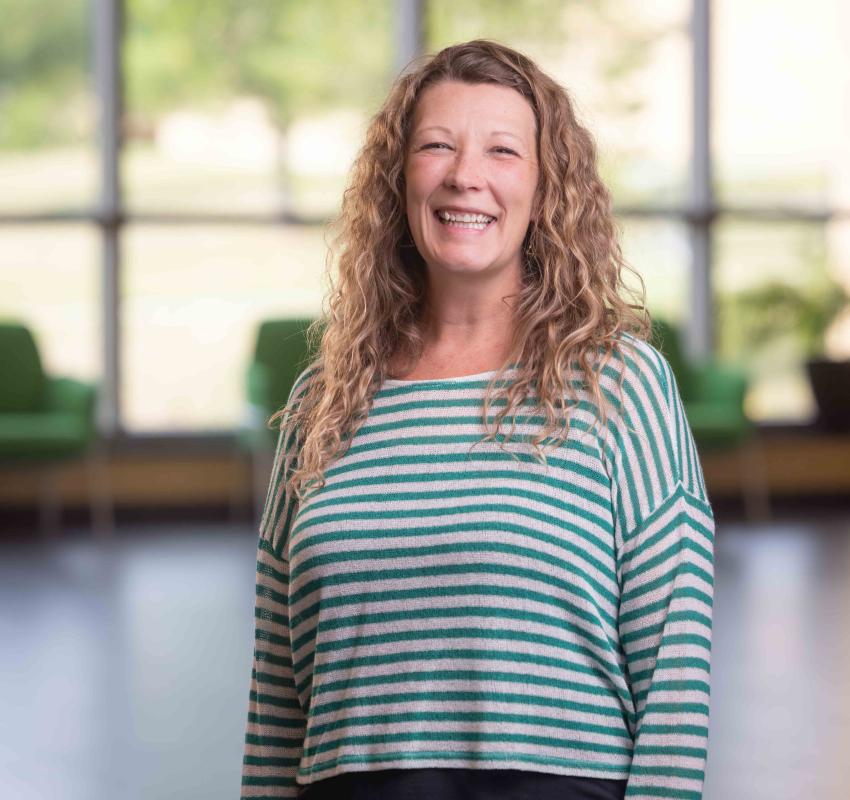
Julie K. Bartley
As a Professor in the Department of Environment, Geography, and Earth Sciences (EGE), Julie K. Bartley teaches courses in the Geology and Environmental Studies programs. With a background in chemistry and geology, Professor Bartley brings an interdisciplinary perspective to the study of the Earth’s past and present. As a teacher, she strives to know her students as individuals and to inspire interest in the Earth’s past and care for its future. She has also held significant leadership roles at Gustavus, including serving as chair of EGE, as the project director for the Inclusive Excellence Project, and as Associate Provost and Dean of Sciences and Education.
Professor Bartley’s expertise lies in interpreting ancient environments, with a particular focus on the Precambrian. Her research explores how microbial communities shaped and were shaped by the environments in which they lived. She and her students study the fossil record and the chemical signatures left by life hundreds of millions or even billions of years ago. At Gustavus, she actively involves students in this discovery process, supervising numerous undergraduate research projects that range from evaluating stromatolites in Minnesota to analyzing the Martian surface signs of habitability.
Students who collaborate with Professor Bartley might conduct fieldwork, perform laboratory analyses, analyze imagery, work with databases, or some combination of these. In the classroom, Professor Bartley teaches a wide array of courses taken by students across campus. Her teaching philosophy is characterized by a commitment to effective and inclusive instruction and a firm belief that every student is equipped to succeed. Whether a geology major, a general education student, or a first-semester Gustie, students can expect to take an active role in class, have many opportunities for hands-on experiences, and be challenged to grow as they learn.
Beyond her teaching and research, Professor Bartley serves Gustavus and the broader scientific community in many ways. She recently served as the Faculty Shepherd for the Nobel Hall of Science renovation and addition project and has co-chaired the Nobel Conference. She is a trained facilitator for two national programs: the ADVANCEGeo Partnership, which aims to improve workplace climate in the geosciences, and the Traveling Workshop Program, whose workshops help strengthen geoscience departments.
As the curator of the Chester Johnson Geology Museum, Professor Bartley regularly shares her passion for geology with K-12 students and the public. Whether leading fossil collecting field trips or presenting to local community organizations, she enjoys helping others see the landscape as a "time machine." Her dedication to service was recently honored with the Gustavus Faculty Service Award.
Outside of her professional life, she has served as the chair of a local charter school board and remains an active member of several professional societies, including the Geological Society of America, the National Association of Geoscience Teachers, and the Association of Women Geoscientists.
Our People
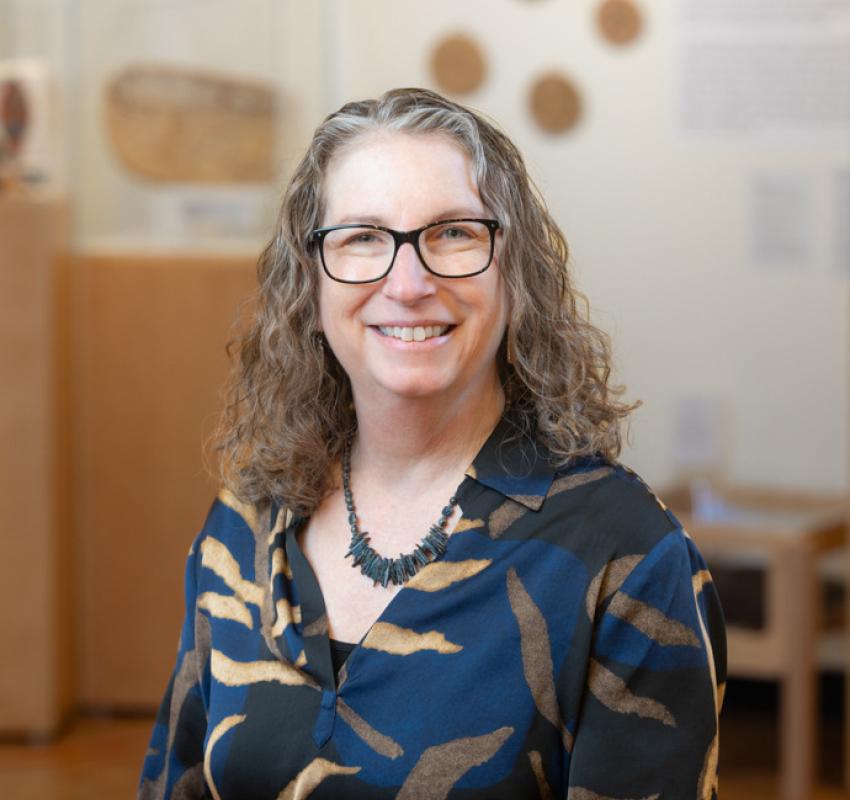
Maria Isabel Kalbermatten
Maria Kalbermatten is a scholar and educator in Hispanic Studies. She teaches courses in Spanish language, culture, and linguistics. Her work centers on the study of humor in discourse, with a particular focus on verbal irony, political humor, and the ways humor operates in contexts of power, ideology, and social interaction. Drawing on approaches from pragmatics, discourse analysis, and critical literacy, her research examines how humor functions not only as entertainment but also as a tool for critique, affiliation, and meaning-making in everyday communication.
Her scholarship includes analyses of spontaneous conversations and media texts, exploring how speakers use irony and humor to negotiate relationships, express stance, and challenge dominant narratives. She has a particular interest in humor in Spanish-speaking contexts, including Latin America, and her recent work engages with questions of political discourse, manipulation, and the role of humor in shaping public opinion. Her research has been presented at national and international conferences and contributes to ongoing interdisciplinary conversations about language, culture, and society.
Kalbermatten is deeply committed to student-centered teaching and to creating an engaging, inclusive classroom environment. Her teaching philosophy emphasizes active learning, critical thinking, and the development of interpretive skills that allow students to analyze language and culture in meaningful ways. She frequently integrates her research into her courses, designing classes that invite students to explore authentic materials such as political cartoons, media discourse, and everyday interactions. In courses like Political Humor and Manipulation, she applies a critical literacy framework to help students examine how humor can both reinforce and challenge systems of power.
Kalbermatten teaches across the Spanish curriculum, from introductory language courses to advanced content courses, and contributes to interdisciplinary programs that engage with global perspectives, media, and cultural studies. She values mentoring students at all levels and enjoys supporting them in developing linguistic proficiency alongside cultural awareness and analytical skills.
In addition to her teaching and research, Kalbermatten is actively involved in service at the College and within the broader academic community. She contributes to curriculum development, participates in collaborative initiatives, and engages in professional activities that connect her work to wider scholarly and educational networks.
One of her favorite aspects of teaching at Gustavus is the opportunity to work closely with students in a liberal arts setting, where discussion, curiosity, and intellectual exploration are central. She values the strong sense of community on campus and the ways in which students bring diverse perspectives into the classroom.
Outside of her academic work, Kalbermatten enjoys creative and cultural activities that complement her scholarly interests, including drawing, exploring global cuisines, and engaging with music and the arts. These interests often inform her teaching and contribute to the dynamic, culturally rich learning experiences she fosters in her courses.
Our People
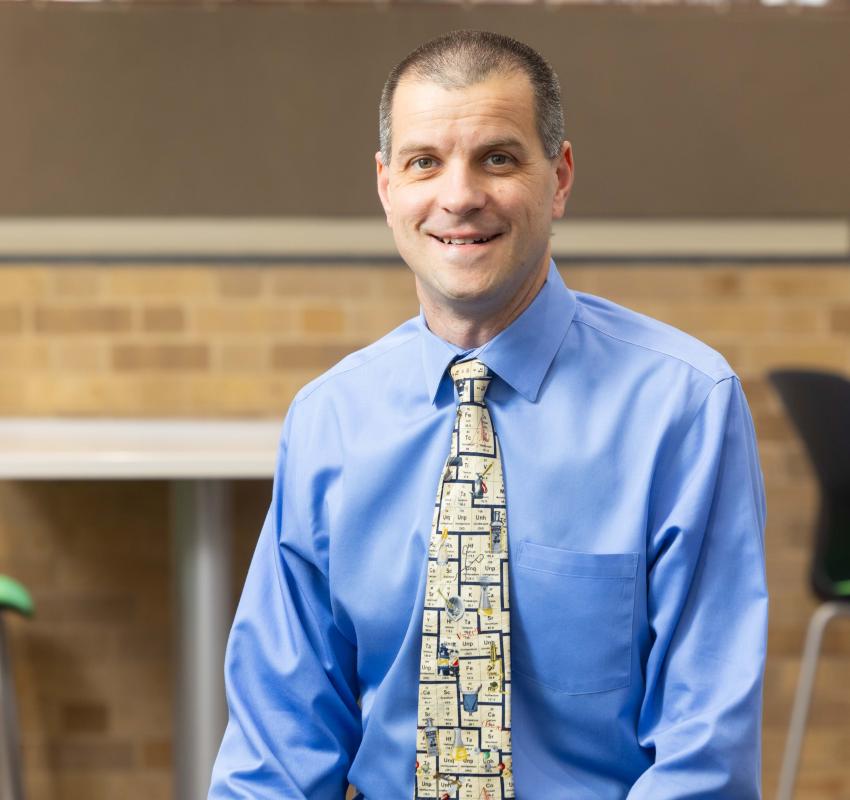
Dwight Stoll
Dwight Stoll is Professor of Chemistry at Gustavus Adolphus College. In this role, he regularly teaches courses in Quantitative Chemical Analysis and Instrumental Methods as well as Introductory Chemistry. He has received both the Faculty Service Award, and the Faculty Scholarly Achievement Award from Gustavus.
Dwight has authored or co-authored more than 100 peer-reviewed publications and six book chapters in separation science and speaks internationally on the topic. He is co-editor of the book on “Multi-Dimensional Liquid Chromatography: Principles, Practice, and Applications”. He has also written the monthly “LC Troubleshooting” column for LCGC Magazine and co-hosts the “Analytically Speaking” podcast.
Dwight's primary research focus is on the development of two-dimensional liquid chromatography (2D-LC) for both targeted and untargeted analyses. Within this area he has made contributions on many aspects of the technique including stationary phase characterization, biopharmaceutical analysis, new 2D-LC methodologies and instrumentation, and fundamental aspects including re-equilibration in gradient elution liquid chromatography and analyte focusing. He regularly teaches short courses on chromatography and 2D-LC, including in venues such as Pittcon, EAS, and the international HPLC20XX series.
He is the 2011 recipient of LCGC’s Emerging Leader in Chromatography Award, the 2015 recipient of the American Chemical Society Division of Analytical Chemistry Award for Young Investigators in Separation Science, and received the Georges Guiochon Faculty Fellowship in 2017.
View more of his work on the Stoll Lab website.
Our People
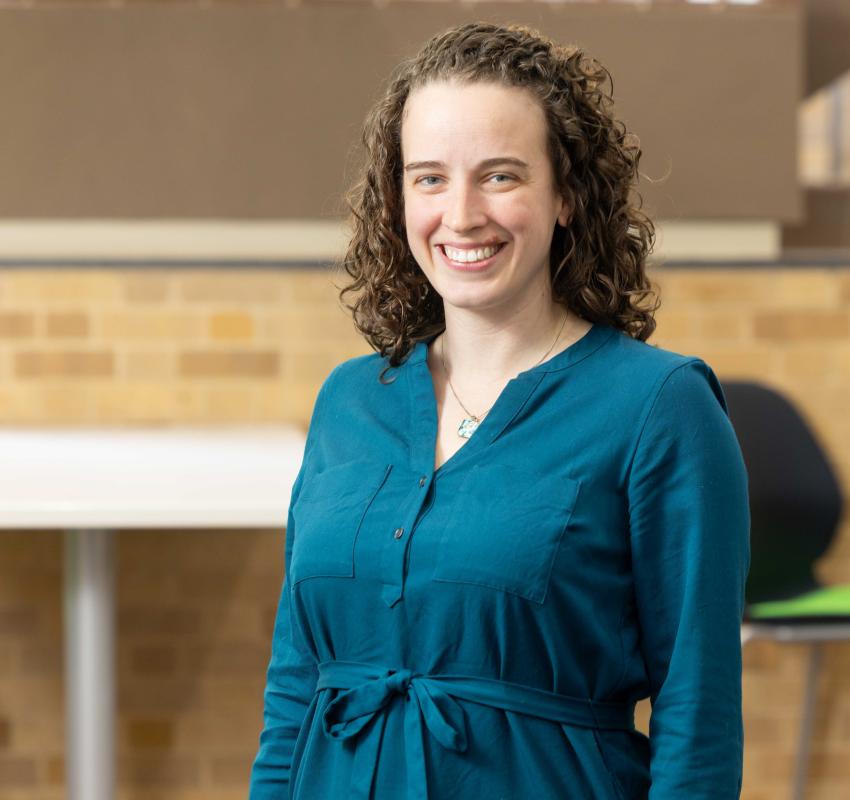
Janie Frandsen
Dr. Janie Frandsen is the Arthur Glass, Charles Hamrum, and Arne Langsjoen Endowed Professor of Biochemistry. Holding a joint appointment in the departments of Biology and Chemistry, she teaches and advises students in the interdisciplinary Biochemistry and Molecular Biology (BMB) program. In her courses, students explore the intersection of the biological and chemical worlds while developing a scientific mindset, essential skills for careers in research or medicine. More importantly, within a liberal arts context, she guides students to become sophisticated thinkers, problem-solvers, and communicators who possess a deep sense of identity, meaning, and purpose — skills that prepare them for lives of leadership and service, no matter what their future holds.
Dr. Frandsen’s research focuses on studying the structure-function relationship of non-coding regulatory RNAs in bacteria, such as riboswitches and small RNAs. Using Escherichia coli as a model organism, her lab combines computational, biochemical, and genetic techniques to understand these molecular mechanisms, with the long-term goal of aiding the development of novel antibiotics to combat antibiotic resistance. Undergraduate researchers engage in high-impact, hands-on discovery, executing experiments ranging from cell culture-based reporter assays to in vitro binding assays with transcribed RNAs and purified proteins. Dr. Frandsen and her students routinely present their work on and off campus and seek support through internal and external grants.
In the classroom, Dr. Frandsen creates structured, inclusive spaces where every student can thrive. Recognizing that students enter college with unique paths and positionalities, she pairs high expectations with robust, equitable support frameworks. To shift focus from stressful numeric grades to deep, formative learning, she implements innovative alternative grading practices, including “ungrading” and contract grading, in her courses. Whether analyzing real-world case studies, developing a growth mindset, or exploring vocation, students are challenged to see themselves as fully capable scientists and multifaceted humans.
Dr. Frandsen’s dedication to excellence extends to her service and leadership on campus. Notably, she has collaborated with her BMB colleagues to complete a comprehensive program review and secure accreditation from the American Society for Biochemistry and Molecular Biology (ASBMB) for the Gustavus BMB program. This prestigious distinction ensures that Gustavus BMB majors graduate from a program validated at the highest national level, opening doors to future careers in academic research, scientific industries, and health professions.
Outside of the classroom and laboratory, Dr. Frandsen claims the title of adventurer. Her adventures range from the local, such as exploring regional hiking trails with her dog, trying out new recipes, or learning a new fiber art, to the momentous, including international hiking trips and family trips to America’s National Parks.
Our People
Jillian Downey
Dr. Jillian Downey is the Clifford M. Swanson Endowed Professor of Mathematics and Associate Professor of Statistics in the Department of Mathematics, Computer Science, and Statistics. Her teaching at Gustavus spans the full breadth of the statistics curriculum, ranging from introductory courses like Introduction to Statistical Methods to specialized advanced topics like Probability Theory and Mathematical Statistics. Driven by a commitment to innovative, student-centered pedagogy, Dr. Downey routinely incorporates active learning models, free open-source materials, and alternative grading frameworks, like standards-based grading, to support student success.
Dr. Downey’s scholarship focuses on statistics education, education research methodology, and statistical consulting. Her research investigates how alternative grading schemes impact student buy-in and performance, as well as how statistical methods can better account for structure in educational assessment data. A dedicated scholar-educator, her interdisciplinary work and educational research have resulted in multiple peer-reviewed articles in publications such as Problems, Resources, and Issues in Mathematics Undergraduate Studies, the Journal of Statistics and Data Science Education, and Research in Higher Education. She also co-hosts a podcast, "T5: Talking Through Teaching Tensions Together," where she explores pedagogical practices alongside fellow statistics educators.
Beyond the classroom, Dr. Downey is deeply engaged in service at Gustavus. She currently serves as Department Chair as well as on the Faculty Senate. She led departmental initiatives to build transparent student worker guidelines and contributed broadly to the campus community through roles on the Curriculum Committee, the Institutional Review Board, and the Howard Hughes Medical Institute (HHMI) Grant Leadership Team. Passionate about working with Gustavus students, she regularly guides students through applied statistical collaborations, including projects analyzing workplace safety data and investigating inclusive teaching practices in STEM.
A Gustavus alumna herself, Dr. Downey considers getting to work with future Gustie alums as the best part of her job.
Our People
Elizabeth Bolint
Dr. Betsy Bolint (she/her) is an Assistant Professor of Nursing who enjoys helping students prepare for nursing careers that are both skilled and compassionate. With a strong clinical background and a commitment to teaching, she brings real-world healthcare experience into the classroom within a Lutheran, faith-based liberal arts setting. While attending Maryville College in Maryville, Tennessee, she developed an appreciation for the liberal arts and whole-person learning—an approach that continues to shape how she teaches and supports students. Her advanced clinical training as a nurse practitioner informs her teaching and supports her goal of preparing students to enter clinical practice with confidence, competence, and professional integrity.
Dr. Bolint is committed to service and caring for underserved communities. Her clinical and service experiences have focused on improving access to healthcare and addressing health inequities. She encourages students to see service, advocacy, and compassion as essential parts of nursing and as values that align with the Lutheran tradition. Her scholarly interests include translational research, with a focus on bridging evidence-based research and clinical practice to improve patient outcomes and healthcare quality. She helps students understand that research is not just something done in academic settings—it is a practical tool nurses use to improve care and make informed decisions.
As an educator, Dr. Bolint works to create a supportive and inclusive learning environment where students are challenged, encouraged, and treated as individuals. She emphasizes clinical readiness, ethical decision-making, and building professional confidence. Helping students make connections between coursework and patient care is central to her teaching style. One of her favorite parts of teaching is working closely with students as they prepare for their future in nursing. She values mentoring students through both the challenges and successes of nursing school and enjoys watching them grow into capable, compassionate nurses who are ready to care for patients, families, and communities.
Grounded in Lutheran values of service, care for neighbors, and respect for the dignity of every person, Dr. Bolint views nursing education as both a profession and a calling. Through teaching, mentorship, service, and clinical application, she helps prepare nursing graduates to enter the profession with strong skills, confidence, and a clear sense of purpose.
Our People
Emma Brunton
Emma Brunton ’19 is an instructor in the Health and Exercise Science Department. She recently returned to her alma mater after receiving her master's in Community Health Education from Minnesota State University, Mankato. Her professional expertise centers on preparing future health and physical education teachers and coaches through evidence-based, purpose-driven practices. Currently, her work focuses on athlete development, leadership training, and incorporating mental health and functional movement into sport. She has led important cross-divisional service initiatives, including the Mental Health Club and Hope Squad, to promote student well-being and support. Brunton received the Golden Apple Award in 2021 and the Section 1A Assistant Coach of the Year award in 2021 and 2025. Outside of academic work, she enjoys weight lifting, painting, reading, and spending time with her husband, family, friends, and dog.
Our People
Jeff Jenson
Jeff Jenson joined Gustavus in August 2007, bringing extensive experience in archives development, public service, and education. In his role, he is dedicated to building and strengthening archival collections, improving access to historical materials, and ensuring the long-term preservation of vital records. Deeply committed to public service and education, he works to connect communities with information resources and assists researchers in fostering meaningful engagement with archival materials. He also collaborates closely with faculty and students, developing instructional sessions that promote the effective use of primary sources and research tools in academic settings.
Embracing the diverse nature of the liberal arts tradition, Jenson’s research interests span a wide range of topics, with his most recent publications and presentations exploring the history of timber rattlesnakes in Minnesota. He is an active member of the archival and library communities, presenting or facilitating sessions at the Midwest Archives Conference, Twin Cities Archives Round Table (TCART), Brick & Click Academic Library Conference, and the ACRL Conference. In addition, Jeff serves as a researcher with the DNA Doe Project.
Beyond his professional affiliations, Jenson is heavily involved in institutional leadership at the College. He has served as Chair of the Library and Archives Department and actively contributes to the campus community through his service on numerous faculty committees. His campus involvement has included roles on the Faculty Senate, the Adjudication Board, Third-Year Review Committee, as a Liberal Arts Search Committee Representative for several searches, and as a faculty representative on the Conduct Board.
Our People
Brandon Dean
Dr. Brandon Dean serves as the Jon and Anita Thomsen Young Distinguished Endowed Chair in Music and is the Conductor of the Gustavus Choir. In addition to his conducting duties, he teaches beginning and advanced conducting, and serves as music director for Christmas in Christ Chapel. Dr. Dean received the 2014 Swenson-Bunn Memorial Award for Teaching Excellence and the 2022 Faculty Service Award, the highest accolade a Gustavus faculty member can receive for distinguished service activities. Before his appointment at Gustavus in 2011, Dr. Dean completed the Doctor of Musical Arts degree in conducting from the University of Cincinnati College-Conservatory of Music.
Our People
Thomas LoFaro
Thomas LoFaro is a Professor of Mathematics. He specializes in applications of dynamical systems to mathematical biology. He has had multiple cross-disciplinary scholarly collaborations in his career working with biologists, neuroscientists, and computer scientists. He is currently an Associate in the Institute for the Interdisciplinary Study of Decision Making at New York University. Thomas has recently co-authored the textbook Discovering Differential Equations Through Experiment & Inquiry with Professor Jeff Ford.
Professor LoFaro teaches a wide variety of mathematics courses in the MCS department but especially enjoys teaching any class with an applied mathematics focus. He has taught at Gustavus since 2000 and has served the College in many capacities including multiple terms chairing the MCS Department. In 2019 he was awarded the college's Faculty Service Award for exceptional service and dedication.
Our People
Julie Gilbert
Professor Julie Gilbert teaches information literacy to students across the curriculum. Her work is grounded in a deep belief that libraries play a vital role in student learning, wellbeing, and belonging, and that equitable access to information is fundamental to academic success and civic engagement. Through her teaching, research, and service, she is committed to making libraries and information accessible to all members of the campus community.
As an educator, Julie collaborates with faculty across disciplines to design instruction that supports students at every stage of their academic journey. Her teaching focuses on critical thinking, research strategies, source evaluation, and the ethical use of information in an increasingly complex landscape. She is especially passionate about demystifying research for students who may feel uncertain or overwhelmed by academic inquiry, and she strives to create learning environments that are inclusive, welcoming, and student-centered. By meeting students where they are, she helps them build confidence as researchers and lifelong learners.
In addition to her academic work, Julie is an award-winning author of books for young readers. Her writing reflects a lifelong engagement with libraries, storytelling, and literacy, and she brings this creative perspective into her teaching and librarianship. She believes strongly in the value of reading for pleasure and its role in intellectual growth, empathy, and wellness. In her role at the library, she takes particular pride in developing and curating collections, with a special emphasis on building vibrant, relevant current fiction holdings that invite students into the library as a place of discovery, connection, and enjoyment.
Julie’s research interests are interdisciplinary and evolving, reflecting the broad and changing role of libraries in higher education. She is especially interested in libraries as wellness spaces and in the ways library environments, services, and collections support not only academic achievement but also mental health, reflection, and community connection. Her work explores how libraries contribute to a holistic student experience and reinforce their importance as both intellectual and restorative centers of campus life.
A certified meditation teacher, Julie also coordinates the Gustavus Meditation Program. Through this work, she integrates contemplative practices into the academic environment and supports students, faculty, and staff in cultivating mindfulness, resilience, and balance. Whether teaching in the classroom, developing collections, supporting research, or leading meditation sessions, Julie’s work is guided by a belief in the transformative power of libraries and learning, and their central role in shaping a meaningful and supportive student experience.
Our People
Hannah Repp
Hannah Repp, Psy.D., L.P., is a Licensed Psychologist and the Director of the Counseling Center at Gustavus Adolphus College, where she has worked in college mental health since 2010 and served as Director since 2018. At the heart of Hannah’s work is a belief that mental health is not simply an individual concern, but a community responsibility. She is passionate about creating environments where students can access support early, develop resilience and self-understanding, and feel empowered to build meaningful lives.
Hannah especially enjoys working with college students as they navigate the many transitions and challenges of emerging adulthood. While she works with a wide range of mental health concerns, she has specialty training in anxiety disorders, trauma interventions, positive psychology, sex therapy, neurodivergence, and cultural adjustment and re-entry concerns. She approaches her work through an intercultural lens and has lived and been a student in both Minnesota and Nigeria. Hannah takes a relational approach to therapy and strives to understand and address the ways intersecting identities shape each person's experience. She is especially interested in working with LGBTQIA+ clients.
As Director of the Counseling Center, Hannah is equally passionate about the ways institutions can promote mental health and wellbeing beyond the therapy office. She has led the Counseling Center through significant organizational growth and change, including the development of an innovative, high-access clinical model and the strategic use of endowed funding to expand services and strengthen the sustainability of the Center. She works closely with colleagues across Academic and Student Affairs on issues including student retention, crisis response, behavioral intervention, accessibility, and campus wellbeing. Her leadership interests include staff wellbeing, organizational culture, equity and inclusion, sustainable models of care, and creating systems that allow both students and professionals to thrive.
Outside of her work at Gustavus, Hannah tends to (far too many) indoor and outdoor plants, helps on her partner’s organic farm, and finds adventures whenever she can in-between cheering at her children’s various sport, theater, music, and dance events.