Our People
Carol Lagergren
Carol Lagergren is a Visiting Instructor in the Education Department. After working 32 years in K-12 education as a classroom teacher and administrator, she moved to Gustavus and taught for several years focusing on Middle and Secondary School Education courses. She currently supervises and supports student teachers in the Education Program.
About - Chaplains
Spiritual places on campus: Christ Chapel, Bonnier Multifaith Center, the Memorial Garden, and Labyrinth and making reservations for events, including weddings.
Where to Give - Advancement
Learn about the many places where you can direct your giving such as: the Gustavus Fund, scholarships, academics, athletics, and performing arts including: Friends of Music (FOM), Heritage Scholarships, and G-Club.
Our People
Claire Woebke
Dr. Claire Woebke began teaching at Gustavus in 2022 as a visiting instructor in the Department of Health and Exercise Science. In 2024, she became an assistant professor and the research coordinator for the Master of Athletic Training Program. She teaches courses on medical and behavioral health conditions, athletic training leadership, and functional return-to-play, as well as the entirety of the Master of Athletic Training Program research sequence. Her own research focuses on embedding cultural humility training and experiences into healthcare education at both the undergraduate and graduate levels.
Our People
Lynnea Myers
Lynnea H. Myers, PhD, PhD MSN, RN is a dual PhD-trained nurse and researcher specializing in pediatrics, child development, asthma, and digital health. She currently serves as the faculty mentor for the Gustavus team for the Innovation Scholars Program. She most recently worked as a Postdoctoral Researcher at Karolinska Institutet in Stockholm, Sweden and a Visiting Research Fellow at Mayo Clinic in Rochester, Minnesota. Prior to those roles, she was an Associate Professor of Nursing at Gustavus Adolphus College. Her research interests focus on leveraging artificial intelligence and remote monitoring devices to improve pediatric asthma management.
Major/Minor
Secondary Education
In the Secondary Education major at Gustavus, you will choose from 17 teacher licensure programs. You will begin working in classrooms as soon as you start the program, and 90% of graduates are placed in teaching roles in middle schools, high schools, and other organizations across the country and the world.
Our People
Jeffrey Ford
Dr. Jeff Ford has been a visiting assistant professor of mathematics at Gustavus since 2016. He has taught almost every mathematics course offered at Gustavus. His research is in topology, dynamical systems, and mathematics education. Dr. Ford has supervised three honors theses, two interdisciplinary research projects, and six independent studies. He has co-authored two books in dynamical systems and one in linear algebra. He is committed to providing open access educational materials to students and encouraging teachers to use active and inclusive pedagogy. To that end, he has presented more than 20 times at conferences on active learning and alternative grading.
Our People
Tiffany Grobelski
Dr. Tiffany Grobelski is a human geographer who works at the intersection of energy geography and peace studies. Her research (and much of her teaching) is focused on energy conflicts, social movement-led energy transition, and how grassroots movements build positive peace. Tiffany earned her PhD in Geography and a graduate certificate in Socio-Legal Studies from the University of Washington, Seattle. Her doctoral research examined how Polish environmental advocates mobilize administrative law. Immediately after graduate school, Dr. Grobelski served as an asylum officer for the U.S. Department of Homeland Security. In that role, she adjudicated hundreds of humanitarian protection claims and gained extensive experience in non-adversarial, trauma-informed interviewing.
She has since received training in Conflict Management and Mediation from the Institute of Peace and Conflict Studies at Conrad Grebel University College in Ontario, Canada. Dr. Grobelski's recent projects focus on energy conflicts in Minnesota. She is actively involved in the Peace & Justice Studies Association, as well as the Energy & Environment Specialty Group of the American Association of Geographers.
Dr. Grobelski is passionate about creative, effective teaching and sharing best practices with colleagues. She and geographer colleagues have received national attention for their approach to designing world geography classes. Dr. Grobelski has also convened a Working Group on Teaching Energy Geographies, which has international membership; the group aims to create a durable space for energy geography educators to build community and collective expertise.
Selected Publications:
- "Pipelines and Peacebuilding: Conflicting Sovereignties and Environmental Knowledge Creation along Line 3." In Handbook of Environmental Conflicts. Edward Elgar Publishing. (2026)
- “Changing the Coal Status Quo through Scalar Practices: The Anti-Smog Movement’s Contributions to Polish Energy Transition.” Environment and Planning C: Politics and Space 43 (7): 1369–90. (2025)
- (with Anna Versluis, and Jesse McClelland) “Discovering Geography through Doing Geography: Project-Based Learning in an Introductory Undergraduate World Geography Course.” Journal of Geography 122 (2): 31–42. (2023)
Our People
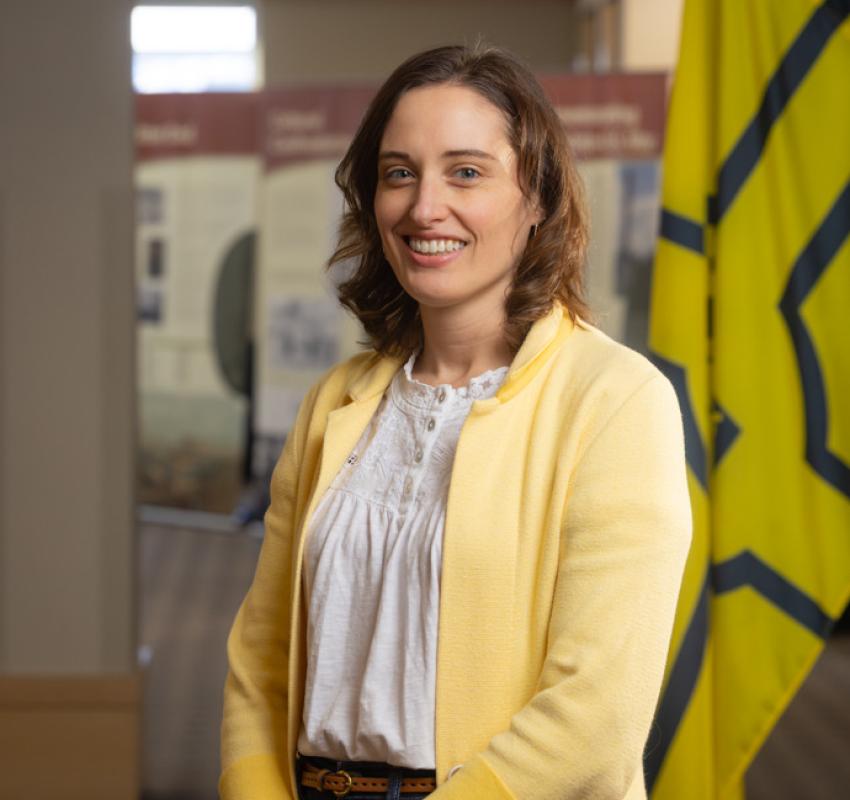
Julie Gilbert
Professor Julie Gilbert teaches information literacy to students across the curriculum. Her work is grounded in a deep belief that libraries play a vital role in student learning, wellbeing, and belonging, and that equitable access to information is fundamental to academic success and civic engagement. Through her teaching, research, and service, she is committed to making libraries and information accessible to all members of the campus community.
As an educator, Julie collaborates with faculty across disciplines to design instruction that supports students at every stage of their academic journey. Her teaching focuses on critical thinking, research strategies, source evaluation, and the ethical use of information in an increasingly complex landscape. She is especially passionate about demystifying research for students who may feel uncertain or overwhelmed by academic inquiry, and she strives to create learning environments that are inclusive, welcoming, and student-centered. By meeting students where they are, she helps them build confidence as researchers and lifelong learners.
In addition to her academic work, Julie is an award-winning author of books for young readers. Her writing reflects a lifelong engagement with libraries, storytelling, and literacy, and she brings this creative perspective into her teaching and librarianship. She believes strongly in the value of reading for pleasure and its role in intellectual growth, empathy, and wellness. In her role at the library, she takes particular pride in developing and curating collections, with a special emphasis on building vibrant, relevant current fiction holdings that invite students into the library as a place of discovery, connection, and enjoyment.
Julie’s research interests are interdisciplinary and evolving, reflecting the broad and changing role of libraries in higher education. She is especially interested in libraries as wellness spaces and in the ways library environments, services, and collections support not only academic achievement but also mental health, reflection, and community connection. Her work explores how libraries contribute to a holistic student experience and reinforce their importance as both intellectual and restorative centers of campus life.
A certified meditation teacher, Julie also coordinates the Gustavus Meditation Program. Through this work, she integrates contemplative practices into the academic environment and supports students, faculty, and staff in cultivating mindfulness, resilience, and balance. Whether teaching in the classroom, developing collections, supporting research, or leading meditation sessions, Julie’s work is guided by a belief in the transformative power of libraries and learning, and their central role in shaping a meaningful and supportive student experience.
Our People
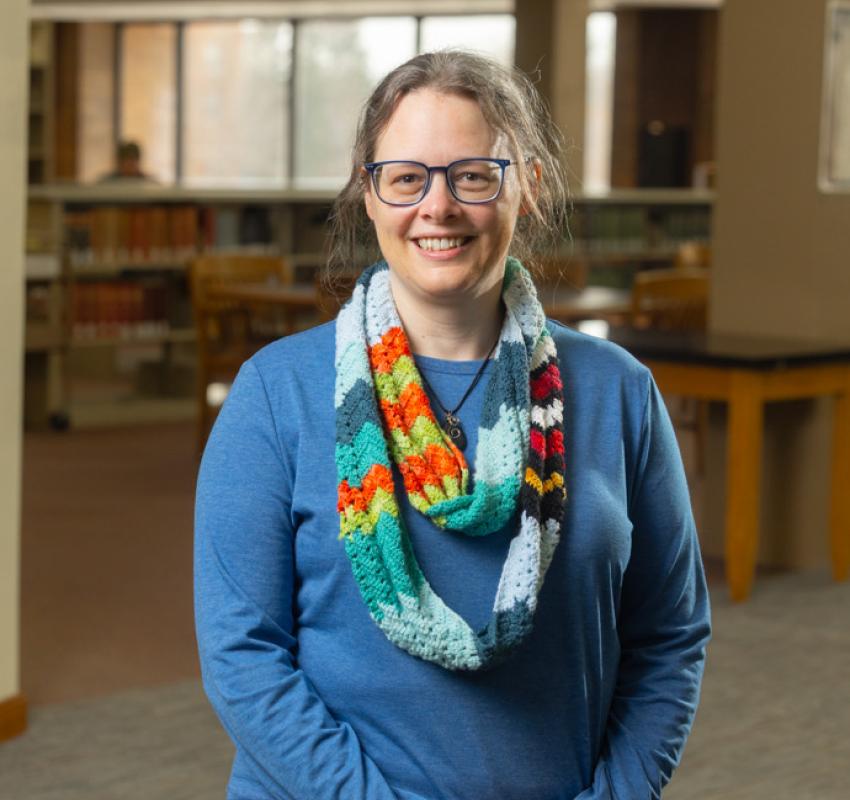
Andrew Kendall
Dr. Andrew Kendall serves as Associate Director of Choral Activities as well as Conductor of the Lucia Singers and the Choir of Christ Chapel. In addition to conducting his ensembles, he teaches courses in music education methods and conducting. Prior to his appointment at Gustavus, he served as Visiting Instructor and Conductor of The Gustavus Choir during the Spring 2023 semester. He earned his DMA in choral conducting at The University of Iowa, his MM in choral conducting at Louisiana State University, and his BA in music education from Gustavus Adolphus College. He has served as conductor of The Gustavus Choir, the LSU Chamber Singers, The University of Iowa Voxman Chorale, The University of Iowa University Choir, Musicorum, The St. John's Boys' Choir, and has held church music positions in Minnesota, Louisiana, and Iowa. He is a frequent choral clinician, guest conductor, and adjudicator.
Major/Minor
Religious Diversity in Professional Life
In this minor, you'll develop skills to negotiate the challenges of religious diversity in the workplace and the world at large. You'll strengthen your interfaith literacy and reflect on your own worldview and values. Religious diversity intersects with other forms of diversity, so this minor serves a range of fields and professions.
Our People
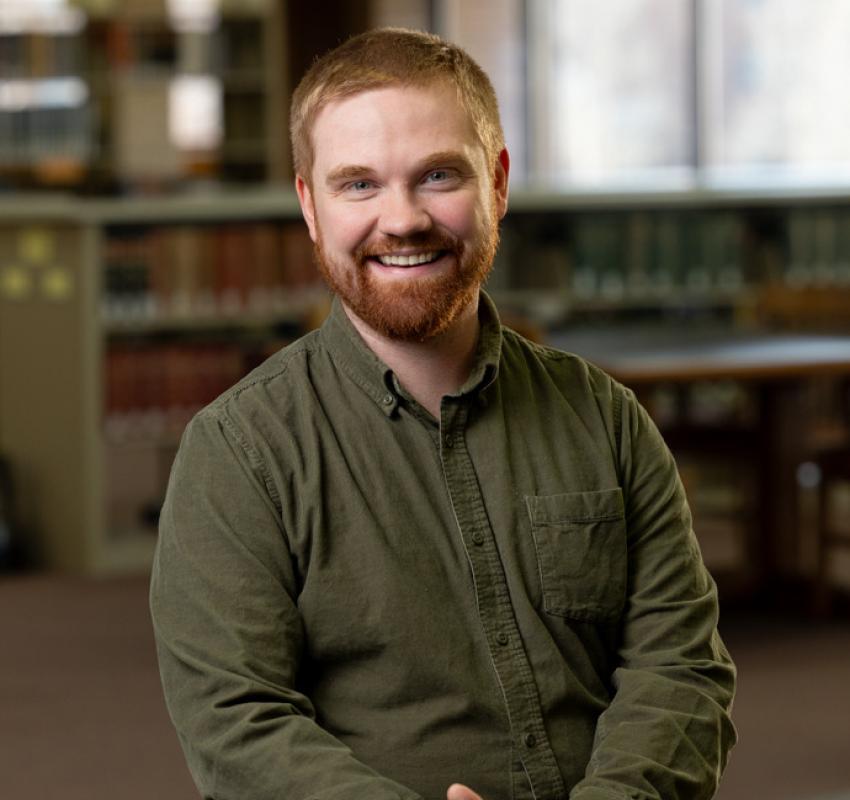
Chris Nolting
Chris Nolting has been a Visiting Assistant Professor of Physics at Gustavus since 2023. In his classes, he focuses on including many worked example problems and opportunities for hands on learning in groups, and as many physics demonstrations as possible. As a computational astrophysicist, he enjoys showcasing examples related to astronomy whenever possible. His research focuses on the study of galaxy cluster environments and powerful jets from active galactic nuclei, supermassive black holes at the centers of galaxies that accrete matter and power some of the brightest objects in the universe. This work is mainly done through numerical simulations on compute clusters and supercomputers using up to tens of thousands of processors simultaneously. Gustavus students working on research with Chris learn coding languages and data visualization techniques, and even 3D print some of the structures they simulate.
Chris is the faculty advisor to the Society of Physics Students and the Gustavus Engineering Club.
Outside of Gustavus, Chris a self-identifying nerd. He is a lover of board games, magic the gathering, Marvel movies, anime, and going on walks with his dog.