Lisa Schulte MooreNobel Conference 62
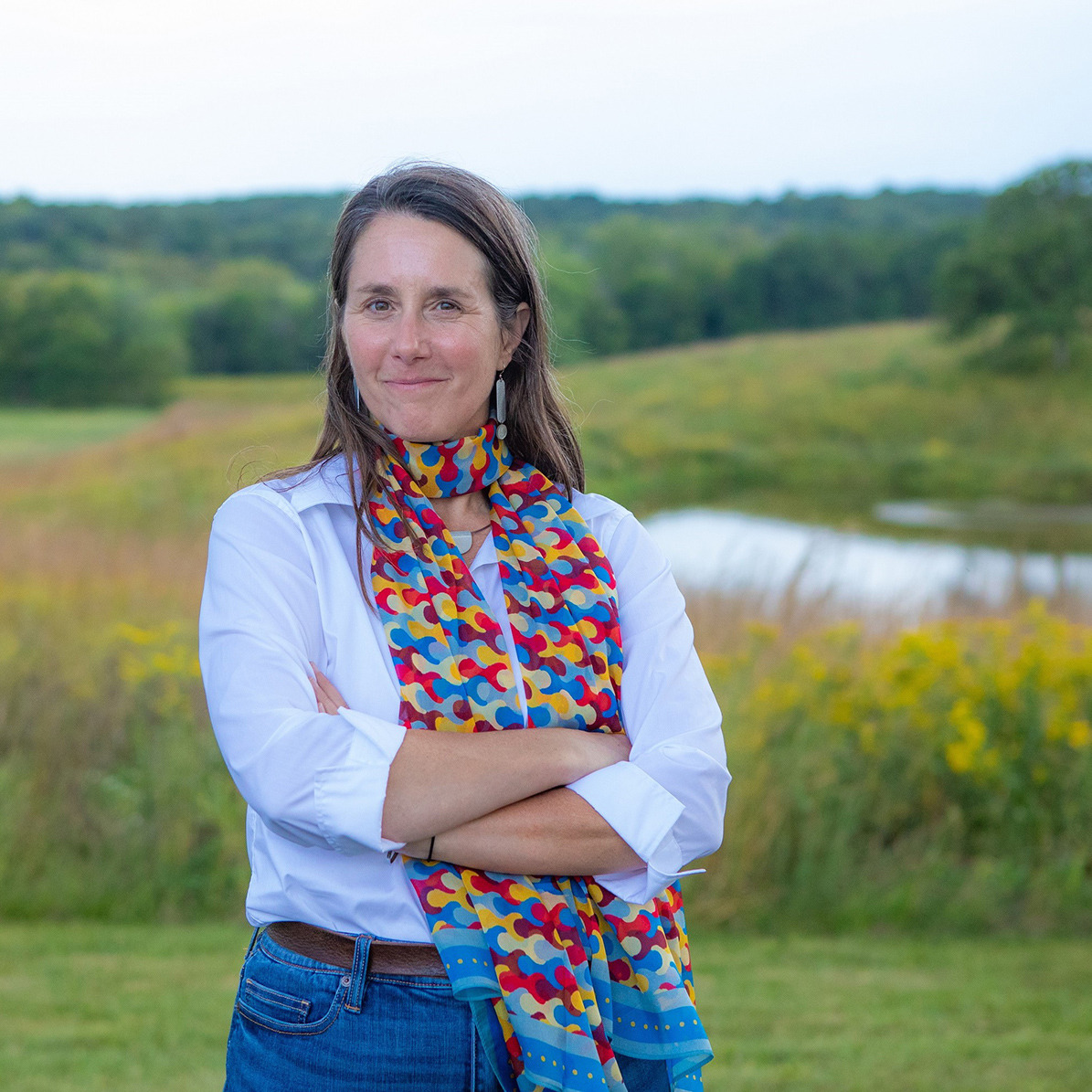
Lisa Schulte Moore
Charles F. Curtiss Distinguished Professor in Agricultural and Life Sciences in the Department of Natural Resource Ecology and Management and Director of the Bioeconomy Institute at Iowa State University
All Together in the Watershed: Connecting What Happens on Land with What’s in Our Water and What to do About It
Just as the Mississippi River and its tributaries shape the lives and livelihoods of the people who depend on them, the choices we make throughout the watershed shape the river’s health and resilience. Agriculture has an exceptionally large impact because it comprises the majority land use in the basin. In this presentation, you’ll learn how farmers and their supporting networks are coming together to strengthen agriculture while improving water quality—from improving crop production practices to planting strategically placed prairie strips that filter runoff and restore biodiversity. You’ll see how small, practical changes on the land can spark big, positive impacts downstream, and why each of us has a meaningful role to play.
Biography
Lisa Schulte Moore is a landscape ecologist working at the intersection of agriculture, ecology, community resilience, and policy, Dr. Schulte Moore has pioneered practical, scientifically rigorous solutions to some of the most pressing challenges facing American agriculture—from soil erosion, water pollution, and biodiversity decline to rural economic decline and market diversification.
Dr. Schulte Moore earned her BS in biology from the University of Wisconsin-Eau Claire, her MS in biology from the University of Minnesota-Duluth, and her PhD in forestry from the University of Wisconsin-Madison. She joined Iowa State’s faculty in 2003, where she has built a career defined by transdisciplinary collaboration and farmer-centered research.
Dr. Schulte Moore is co-founder of the groundbreaking Science-based Trials of Rowcrops Integrated with Prairie Strips (STRIPS) project, which has transformed agricultural conservation across the Midwest. Her team demonstrated that strategically placing native prairie vegetation strips—covering just 10% of a crop field—can reduce soil erosion by 95% and nitrogen and phosphorus runoff by 70-80%, while simultaneously supporting biodiversity including native pollinators and grassland wildlife. Importantly, prairie strips represent one of the most cost-effective conservation practices because they can be planted on the least productive portions of fields. Through intensive engagement with farmers and conservation practitioners, Dr. Schulte Moore has helped prairie strips gain adoption on over 26,000 acres on approximately 260,000 acres of cropland across 14 states. Her teamwork contributed to prairie strips being recognized as an eligible conservation practice in the 2018 Farm Bill’s Conservation Reserve Program, making federal financial support available to farmers using the practice.
As Director of the Bioeconomy Institute, Dr. Schulte Moore leads efforts to develop a circular, producer-first bioeconomy that transforms agricultural residues and perennial crops into renewable energy, materials, and chemicals—creating new revenue streams for rural communities while advancing environmental goals. She also directs C-CHANGE (Consortium for Cultivating Human And Naturally reGenerative Enterprises), which began as an Iowa State Presidential Initiative and grew into a major USDA-funded project exploring how continuous living cover—keeping roots in the ground year-round through diverse crop rotations and perennial plantings—can meet multiple societal goals simultaneously: sustainable food production, clean water, healthy soils, biodiverse habitats, climate mitigation, and rural prosperity.
Dr. Schulte Moore’s honors reflect the transformative impact of her work: she is the first Iowa State faculty member to receive a MacArthur Fellowship (2021), and is a fellow of the Ecological Society of America, the American Association for the Advancement of Science, and the Leopold Leadership Program. She was named an inaugural Top Agri-Food Pioneer by the World Food Prize Foundation in 2024. Her research has been featured by the BBC, National Geographic, National Public Radio, NBC Nightly News, The New York Times, The Washington Post, and PBS NewsHour.