Our People
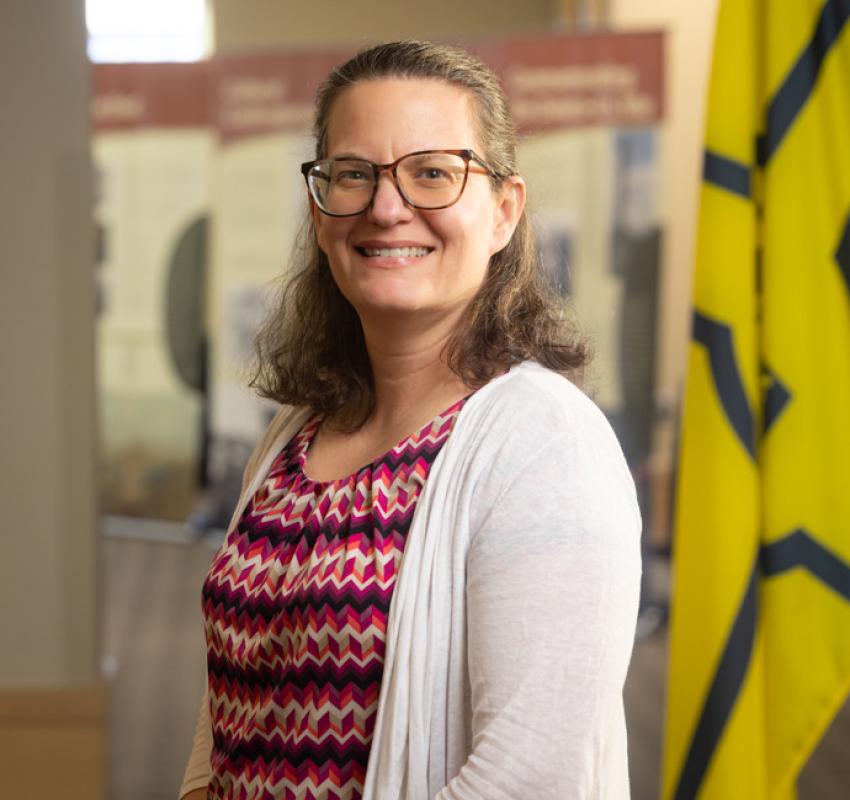
Janie Frandsen
Dr. Janie Frandsen is the Arthur Glass, Charles Hamrum, and Arne Langsjoen Endowed Professor of Biochemistry. Holding a joint appointment in the departments of Biology and Chemistry, she teaches and advises students in the interdisciplinary Biochemistry and Molecular Biology (BMB) program. In her courses, students explore the intersection of the biological and chemical worlds while developing a scientific mindset, essential skills for careers in research or medicine. More importantly, within a liberal arts context, she guides students to become sophisticated thinkers, problem-solvers, and communicators who possess a deep sense of identity, meaning, and purpose — skills that prepare them for lives of leadership and service, no matter what their future holds.
Dr. Frandsen’s research focuses on studying the structure-function relationship of non-coding regulatory RNAs in bacteria, such as riboswitches and small RNAs. Using Escherichia coli as a model organism, her lab combines computational, biochemical, and genetic techniques to understand these molecular mechanisms, with the long-term goal of aiding the development of novel antibiotics to combat antibiotic resistance. Undergraduate researchers engage in high-impact, hands-on discovery, executing experiments ranging from cell culture-based reporter assays to in vitro binding assays with transcribed RNAs and purified proteins. Dr. Frandsen and her students routinely present their work on and off campus and seek support through internal and external grants.
In the classroom, Dr. Frandsen creates structured, inclusive spaces where every student can thrive. Recognizing that students enter college with unique paths and positionalities, she pairs high expectations with robust, equitable support frameworks. To shift focus from stressful numeric grades to deep, formative learning, she implements innovative alternative grading practices, including “ungrading” and contract grading, in her courses. Whether analyzing real-world case studies, developing a growth mindset, or exploring vocation, students are challenged to see themselves as fully capable scientists and multifaceted humans.
Dr. Frandsen’s dedication to excellence extends to her service and leadership on campus. Notably, she has collaborated with her BMB colleagues to complete a comprehensive program review and secure accreditation from the American Society for Biochemistry and Molecular Biology (ASBMB) for the Gustavus BMB program. This prestigious distinction ensures that Gustavus BMB majors graduate from a program validated at the highest national level, opening doors to future careers in academic research, scientific industries, and health professions.
Outside of the classroom and laboratory, Dr. Frandsen claims the title of adventurer. Her adventures range from the local, such as exploring regional hiking trails with her dog, trying out new recipes, or learning a new fiber art, to the momentous, including international hiking trips and family trips to America’s National Parks.
Our People
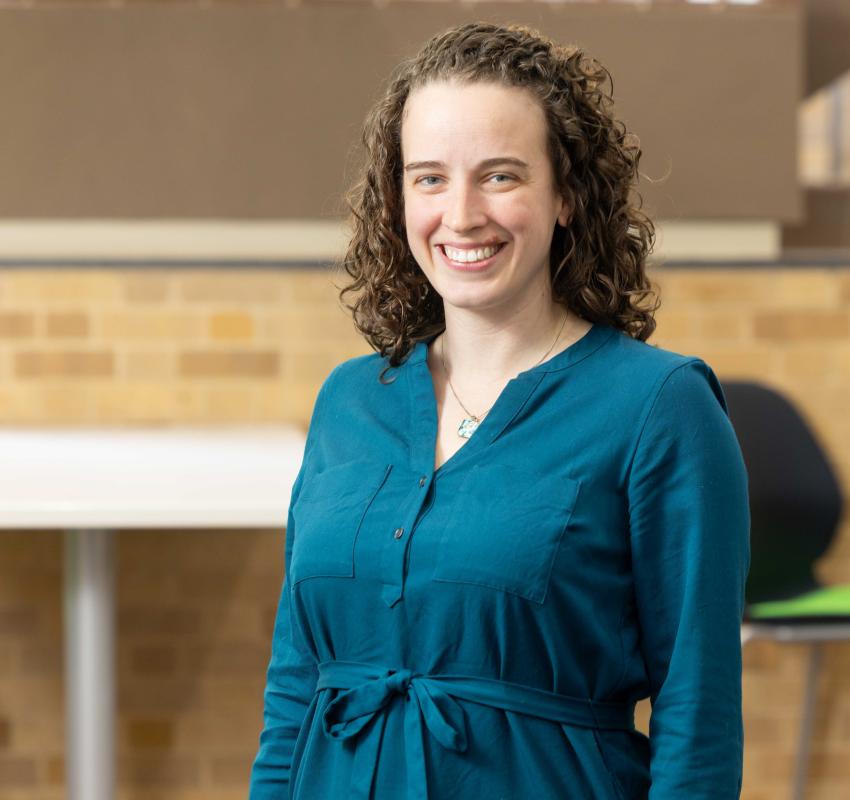
Sarah Mages
Sarah Mages is a Licensed Independent Clinical Social Worker who has been a Mental Health Therapist at Gustavus since 2022. Prior to this, Sarah worked as a school social worker and has over 25 years of experience working with students of all ages in educational settings. Sarah utilizes a "strengths and 'whole' person" approach in her clinical work. She believes in finding and using individual strengths to make positive changes as well as looking at all aspects of an individual’s environment when problem solving.
Sarah prefers to customize therapy based on individual student needs and meets students where they are at in the healing process. Sarah pulls from many types of therapy including but not limited to: Accelerated Resolution Therapy (ART), Brainspotting (BSP), Dialectical Behavior Therapy (DBT), Cognitive Behavior Therapy (CBT), Somatic Therapy, and Acceptance and Commitment Therapy (ACT). Sarah has worked with mental health issues including: anxiety, depression, social relationship issues, adjustment/life changes, emotional regulation, grief/loss, stress, self-esteem, trauma, identity, and learning concerns. Sarah is enthusiastic about working with college students and is excited by the positive insight and energy they bring to the therapeutic process.
Outside of her time on campus, Sarah is an avid reader, likes to cook, and enjoys the outdoors and traveling. Sarah likes spending time with her family and friends and loves watching movies on the big screen.
Our People
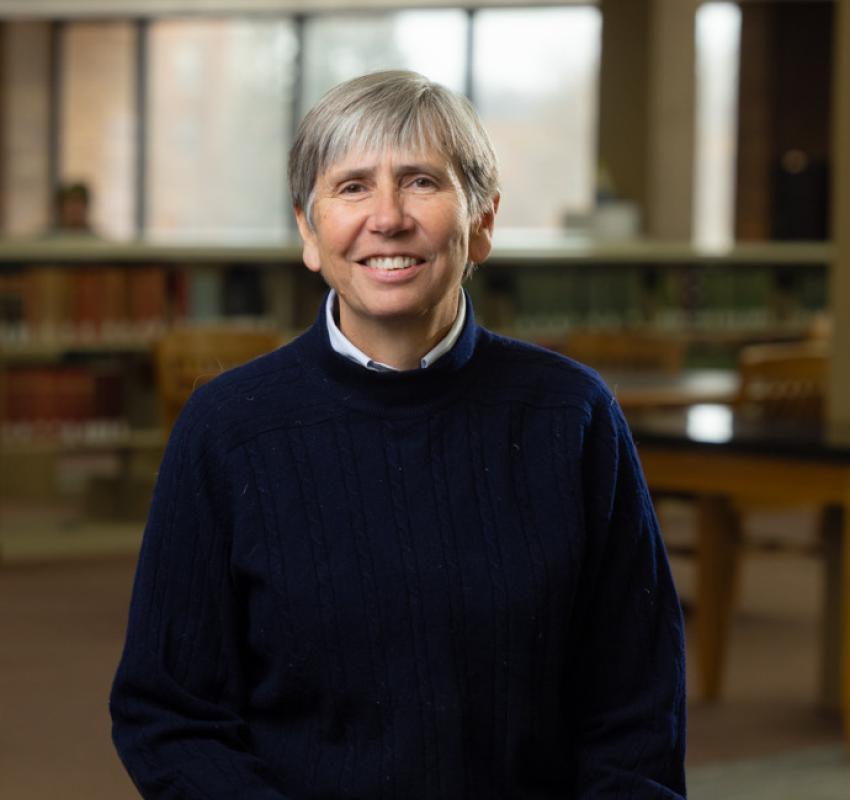
Lisa Heldke
Lisa Heldke teaches in the philosophy department and the gender, women and sexuality studies program, of which she was a founding faculty member. Among her favorite courses to teach are modern philosophy (which, believe it or not, focuses on the eighteenth century); aesthetics; and gender, knowledge and reality. But her real passion is the philosophy of food, which she holds in the teaching kitchen of the Nobel Hall of Science, where students can cook together each week.
The philosophy of food is not only a teaching passion, it has also been a focus of much of her service work on campus. She is the co-founder of the Kitchen Cabinet, an advisory committee to the Gustavus Dining Service that works to enhance the ways it serves the mission of the College. The committee includes representation from all the campus constituencies, including students.
Food is also the focus of Heldke’s scholarly research; she is one of the first contemporary philosophers to treat food as a serious philosophical topic. She is the author or editor of a number of books in the field, including Philosophers at Table: On Food and Being Human; Exotic Appetites: Ruminations of a Food Adventurer; Cooking, Eating Thinking: Transformative Philosophies of Food; and (most recently) Parasitic Personhood and the Ontology of Eating. Her research has led to her being invited to teach each year in a master’s program at the University of Gastronomic Sciences in Pollenzo, Italy, a kind of “liberal arts college of food” founded by the Slow Food founder Carlo Petrini. Her scholarly work has also garnered her awards from the Agriculture, Food and Human Values Society and the John Dewey Society.
For ten years, she served as director of Gustavus’s Nobel Conference, a role she described as being the “chief learner” for this science-and-ethics extravaganza which is a highlight of the Gustavus academic year, and has brought more than 100 Nobel laureates to campus.
Her newest book project bears the working title “Yurtitude is Experience”; it’s a philosophical exploration of her summertime life in a yurt on the coast of Maine where she lives (mostly) off the grid with her Siberian husky, writing, baking bread in a wood-fired brick oven, and kayaking and sailing in Eggemoggin Reach. Winter finds her and her husky skijoring in the Gustavus Arboretum whenever the snow cover allows.
Our People
Laura Burrack
Laura Burrack is a Professor of Biology. Her area of expertise is in microbiology and molecular genetics. Professor Burrack has an active research program at Gustavus with undergraduates that focuses on better understanding how fungal pathogens, such as Candida albicans, an organism that causes infections in humans like thrush and candidemia, evolve resistance and tolerance to antifungal drugs.
Professor Burrack has contributed to eighteen peer-reviewed scientific papers and has co-authored multiple research papers with Gustavus students. She recently won the Janet Anderson Award from the Midstates Consortium for Math and Sciences for her work mentoring students in undergraduate research.
She teaches classes in the Biology department such as Cellular and Molecular Biology, Microbiology, and Cancer Biology. She was the Program Director for the Challenge Seminar Program from 2022—2025 and is currently the Chair of the Biology Department.
When not in the classroom or the lab, Professor Burrack enjoys experimenting in the kitchen with cooking and baking.
Our People
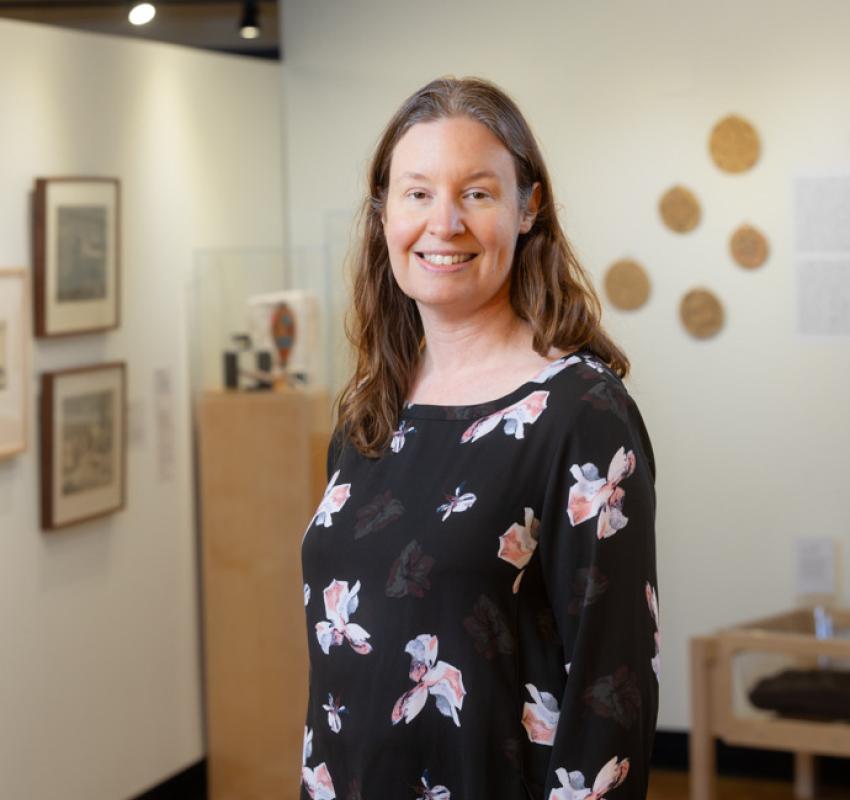
Amanda Nienow
Dr. Amanda Nienow began her Gustavus career in 2007, in the department of chemistry. She obtained her PhD in (Physical) Chemistry at the University of Minnesota and completed a brief post-doctoral fellowship at Purdue University in West Lafayette, IN. In 2013, she was promoted to Associate Professor and in 2018, was promoted to Professor. She has authored multiple peer-reviewed publications with undergraduate students related to environmental fate and photochemistry of herbicides. She recently won the Janet Anderson Award from the Midstates Consortium for Math and Sciences for her work mentoring students in undergraduate research. Dr. Nienow served as co-chair of the Chemistry Department from 2015-2020 and 2023-2026 with Dr. Dwight Stoll. She currently serves as the Director of Undergraduate Research and regularly teaches SIG-370, Signature Experience - Research along with physical chemistry courses.